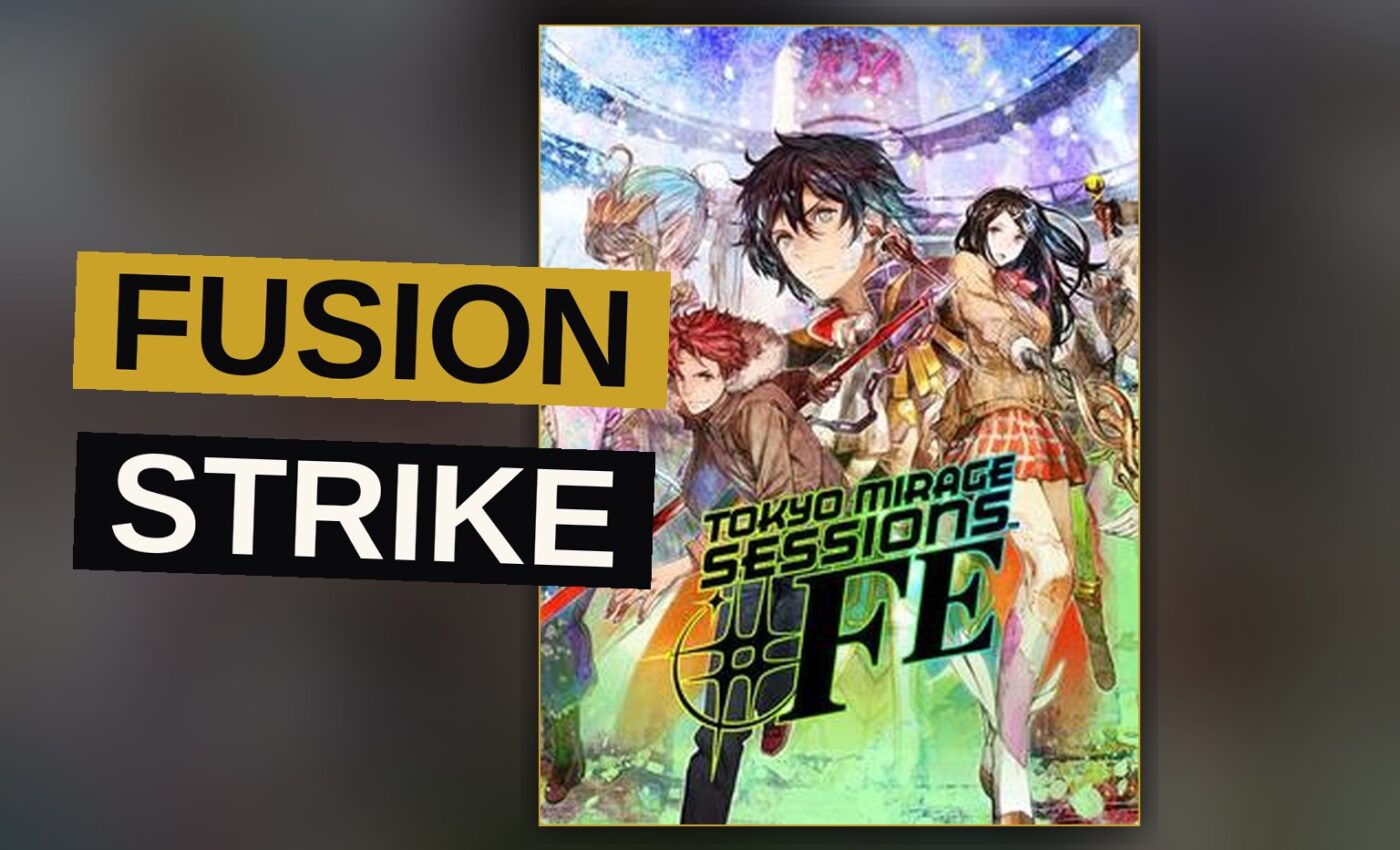
Tokyo Mirage Sessions #FE is a game about pop idols that is secretly about something stranger: the way a city eats its own talent. Atlus built it on the bones of Shin Megami Tensei and Fire Emblem, and Nintendo published it for the Wii U in Japan in December 2015, with the rest of the world getting it in June 2016. The crossover sounds like fan service. It plays like a musical about possession, and it works far better than that pitch has any right to.
Trailer, via Nintendo of America.
Shibuya, Harajuku, and the Idolasphere
The game is set in modern-day Tokyo, and it uses the city the way a good album uses a room. Shibuya and Harajuku are not wallpaper. They are the ground the story walks on. Underneath them sit the Idolaspheres, alternate dimensions where hostile beings called Mirages roam and where the fighting actually happens. The story moves between the real districts and these other spaces, and the contrast is the whole point: the same city, twice, once as a place where people chase careers and once as a place where those careers are harvested.
Everyone in this Tokyo carries energy called Performa, which is what lets a person pursue a dream. Performa also attracts Mirages. Some of them want to take it. Others want to protect the people who have it. The friendly ones merge with humans, and the humans who merge with them are called Mirage Masters. That is the entire engine of the game, and it is a cleaner piece of worldbuilding than most crossovers bother to attempt.
Fortuna Entertainment and Itsuki Aoi
The main cast works for Fortuna Entertainment, a talent agency that is secretly a hub and recruiting operation for Mirage Masters. The protagonist is Itsuki Aoi, a high schooler who stumbles into the business and starts out uninterested in it. He is the least interesting person in his own game, which is a real flaw, but he is also the straight man the rest of the cast needs.
Around him: Tsubasa Oribe, his classmate, optimistic and hard-working, chasing pop idol work. Touma Akagi, impulsive, trying to become an actor in a tokusatsu show. Kiria Kurono, a famous idol and a veteran Mirage Master. Eleonora Yumizuru, a successful half-Scandinavian actress. Mamori Minamoto, a cooking show host with a taste for Shōwa period clothing and music. And Yashiro Tsurugi, a superstar male idol who starts out hostile to the group and their ambitions. Maiko Shimazaki, a former model, runs Fortuna. Barry Goodman is a strict instructor from overseas with a love of otaku culture.
The Mirages who pair with them are drawn straight from Fire Emblem. Chrom, Virion and Tharja come from Awakening. Caeda, Cain, Draug and Navarre come from Shadow Dragon and the Blade of Light. If you know those games, the casting lands. If you do not, they are still legible as characters with wants.
Chapters, Quests, and the Topic App
Structurally this is a role-playing game split into chapters, with side stories for playable and supporting characters and quests handed out by NPCs around Tokyo. You control Itsuki in both worlds. Money from battles buys restorative items for HP and EP, and protective accessories, with shops offering lottery tickets that can win you extra items. Items also turn up inside the Idolaspheres, in hidden treasure chests or off defeated enemies.
The Wii U GamePad runs a social app called Topic. Messages from other characters arrive there. So does the current state of Unity fusions, and a map of each area. It is one of the better uses of that second screen, because it turns a menu into a phone, which is exactly what a game about idols and media should do.
A Five-Year Production and a Switch Port
Nintendo producer Kaori Ando first proposed the crossover between Fire Emblem and Shin Megami Tensei. Atlus was initially reluctant, citing workload, and then agreed. Much of the early work went into deciding what genre the thing would be and how to fold both series into an original game rather than a mashup. The production period lasted five years. An enhanced port, Tokyo Mirage Sessions #FE Encore, came to the Nintendo Switch on January 17, 2020.
That five-year figure explains a lot about the final product. This is not a quick asset swap. The battle system, the dungeon design and the aesthetic all had to be argued into place, and you can feel the argument in the result.
Yatsufusa Hatanaka and the Possessed Figureheads
The story opens with Itsuki tagging along to Tsubasa’s talent audition. Hostile Mirages attack, and the two land in the Idolasphere, where Chrom and Caeda go after them. Itsuki uses his Performa to cleanse the Mirages, and the two join him. With Touma and Kiria, partnered with Cain and Tharja, they beat the Mirage leader. Maiko then enrolls Itsuki and Tsubasa at Fortuna. Tiki aids them, suffering from amnesia like the other allied Mirages.
More attacks follow across Tokyo, each one targeting entertainment and media figureheads who get possessed by hostile Mirages. Those Mirages turn out to serve a greater power. On one mission the group rescues producer Yatsufusa Hatanaka, who then keeps a close watch on them. Eleonora and Virion join, then Mamori and Draug, the latter the former partner of Barry, who was initially possessed. Yashiro and Navarre show up repeatedly as an antagonistic force before Itsuki persuades Yashiro that he can help avenge his father, who vanished from an opera performance.
| Chapter | Beat | Location |
|---|---|---|
| Opening | Tsubasa’s audition, first Mirage attack | Tokyo, Idolasphere |
| Recruitment | Itsuki cleanses Chrom and Caeda | Idolasphere |
| Formation | Fortuna enrollment under Maiko | Fortuna Entertainment |
| Escalation | Possessed media figureheads | Multiple Tokyo districts |
| Rescue | Yatsufusa Hatanaka recovered | Tokyo |
| Expansion | Eleonora, Mamori join the party | Tokyo, Idolasphere |
| Rivalry | Yashiro and Navarre turn | Idolasphere |
What the Crossover Gets Right
This is a confident, odd, specific game, and it earns its 8.2 out of 10. The combat and the dungeon crawling carry the Shin Megami Tensei weight well. The Fire Emblem characters are not decoration; they are the second half of a two-part idea about borrowed strength. The idol business framing is the smartest thing here. A talent agency as a front for people who fight monsters feeding on ambition is not subtle, but it is true enough to sting, and the game never apologizes for it.
The flaws are real. Itsuki is a blank, and the plot spends a lot of time on figureheads being possessed, which is a premise that repeats more than it develops. The middle chapters can sag. Anyone hoping for a straight Fire Emblem tactics game will be confused for a while, and anyone hoping for pure Shin Megami Tensei gloom will find the pop sheen jarring.
What matters is that the two halves do not fight each other. The five-year production shows in the seams, but it also shows in how completely the game commits to its own premise. Tokyo Mirage Sessions #FE is not a compromise between two franchises. It is a third thing, and it is worth the time.
Get the Notebook.
The day's best stories and every fresh verdict, in plain English, in your inbox by seven. One email a day, no more.