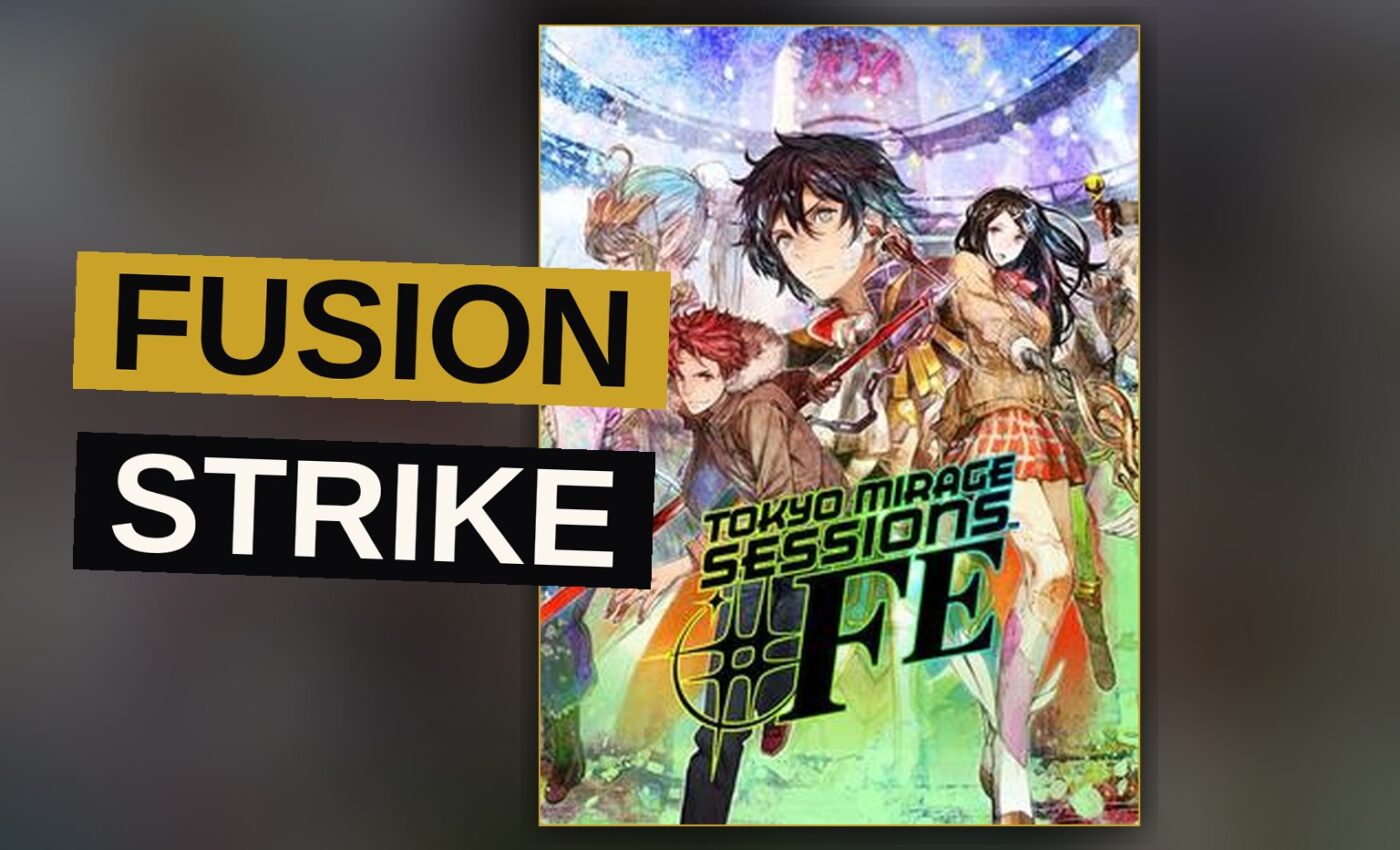
Tokyo Mirage Sessions #FE is a strange hybrid of a game. It started life as a Nintendo 3DS title, but the Wii U version expands it into something bigger: a full-fledged action role-playing game with a rhythm game built inside it. That might sound like a gimmick, but it works better than almost anyone expected. The result is a game that rewards patience and punishes haste, and it is one of the more original entries in a genre full of similar titles.
The premise is simple enough. In modern-day Tokyo, people start vanishing without warning, and a mysterious organization called S.E.E.D. tries to understand why. The protagonist, Tsubaki Akaza, discovers he can see spirits called Mirages, and soon he is pulled into a world where music and combat collide. The story leans heavily on Japanese pop culture, with references to anime, idols, and the city itself, and it moves at a steady pace that keeps the mystery intact without rushing the emotional beats.
Trailer, via Nintendo of America.
The Music Is the Weapon
The core mechanic is the Fusion Strike. When a player hits an enemy, they build up energy. Once enough energy is stored, a gauge fills, and the player can trigger a Fusion Strike, which locks the screen and lets them attack with a burst of damage. The timing is tied to a rhythm bar that appears during combat, and hitting the right moment grants extra damage and a satisfying visual flair. It is a small addition, but it changes how battles feel.
The rhythm element is not forced. Players can ignore it entirely and still get through the game, but doing so means missing out on some of the best moments. The Fusion Strike system rewards players who pay attention, and it makes battles feel more interactive than the standard button-mashing of other action RPGs. It also gives the game a distinct identity that separates it from its peers.
The City of Tokyo
The game is set in a fictionalized version of Tokyo, and the developers clearly put effort into making it feel lived-in. The streets are packed with pedestrians, shops, and landmarks that reference real locations. The districts vary in tone, from the neon-lit Shibuya crossing to the quieter residential areas, and each one carries its own personality. This attention to detail extends to the characters themselves, who are drawn from a wide range of backgrounds and carry their own arcs.
The world design is dense, and it rewards exploration. Side quests, collectibles, and hidden audio tracks are scattered across the map, and finding them takes real effort. The game does not handhold, and that freedom is part of its charm. Players who want to skip the extras can move straight through the main story, but those who take the time to look around will find a wealth of content hiding in plain sight.
The Fighting System
The combat itself is a mix of real-time action and menu-based commands. Players can switch between three characters mid-battle, and each character has a unique skill set. One might focus on healing, another on crowd control, and a third on pure damage. The switching mechanic allows for tactical play, and it keeps battles from feeling repetitive. Enemies also scale with the player’s level, so battles stay challenging even after the early hours.
The game does not rely on grinding. Experience points are earned naturally through combat, and leveling up feels earned rather than forced. There is no need to grind for gear or money, which keeps the pacing clean. The difficulty curve is gentle in the early hours but ramps up later, especially in the optional content, which adds replay value for players who want to master the system.
The Story and Its Cast
The plot follows Tsubaki as he investigates the disappearances and uncovers a conspiracy that reaches deep into S.E.E.D. and the city itself. The writing leans on drama, romance, and occasional humor, and it manages to keep the stakes personal even as the scope grows. The cast is large, but the game finds room to develop each character through dialogue and side stories, giving the ensemble a sense of depth.
The main cast is voiced by a roster of Japanese voice actors, and their performances carry the weight of the story. The localization effort is strong, and the English dub holds up well against the original Japanese audio. The soundtrack is a highlight, blending orchestral pieces with electronic beats and vocal performances that tie into the Mirage theme. The music is not just background noise; it is part of the gameplay, and it sets the tone for every scene.
The Technical Side
The Wii U version runs at a solid frame rate, though it shows its age in places. The graphics are detailed for the hardware, with a cel-shaded style that suits the anime-inspired art direction. The game does not push the limits of the console, but it does not need to. The presentation is consistent, and the menus are easy to navigate.
The game also includes a rhythm mode outside of combat, where players can listen to tracks and score points based on their timing. This mode is separate from the main story and can be skipped entirely, but it adds a layer of depth for players who enjoy that kind of gameplay. It is not required, but it is a nice touch for fans of the genre.
How It Compares
| Feature | Tokyo Mirage Sessions #FE | Other Action RPGs |
|---|---|---|
| Combat Type | Real-time with menu commands | Menu-based or real-time |
| Core Mechanic | Fusion Strike rhythm system | Standard attacks and skills |
| World Design | Modern-day Tokyo | Fantasy settings |
| Story Focus | Personal drama and conspiracy | Epic fantasy narratives |
| Replay Value | Optional content and rhythm mode | Standard side quests |
The comparison is rough, but it shows where the game stands. It shares DNA with other action RPGs, but the rhythm mechanic sets it apart. The game is not trying to remake the genre; it is adding something new to it.
Final Word
Tokyo Mirage Sessions #FE is a confident, ambitious game that succeeds because it trusts its own ideas. The fusion of rhythm and combat is not a gimmick; it is a genuine innovation that makes the game feel fresh. The story is engaging, the world is alive, and the combat is satisfying. It is not perfect, and some players may find the learning curve steep, but those who stick with it will be rewarded.
The game earns its place among the better entries in the genre. It is a game about music, identity, and the power of connection, wrapped in a package that is both accessible and demanding. It is a game that respects its players and asks them to meet it halfway.
Get the Notebook.
The day's best stories and every fresh verdict, in plain English, in your inbox by seven. One email a day, no more.