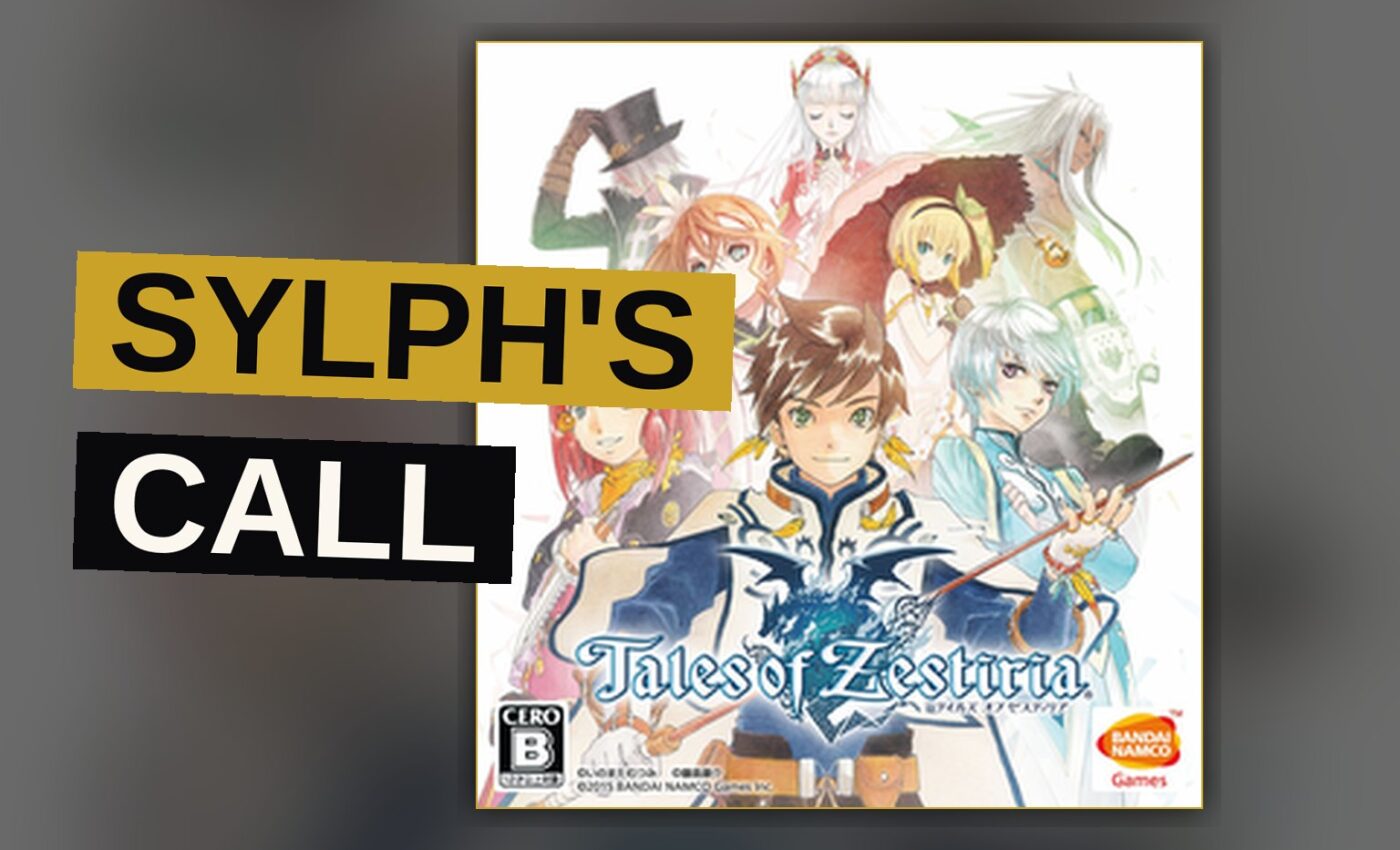
Tales of Zestiria is a strange beast. It is a game built for the PS3 and PS4, released in 2015, that wants to be two things at once: a massive, sprawling adventure for new players, and a deep, demanding dungeon crawler for longtime fans of the series. It mostly succeeds at the former and stumbles at the latter, leaving behind a product that is generous in scope but occasionally thin on depth. The game carries a critical score of 7.7 out of 10, and that number feels about right.
Trailer, via Bandai Namco Entertainment.
Sylphs and the World Map
The game opens with Serah, a young woman who can summon a spirit partner called a Sylph. The Sylphs are the heart of the combat system. They live in a separate world map, a floating realm of light and darkness, and players can call them forth during battles to unleash attacks. This mechanic is simple but clever, giving the game a layer of strategy that sets it apart from other entries in the Tales of series.
The world map itself is vast. Players travel across a continent filled with towns, dungeons, and hidden treasures, all rendered in a bright, painterly style that draws the eye. The game rewards exploration, and the map is packed with side quests, secret areas, and optional encounters that offer:
- Experience points
- Items
- Lore
It is a game built for wandering, and the sheer amount of content on offer is impressive.
The Main Story
The plot follows Serah and her companions as they search for the source of the corruption spreading across the land. The story is straightforward, with a clear arc and a satisfying conclusion. It does not reinvent the wheel, but it handles character development well, giving each member of the party a distinct personality and a clear role in the narrative. The pacing is uneven, with some stretches dragging while others crackle with energy, but the overall journey holds together.
The cast is large, and the game manages to give each character a moment in the spotlight. The main antagonist is a figure of great power, and the conflict between the heroes and the villains is central to the plot. The game does not shy away from difficult moments, and there are scenes of genuine tension and emotion. It is a solid story, if not a groundbreaking one.
Combat and Difficulty
The battle system is a variant of the series’ traditional formula. Players control a party of characters, each with their own skills and roles, and fight enemies on a grid-based battlefield. The Sylphs add a layer of strategy, as players can call them forth mid-battle to deal damage, heal allies, or create openings. The system is easy to learn but hard to master, and it offers a satisfying rhythm of action and planning.
The difficulty curve is where the game stumbles. Early fights are simple, but later encounters demand precise timing and careful positioning. Some boss battles require players to learn complex patterns and execute them with precision, which can frustrate players who are not used to that level of challenge. The game does not ease players into its harder encounters, and the sudden jump in difficulty can feel unfair.
The game also suffers from occasional technical issues. Frame rate drops are common during battles, especially on the PS3 version, and the camera can be uncooperative during hectic encounters. These problems are minor but persistent, and they can break the flow of an otherwise engaging encounter.
Exploration and Freedom
The game’s open-world design is its strongest feature. Players are free to explore the map at their own pace, taking on quests, grinding for experience, or simply enjoying the scenery. The game offers a sense of freedom that is rare in the genre, and it rewards curiosity. There are hidden chests, secret paths, and hidden locations that offer rare items and additional lore.
The game also includes a crafting system, allowing players to combine materials found in dungeons to create weapons and armor. This adds a layer of customization that is absent from many other entries in the series. It is a small touch, but it gives players a reason to collect every item they find.
Music and Presentation
The soundtrack is a highlight. The music is composed by Motoi Sakuraba, a veteran of the series, and it captures the epic scale of the story while maintaining a warm, melodic quality. The main themes are memorable, and they carry the emotional weight of the narrative. The sound design is also strong, with clear audio cues and a clean mix that lets the music breathe.
The presentation is polished. The character models are detailed, and the environments are vibrant. The game runs at a smooth frame rate on the PS4, though the PS3 version shows its age with occasional slowdown. The visuals are not revolutionary, but they are competent and pleasing to look at.
Where It Falls Short
The game is not without flaws. The writing is occasionally uneven, with some dialogue feeling forced or overly expository. The pacing is also inconsistent, with long stretches of filler content sandwiched between exciting set pieces. The game is long, and some players may find themselves growing tired of the repetitive grind before the endgame.
The game also lacks a strong multiplayer component. While it supports cooperative play, it is limited to a few modes, and it does not offer the depth of some other games in the genre. This is a missed opportunity, as the game’s mechanics would seem to lend themselves well to multiplayer.
The game also suffers from a lack of polish in some areas. The menu interface is occasionally clunky, and the game’s systems are not always explained clearly. Some players may find themselves confused by certain mechanics, particularly the Sylph system, which takes time to fully understand.
Final Verdict
Tales of Zestiria is a game of contrasts. It is a generous package that offers a lot to players, but it is not always consistent in delivering on its promises. The combat is engaging, the story is compelling, and the world is vast. But the difficulty spikes and the occasional technical issue keep it from greatness.
The game is best enjoyed by players who are willing to put in the time and accept its flaws. It is not a perfect game, but it is a rewarding one. It offers a different kind of experience than other games in the genre, and it succeeds in carving out its own niche.
The game is available on PS3, PS4, and PC, and it runs well on all three platforms. The PS4 version is the recommended way to play, as it offers the smoothest performance and the clearest picture. The PC version is also a viable option, though it requires a powerful machine to run at full speed.
The game is worth playing for anyone who enjoys action RPGs, but it is not for everyone. It requires patience, persistence, and a willingness to accept its shortcomings. It is a game that rewards exploration, but it is not always kind to those who want a quick fix.
The score reflects this balance. Tales of Zestiria is a game of highs and lows, and its final judgment rests somewhere in the middle.
Get the Notebook.
The day's best stories and every fresh verdict, in plain English, in your inbox by seven. One email a day, no more.