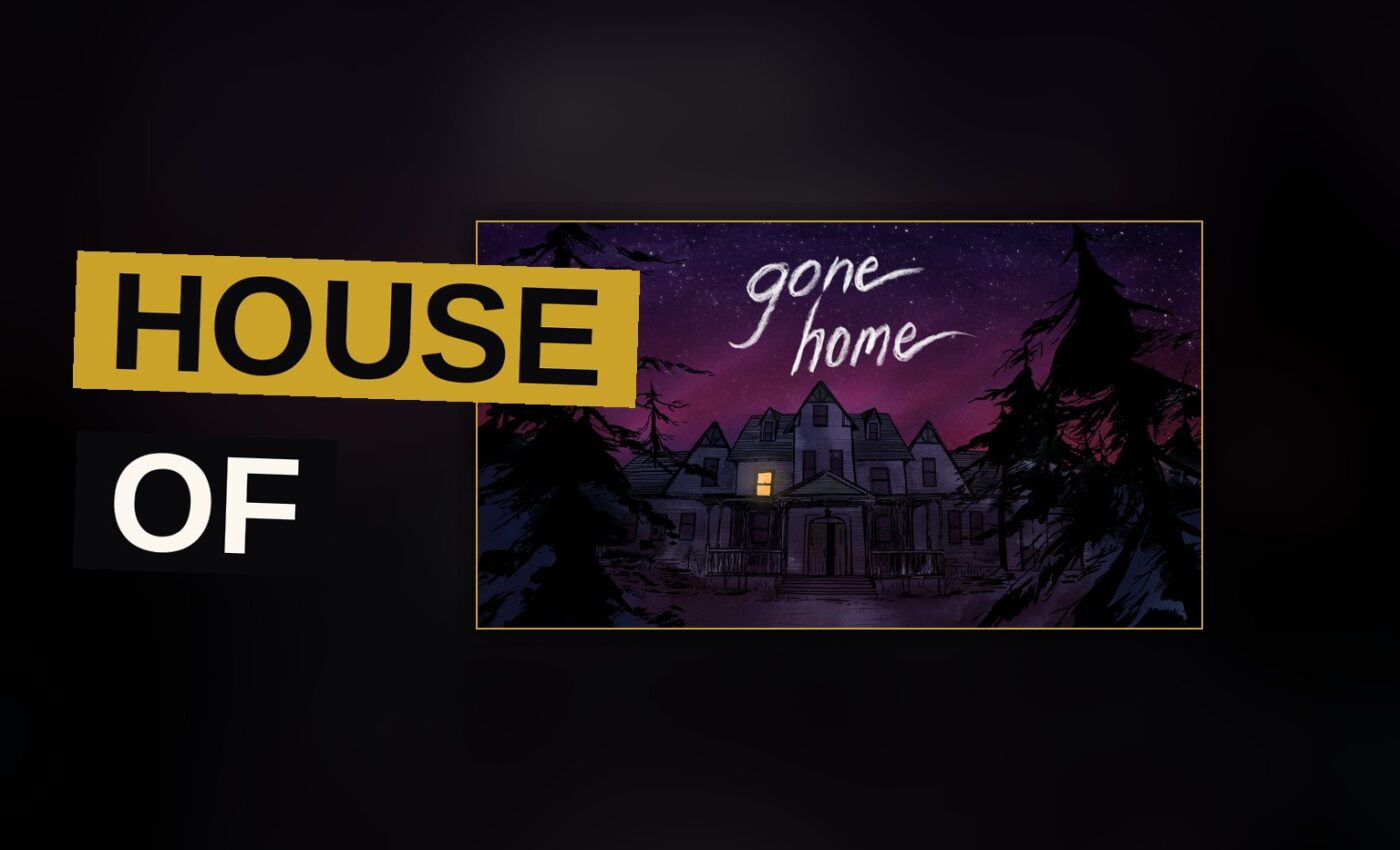
Gone Home is a game about walking through a house you’ve never seen before, carrying a flashlight, and finding out what happened to the people who lived there. It doesn’t shoot anyone, it doesn’t chase anyone, and it barely moves. What it does instead is let you read, listen, and piece together a family’s collapse across a single night in 1995. The game asks you to slow down, and it earns that patience.
Trailer, via Fullbright.
The House and Its Rooms
The Greenbriar house is the whole world. It sits on a hill, surrounded by woods, and it holds secrets in every drawer and under every bed. You move through it at a pace set by the developer, and that pace is deliberate. You walk from room to room, picking up objects, reading notes, and turning on lights in dark corners. The house itself is the puzzle, and the furniture, the wallpaper, and the scattered papers are the clues.
Each room tells a small story. The living room holds a TV that plays a tape of a father’s speech, while the basement carries a diary entry from a daughter who feels invisible. The kitchen fridge has a note from a mother who can’t find her keys. These details add up slowly, and the game trusts you to connect them without rushing.
The Music and the Mood
The soundtrack is a mix of 1995 pop, rock, and alternative music. It plays over the radio in the house, and it sets the tone for each scene. A song about missing someone plays during a moment of quiet reflection, while a driving track fills the room when the tension rises. The music is used sparingly, but it lands when it matters.
The lighting also does a lot of work. The flashlight reveals a room one corner at a time, and the dark spaces carry a sense of dread even when nothing threatens you. The game knows you’re alone in this house, and it lets you feel that loneliness.
The Story Behind the Doors
The plot follows a family that has moved to a new town, bought a new house, and tried to start over. The father is distant, the mother is stressed, and the daughter feels left behind. The game unfolds in flashbacks, told through letters, tapes, and objects found around the house. Each clue brings a new piece of the story, and the final hour pulls everything together into a single, sad arc.
The writing is sharp and specific. Characters speak like real people, with doubts, jokes, and moments of genuine affection. The game doesn’t explain everything, and some threads remain open at the end, but the core story is satisfying.
What Works and What Falls Short
Gone Home succeeds because it commits fully to its idea. It trusts you to look closely, and it rewards that attention with small, human moments. The pacing is occasionally uneven, and some rooms feel padded, but the best sections are genuinely affecting. The game is at its strongest when it lets you sit with a letter or a recording, letting the emotion land without hurry.
Here’s what stands out:
- The 1995 setting, which grounds the story in a specific time and place
- The writing, which gives each character a distinct voice
- The use of sound, both music and the ambient noise of the house
- The structure, which builds toward a clear emotional payoff
There are moments where the game leans too heavily on exposition. Some rooms ask you to read several pages of text before moving forward, and that can break the spell. The puzzles, when they exist, are simple fetch quests rather than clever challenges. These are minor complaints, but they keep the game from being perfect.
The Verdict on Greenbriar
Gone Home is a quiet triumph. It takes a simple premise — exploring a house — and turns it into something deeply felt. The game doesn’t need violence or spectacle to work, and that restraint is rare in modern games. It’s a game about memory, absence, and the ways families fail each other, wrapped in a package that asks you to pay close attention.
The game is available on PC, Mac, iOS, and Linux, and it runs well on all of them. There’s no multiplayer, no online component, and no reason to play it twice. It’s a one-time experience, and it’s a strong one.
Gone Home earns a score of 7.4 out of 10.