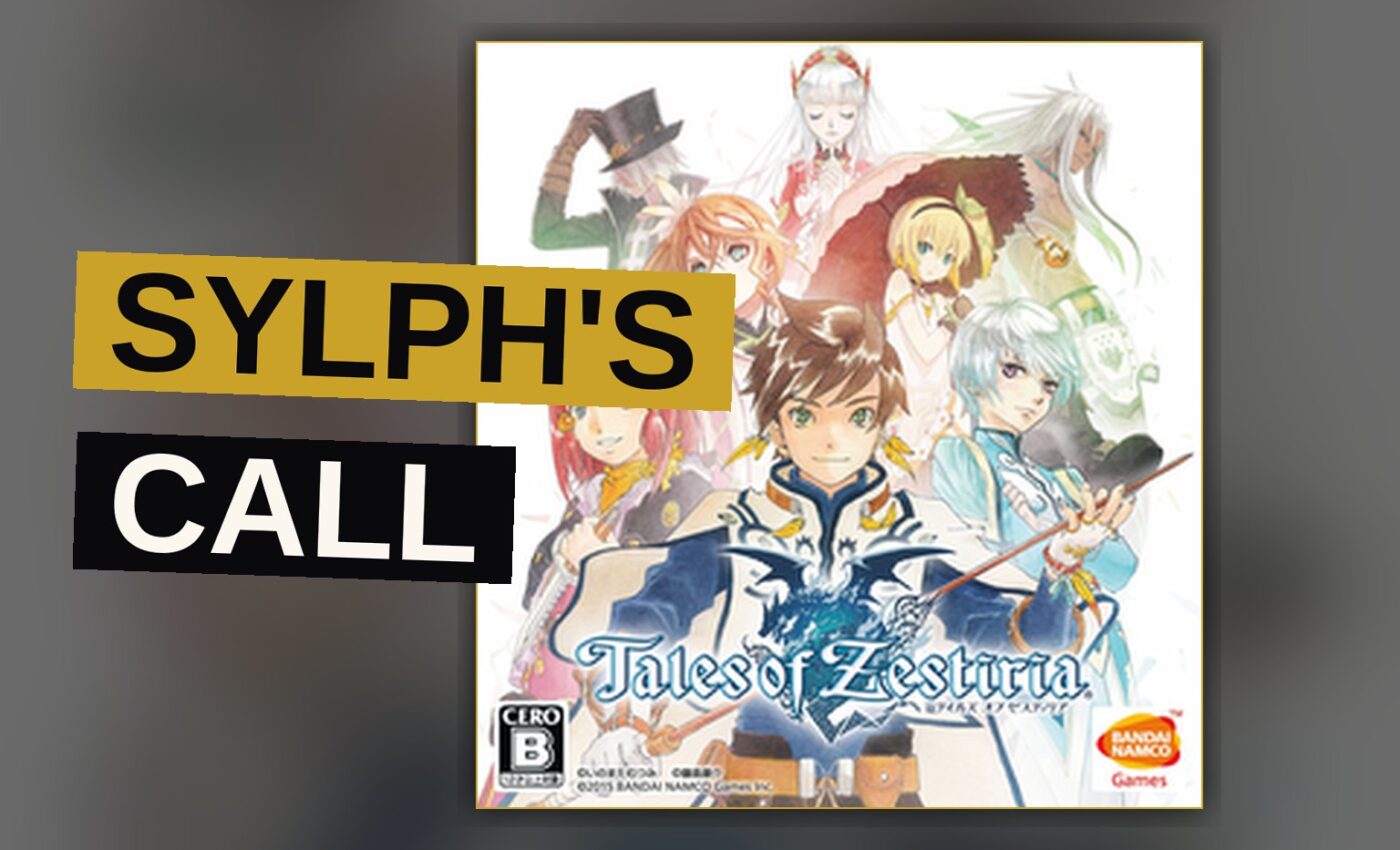
Tales of Zestiria is a game about a young man who talks to spirits and purifies monsters, and in 2015 that was somehow both the most old-fashioned and most forward-looking thing Bandai Namco could have shipped. It is the fifteenth main entry in the Tales series, developed by Bandai Namco Studios and published by Bandai Namco Entertainment. It arrived in January 2015 in Japan on the PlayStation 3. The Western release followed in October of the same year, and by then it had been ported to PlayStation 4 and Windows via Steam. The PS4 version reached Japan in July 2016.
Our score is 7.7 out of 10. That is not a shrug. Tales of Zestiria has a genuinely interesting world, a combat system that rewards patience, and a set of design decisions that fight each other for the entire runtime.
Trailer, via Bandai Namco Entertainment.
Sorey, Mikleo, and the Village of Elysia
The game opens with Sorey, a young human, and his friend Mikleo, a Seraph of water, exploring nearby ruins. They rescue a human girl named Alisha and bring her back to their home in the village of Elysia. Once Alisha leaves, Sorey and Mikleo clash with a Hellion called Lunarre. Worried about Alisha, they leave the village to find her.
Sorey then meets Lailah, a Seraph of fire known as the Lady of the Lake, who forms a pact as his Prime Lord. That pact gives Sorey the power to purify Hellions and makes him a Shepherd. Alisha turns out to be a princess of the Hyland Kingdom, and she becomes his Squire. But her low resonance with the Seraphim takes a toll on Sorey’s body, and she is forced to leave the group.
That is a clean setup, and a sad one. Sorey is not a chosen one because of prophecy. He is a chosen one because he made a pact with a fire spirit in a lake and now has a job. The game’s genre name, Jōnetsu ga sekai o terasu ārupījī, translates to “RPG of Passion Lighting the World,” and the story leans on that idea hard.
Glenwood, Malevolence, and the Hellion
The world is the strongest thing Tales of Zestiria has going for it. It takes place on a fictional continent called Glenwood, set in the middle of an ocean-dominated world, and it shares that setting with Tales of Berseria, which is set in the distant past. Glenwood is split between two warring countries: the Hyland Kingdom, ruled by a constitutional monarchy, and the Rolance Empire. Independent Guilds profit from the conflict across professions that run from transportation to goods manufacture to assassination.
Then there is malevolence. It is an impurity generated by humanity’s negative emotions, and it periodically transforms the living, the dead and even inanimate objects into monsters called Hellion. That is a strong hook for an RPG, because it means the enemy is not an army. It is a mood.
The Seraphim are the other main race, supernatural humanoids and animals who can only interact with humans who have enough resonance. They were once abundant in Glenwood and are now scarce. People call those who interact with them Shepherds, and they are both hailed as saviors and feared for their power. Seraphim can also form contracts among themselves, with a dominant figure called a Prime Lord and partners called Sub Lords.
The game tells the story of the Shepherds during the “Era of Chaos,” when Hellion run rampant across Glenwood, attacking countryside and cities alike. The war between Hyland and Rolance becomes leverage, used to force Sorey and his friends into battle. During one skirmish, Heldalf, the Lord of Calamity, appears before Sorey, and Sorey is rescued by the assassin Rose. Sorey later learns of four shrines, each holding trials a Shepherd must accomplish to become stronger.
The Linear Motion Battle System and the Open World
As with previous Tales entries, the game uses a variation of the action-based Linear Motion Battle System. It adds a navigable open world, a contrast with earlier entries in the series, and the ability for certain characters to fuse into a single entity in battle to deliver powerful attacks. That fusion mechanic is the best idea in the game. It gives combat a rhythm beyond mashing, and it makes the party feel like a single unit rather than four people standing near each other.
The open world is where the game stumbles. Tales of Zestiria renders three-dimensional characters to scale with the areas around them, and the main world uses an open layout in contrast to earlier entries. Scale is the problem. When your character is correctly sized against a field, that field can feel empty, and Glenwood often does.
Skits return, the extra conversations between characters that can be dramatic or comical. Their full-body representation of characters carries over from Tales of Graces, and as in Graces and Tales of Xillia, they are fully voiced. This is where the cast gets to be a cast.
Edna, Mikleo, Lailah, and Dezel in the Field
Exploration has its own systems, and they are more clever than the open world they sit in. While moving between locations, with a specific Seraph assigned, the player can execute special commands. All characters can slice through minor obstacles. Edna smashes large obstacles. Mikleo temporarily shields the party from enemy view. Lailah ignites special lights in dungeons. Dezel teleports across gaps.
A changeable second character accompanies the lead, and you can start story-relevant or trivial conversations with them. Characters have unique Support Talents that range from locating treasure chests to monitoring health, and these level up alongside the characters. New special abilities come from side-quests for creatures called Normins scattered through the land.
Equipment can be given special skills, with one piece having four skill slots, and certain combinations add extra effects. Some equipment types can only be obtained by fusing two different accessories. A local four-player multiplayer option is available. Shops sell outfits, weapons, armor and items, and using a certain shop enough levels it up, unlocking higher-end items.
That is a lot of systems, and they do not all justify themselves. The Normin quests and the equipment fusion are the kind of depth that rewards a second playthrough and punishes a first one.
What Actually Matters Here
The fusion mechanic and the skits are the parts worth keeping. The open world is the part worth cutting. Tales of Zestiria began development in 2012 as the 20th anniversary title for the Tales series, returning to the series’ thematic roots as established in Tales of Phantasia, with revamped gameplay systems. Multiple staff members from previous Tales games returned, including producer Hideo Baba, battle programmer Tatsuro Udo and designer Kōsuke Fujishima.
You can feel the anniversary pressure in the design. The game wants to honor the past and modernize at the same time, and those two goals do not always agree. The story’s focus on the passion of the characters is the thread that holds it together. Sorey is not a complicated protagonist, but he is a consistent one, and the Seraphim around him carry the emotional weight.
Key facts
- Released: January 2015 in Japan, PlayStation 3
- Western release: October of the same year, also on PlayStation 4 and Windows via Steam
- PS4 version in Japan: July 2016
- Developer: Bandai Namco Studios
- Publisher: Bandai Namco Entertainment
- Entry: fifteenth main entry in the Tales series
- Development began: 2012, as the 20th anniversary title
- Genre name: Jōnetsu ga sekai o terasu ārupījī (“RPG of Passion Lighting the World”)
- Our score: 7.7 out of 10
The thing to watch is not whether the open world gets bigger in the next entry. It is whether the fusion mechanic survives. Tales of Zestiria’s best combat idea is also its most specific one, and a series that spent its 20th anniversary looking backward may decide the safer move is to leave it behind. That would be a mistake.
Get the Notebook.
The day's best stories and every fresh verdict, in plain English, in your inbox by seven. One email a day, no more.