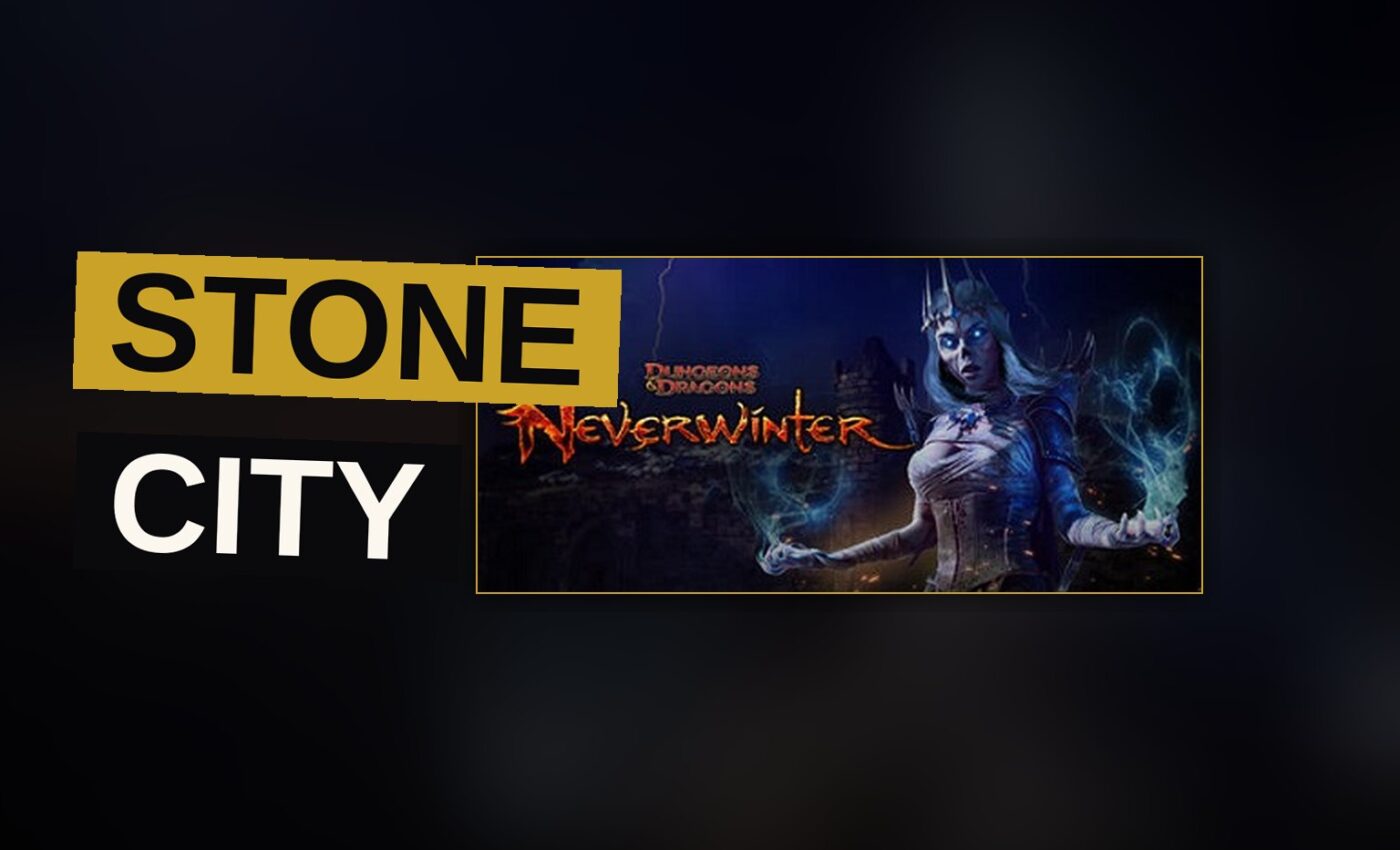
Neverwinter is a free-to-play action MMORPG built on the Dungeons & Dragons Forgotten Realms setting, and it hands players a city and asks them to hold it. Cryptic Studios developed it. Perfect World Entertainment published it. It arrived on PC in 2013, on Xbox One in 2015, and on PlayStation 4 in 2016. It scores 7.3 out of 10.
That number comes from an IGDB critic aggregate across 11 outlets. It is a fair landing spot for a massively multiplayer online role-playing game that is generous and rough in places, and unusually committed to telling a story rather than just farming spawns.
The Jewel of the North, Rebuilt
The setup is borrowed from the tabletop. One hundred years have passed since the Spellplague changed Faerûn, toppling empires and leaving monster-haunted ruins behind. Neverwinter, the Jewel of the North, survived the Spellplague largely intact while the rest of the Sword Coast was devastated. That reprieve did not last. Nearly 75 years later, a volcanic eruption rained fire, ash and molten fury on the city and annihilated everything in its wake.
Today the city has restored much of its former glory. Lord Neverember of Waterdeep has taken Neverwinter under his protection and put out a call to adventurers and heroes of the Savage North to help rebuild it. His motive is not charity. The source material is blunt about it: he hopes one day to lay claim to her throne and crown. Evil forces conspire in the dark places of the world to undermine all of it.
That is a better hook than most free-to-play games bother with. A rebuilding project gives players a reason to care about a map, and a lord with an open ambition gives the whole thing an edge.
Eight Classes and a Foundry
Players pick one of eight Dungeons & Dragons character classes and form groups of up to five player characters. The game was originally based on a modified version of the Dungeons & Dragons 4th edition rules set, which brought healing powers and action points. Action points run through a system called dailies: pile up enough points in combat and you can fire off a special ability.
The more interesting piece is the Foundry, a player-created content system that lets players build their own stories and quests. Players can create whole new locations that may or may not conform to the game’s lore. Cryptic marks that content clearly so users are not confused, and players are told whether they are running user-generated or official content. That distinction matters, and the game deserves credit for making it instead of letting the two blur.
There is also a clear design philosophy underneath the combat. The pitch, as stated at the time, was that this is not an MMO in the sense of zones packed with hundreds and hundreds of people. You are not fighting for spawns. There is a very strong storyline throughout the game. It is more of a story-based game, closer to things like Dragon Age or Oblivion, which the team said it really tried to follow.
That claim is the whole argument for Neverwinter, and it mostly holds up.
A Free-to-Play Turn in 2011
By October 2011, the gameplay had been restructured into a free-to-play MMORPG, with extra items and other advantages available for purchase for a fee. That restructure is the decision that shaped everything after it, and it is the clearest dividing line in the game’s history.
In August 2014, the Tyranny of Dragons module was used to bridge the narrative gap between the game and the then recently released 5th Edition Dungeons & Dragons. Many later modules tied into 5th Edition storylines: Elemental Evil, Storm King’s Thunder, Tomb of Annihilation, Ravenloft and Undermountain.
By April 2019, all eight classes had received varying levels of balance and adjustments, and each class was renamed to align with 5th Edition Dungeons & Dragons. The source gives the what and the when. It does not say why the classes needed the work, or how far they had drifted. That gap is worth naming rather than filling in.
Valindra, the Bridge, and the Nashers
The story opens with the Lich Queen Valindra briefly assuming her pre-lich appearance and attacking the soldiers of New Neverwinter, as new grounds are built outside the original city while it is repaired. Her attack sparks the Battle of the Bridge. At a pub in the shattered town of Luskan, gossipers say Barrabus the Gray, formerly known as Artemis Entreri, and Drizzt Do’Urden were present.
Each soldier tells his own version of the battle until one reveals that Valindra’s attack was going badly until the blue dragon Fulminorax, a leader in the country of Thay, helped her escape. The soldier finishes by asking where people will be and what they will be doing when the dragon attacks again.
That is strong scene-setting, and the game knows it. After their ship is sunk by a dracolich, adventurers help a nearby militia of Neverwinter against Valindra. They do not confront her directly on the Sleeping Dragon Bridge. Instead they fight a Harbinger, a huge humanoid undead, then report to a Sergeant in Protector’s Enclave. For their valor, they become the Heroes of the Sleeping Bridge.
The setting itself sits in a moment when the city is plunged into chaos after the disappearance of the last Lord of Neverwinter. In the aftermath of the Spellplague and a Primordial Fire Elemental’s near-destruction of the city, as seen in the novel Gauntlgrym, remaining citizens form factions and struggle for dominance while the dead rise and attack the city they once called home. The player investigates the Sect Crown of Neverwinter and tries to work out what the skeletons and another mysterious group are looking for. The included locations are based on the novels Gauntlgrym, Neverwinter and Charon’s Claw.
Release Schedule
| Platform | Release year |
|---|---|
| PC (Microsoft Windows) | 2013 |
| Xbox One | 2015 |
| PlayStation 4 | 2016 |
The gaps are worth noting. PC players got Neverwinter two years before Xbox One players did, and the Xbox One version landed two years before the PlayStation 4 version. The source lists the years and stops there. It does not say what those gaps meant for the game on each platform.
Key Facts
- Developer: Cryptic Studios
- Publisher: Perfect World Entertainment
- Platforms: PlayStation 4, PC (Microsoft Windows), Xbox One
- PC release: 2013
- Xbox One release: 2015
- PlayStation 4 release: 2016
- Genres: Role-playing (RPG), Adventure
- Modes: Single player, Multiplayer, Co-operative, Massively Multiplayer Online (MMO)
- Perspective: Third person
- Character classes: eight
- Group size: up to five player characters
- Critic aggregate: 7.3/10 (IGDB, 11 outlets)
- Free-to-play restructure: October 2011
- Tyranny of Dragons module: August 2014
What Actually Holds Up
The Foundry is the part worth watching. A player-created content system that lets users build stories and quests, with clear labeling so nobody mistakes user work for official work, is a real answer to the content treadmill that kills most live games. The source describes the tool and the labels. It says nothing about how many players stayed because of it.
The combat rules are the weaker inheritance. Action points and dailies are a fine loop, but they are a loop, and the 4th edition framework underneath them has aged less gracefully than the setting. The 2019 class renames and rebalancing sit in the record as a plain fact: eight classes, varying levels of adjustment, new names aligned to 5th Edition.
The story is the strongest argument for the game. Valindra, the Battle of the Bridge, the Nashers, Karzov, Vansi Bloodscar, Rhazzad — that is a lot of named antagonists doing specific things in specific places, and it is all threaded through a city the player is actively rebuilding. The narrative is not a wrapper here. It is the reason to log in.
The free-to-play turn in October 2011 is the piece that will decide how a given player feels. It is also the point where the reporting runs out. The source confirms the restructure and the paid items. It does not say what the change did to the audience or the game’s life span, and this paper will not guess.
A 7.3 is the right score. Neverwinter is not a landmark, and it is not a cautionary tale either. It is a long-running, free-to-play Dungeons & Dragons game that took its own story seriously and built a tool that let players write their own. That is a lot of work for a game that never got the loudest reception.
Get the Notebook.
The day's best stories and every fresh verdict, in plain English, in your inbox by seven. One email a day, no more.