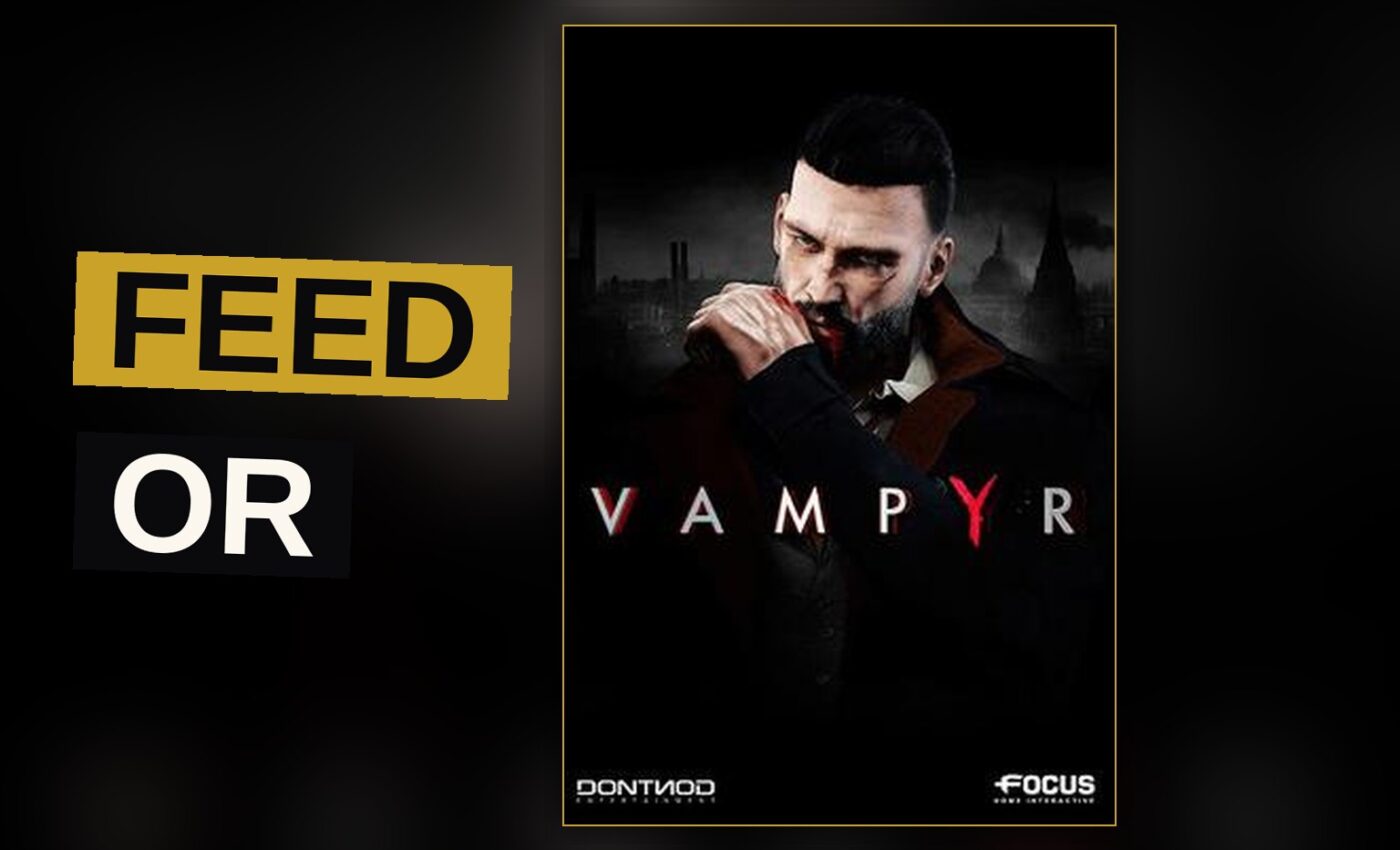
Vampyr is a game about feeding. That is its central problem, and it is also its central idea. Developed by Dontnod, the studio behind Life Is Strange, the game drops you into 1918 London as Dr. Jonathan Reid, a doctor turned vampire who must feed on the living to survive. The city is a war zone, and the plague is running wild. You are hungry, and the people around you are dying anyway. The question the game asks is simple: who gets to live, and who gets to die.
Trailer, via IGDBcom.
London Under the Plague
The setting is the real draw. The streets are wet and grim, lit by gas lamps and choked with fog. The game uses a version of London that never existed, a hybrid of historical districts that feels lived-in. There are markets, pubs, churches, and tenements, each packed with people who have names, jobs, and families. The map is large enough to wander, and the details hold up. The rain hits the cobblestones with weight. The mud stains your shoes. This is a London that hurts to breathe.
The plague is everywhere. People cough in the streets, and bodies lie in doorways. The city is full of fear, and the game captures that dread through the crowds. Everyone is looking over their shoulder. Everyone is afraid of everyone else. The tension is constant, and it never lets up.
Feeding and Corruption
The core loop is the feeding system. You can hunt for blood, or you can take it from the people you meet. Each person has a profile, and their blood carries traits. Some give you strength. Some give you speed. Some give you fear. You can feed on anyone, but the game tracks your choices. Every kill raises your corruption meter, and that meter affects how the world treats you. The game wants you to feel guilty, but it also wants you to feel powerful.
The morality system is where Vampyr stumbles. The game offers you choices, but it does not trust you to make them. The consequences are often blunt: feed on a mother and her son dies, feed on a child and the town turns against you. The game wants you to feel the weight of your actions, but it also wants you to follow a script. The result is a system that feels less like choice and more like punishment. The game is telling you what to do, and it is doing so loudly.
Combat and the Vampire Powers
Combat is where Vampyr shows its technical limits. The fights are slow and clunky. Your attacks are telegraphed, and your enemies react slowly. The game tries to make combat cinematic, with slow-motion dodges and dramatic finishing moves, but the animations are stiff, and the hit detection is inconsistent. You will find yourself stuck in a fight for minutes, unable to move past a single enemy.
The vampire powers help, but they are limited. You can fly, summon shadows, and create illusions, but the powers are mostly cosmetic. They do not change the flow of combat. The game is built around stealth and evasion, and those systems are weak. You can sneak through a crowd, but the AI is dumb, and the sound design is poor. You will hear footsteps long after you have hidden, and you will miss enemies who should have spotted you. The game is asking you to be quiet, but it is not giving you the tools to do it.
Dr. Reid and His Haunted Past
The story is the heart of Vampyr, and it is also its weakest part. Dr. Reid is a haunted man, and the game spends a lot of time showing his grief. He lost his wife, and he is struggling with what he has become. The writing is earnest, but it is also heavy-handed. The game explains everything to you, and it explains it again. The dialogue is full of exposition, and the pacing suffers for it. The plot is about a cure for the plague, but the cure is a McGuffin. It exists to drive the story forward, not to shape it.
The supporting cast is better. The characters you meet are memorable, and the game takes the time to show their lives. You can talk to them, listen to their stories, and sometimes you can save them. These moments are the best in the game, but they are rare. The game is too busy pushing you toward the next mission to let you sit with anyone for long.
Sound Design and Visuals
The sound design is excellent. The music is moody, and the sound of the city is immersive. The wind whistles, the rain drums, and the voices of the crowds rise and fall. The score is atmospheric, and it fits the setting perfectly. The sound is the reason the game works at all.
The visuals are mixed. The character models are dated, and the textures are rough. The lighting is excellent, but the shadows are harsh. The game looks good in motion, but it looks dated in stills. The art direction is strong, but the execution is not. The game is trying to be a period piece, and it is succeeding visually, but it is failing technically.
Length and Structure
The game is long, but it is not dense. The missions are repetitive, and the side content is thin. The main story takes about twenty hours to complete, but there is not much to do after that. The game is designed for a single playthrough, and it shows. There is no New Game Plus, no extra difficulty, no hidden content. The game is over when the story ends, and there is nothing left to see.
The structure is linear. You follow a path, and you complete objectives. The game does not give you much freedom. You can explore, but you will always be pointed back to the next task. The game is built around a series of fetch quests, and it does not hide that fact. The pacing suffers for it.
Final Verdict
Vampyr is a game with a great idea and a weak execution. The setting is excellent, the story is ambitious, and the themes are deep. But the combat is broken, the morality system is heavy-handed, and the pacing is slow. The game is a product of its time, and it shows. It is a game that was made before Dontnod had the tools to deliver on its vision.
The game is not a failure, but it is not a success either. It is a game that is worth playing for the setting, but it is not a game that is worth recommending. It is a game that will frustrate you, bore you, and occasionally delight you. It is a game that is best played in short bursts, not in long sessions.
Key Facts Box
– Platforms: Series X|S, PS4, PC, PS5
– Developer: Dontnod
– Setting: 1918 London
– Main character: Dr. Jonathan Reid
– Critical score: 6.8/10
Vampyr is a game that is worth experiencing, but it is not a game that is worth praising. It is a game that is flawed, and it is honest about those flaws. It is a game that is trying to say something, and it is saying it through a cracked megaphone. It is a game that deserves your time, but it does not deserve your praise. It is a game that is better than it looks, but it is not as good as it could have been.
Get the Notebook.
The day's best stories and every fresh verdict, in plain English, in your inbox by seven. One email a day, no more.