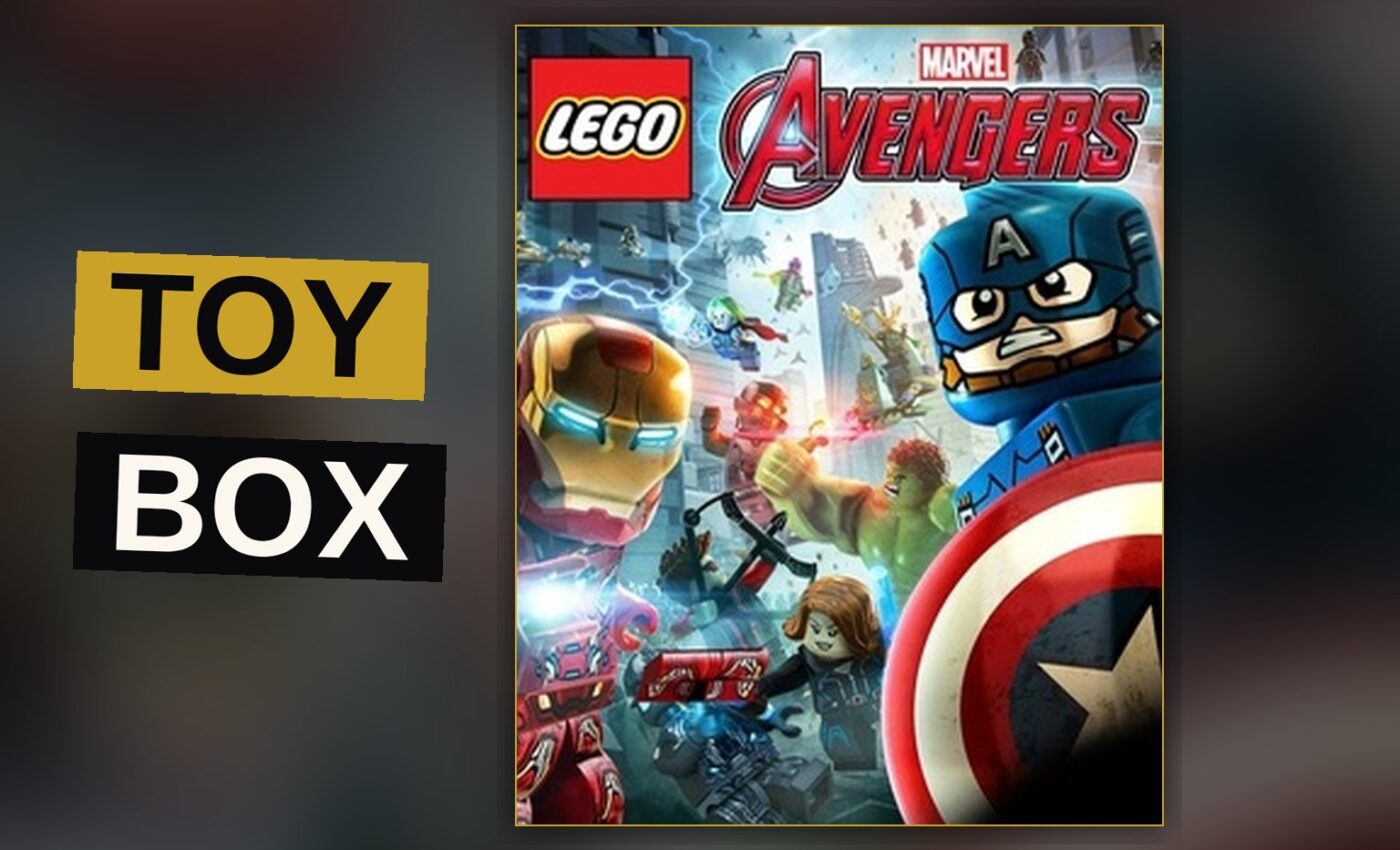
Lego Marvel’s Avengers is a game about assembling the pieces of a universe that already exists. It takes characters, locations and storylines from the Avengers films and Marvel Comics, and turns them into building blocks. The result is a game that is generous in scope but uneven in execution. Players get a vast toy box of heroes, villains and locations, but the glue holding it together sometimes fails.
Trailer, via IGDBcom.
The Toy Box Model
The game follows the established Lego formula: character selection, mission objectives, and a combination of combat, puzzle-solving and exploration. Players pick a team of characters, walk through a story mission, collect studs, and move on. The missions are short, mostly linear, and rarely ask for much more than following the yellow brick road.
Where the game excels is in variety. There are dozens of playable characters, each with their own abilities and moves. Captain America can throw his shield, Iron Man can fire missiles, Thor can summon lightning. The roster spans the Avengers, the Fantastic Four, the Guardians of the Galaxy, and more. That range gives the game a breadth that few other Lego titles attempt.
The levels themselves are built around familiar Marvel locations. New York City, Asgard, Wakanda, and the Negative Zone all appear. Each area is packed with collectibles, side quests and hidden objects, rewarding players who want to explore beyond the main path.
Story Missions
The main campaign is based on the events of the Avengers films, from the first movie to Age of Ultron. Missions follow key scenes from those films, letting players relive the destruction of New York, the Battle of the Avengers, and the final confrontation with Ultron. The story is told through dialogue bubbles and cutscenes, with a narrator who explains the action as it happens.
This approach works best when it is light. The game leans heavily on visual gags and pop culture references, which land well with players who know the source material. A scene where Spider-Man swings past the Statue of Liberty while a villain rants is pure fun. But the reliance on film references also means the game often feels like a retelling rather than a new adventure. Players who want a fresh story will find little here beyond the familiar plot beats.
The pacing suffers from repetition. Mission after mission follows a similar structure:
- Fight a group of enemies
- Activate a device
- Solve a puzzle
- Move to the next checkpoint
The game rarely changes up the formula, and the missions start to blend together after a dozen hours. Some players may find the middle stretch of the campaign tedious, even with the large cast of characters available.
Free Play Mode
Beyond the main story, the game offers a free play mode where players can build their own teams and roam the world. This mode lets players fly anywhere in the map, team up with friends, and create custom missions. It is a solid addition, though it lacks the depth of similar modes found in other Lego games.
The mode is mostly a sandbox for experimenting with character combinations. Players can test out which hero works best in a particular situation, or simply fly around and watch the city react to their presence. The lack of a proper editor limits what players can build, but the freedom to choose teams and destinations still adds replay value.
Performance Issues
Lego Marvel’s Avengers launched across multiple platforms, including PS3, PS4, 3DS, PC, Xbox One and Wii U. The version reviewed here is the PS4 edition, and it shows its age. The game runs at a low frame rate in many scenes, especially during busy combat sequences. Character models are blocky, textures are rough, and the lighting is inconsistent. These issues are not unique to the PS4 version; the game struggled with performance across most of its release platforms.
The loading times are also notable. Level transitions take several seconds, and the game frequently pauses to load assets mid-mission. This pause breaks immersion, especially during combat where the game needs to render a large number of characters and effects. The frame rate drops further during these transitions, making the experience feel less polished than it should.
The game’s technical problems are not minor complaints. They affect the core experience of playing the game, and they are present throughout the campaign. Players who expect a smooth, fast-paced action game will find the performance issues frustrating.
Collectibles and Side Content
The game is packed with content beyond the main story. Each level hides dozens of collectible items, including golden bricks, minikits, and character helmets. Finding these items requires careful exploration, and the game rewards players who look beyond the main path.
The collectibles add replay value, but they also extend the length of the game. Players who want to see everything will spend far more time than the main story suggests. The game does not hide these extras behind locked doors or paywalls, which is a fair approach, but the sheer volume of content can feel overwhelming.
Side missions are scattered throughout the world, offering brief adventures that tie into the main story. These missions are optional, but they flesh out the lore and provide additional context for the characters. Some players will enjoy these side trips, while others will skip them to keep moving forward.
Multiplayer and Co-op
The game supports multiplayer and co-op play, allowing friends to join in and complete missions together. The co-op mode works well, letting players share the screen and coordinate attacks. It is a welcome feature, though it is limited to local play rather than online matchmaking.
The game also includes a challenge mode that tests players’ skills. These challenges pit players against waves of enemies, timed objectives, and other obstacles. The challenge mode adds some replay value, but it is not as extensive as the main game’s content.
Final Score
Lego Marvel’s Avengers is a game that tries to do too much at once. Its ambition is clear: a vast roster of characters, a sprawling world, and a story tied to major film events. But the execution falls short in several areas. The performance issues, repetitive mission design, and uneven pacing drag down what could have been a strong entry in the series.
The game is not a failure, but it is not a standout either. It is a solid, if flawed, entry in the Lego franchise. Players who love Marvel will find plenty to enjoy, but those looking for a refined, polished experience will be disappointed.
The game’s strengths are its character roster and its collectible content. The weaknesses are its technical limitations and its repetitive mission structure. Taken together, these factors lead to a score of 6.8 out of 10.
That score reflects a game that delivers on quantity but struggles with quality. It is a game worth playing for fans of the genre, but it is not a game that stands out from the crowd. The toy box is full, but the glue holding it together is not always strong enough.
Get the Notebook.
The day's best stories and every fresh verdict, in plain English, in your inbox by seven. One email a day, no more.