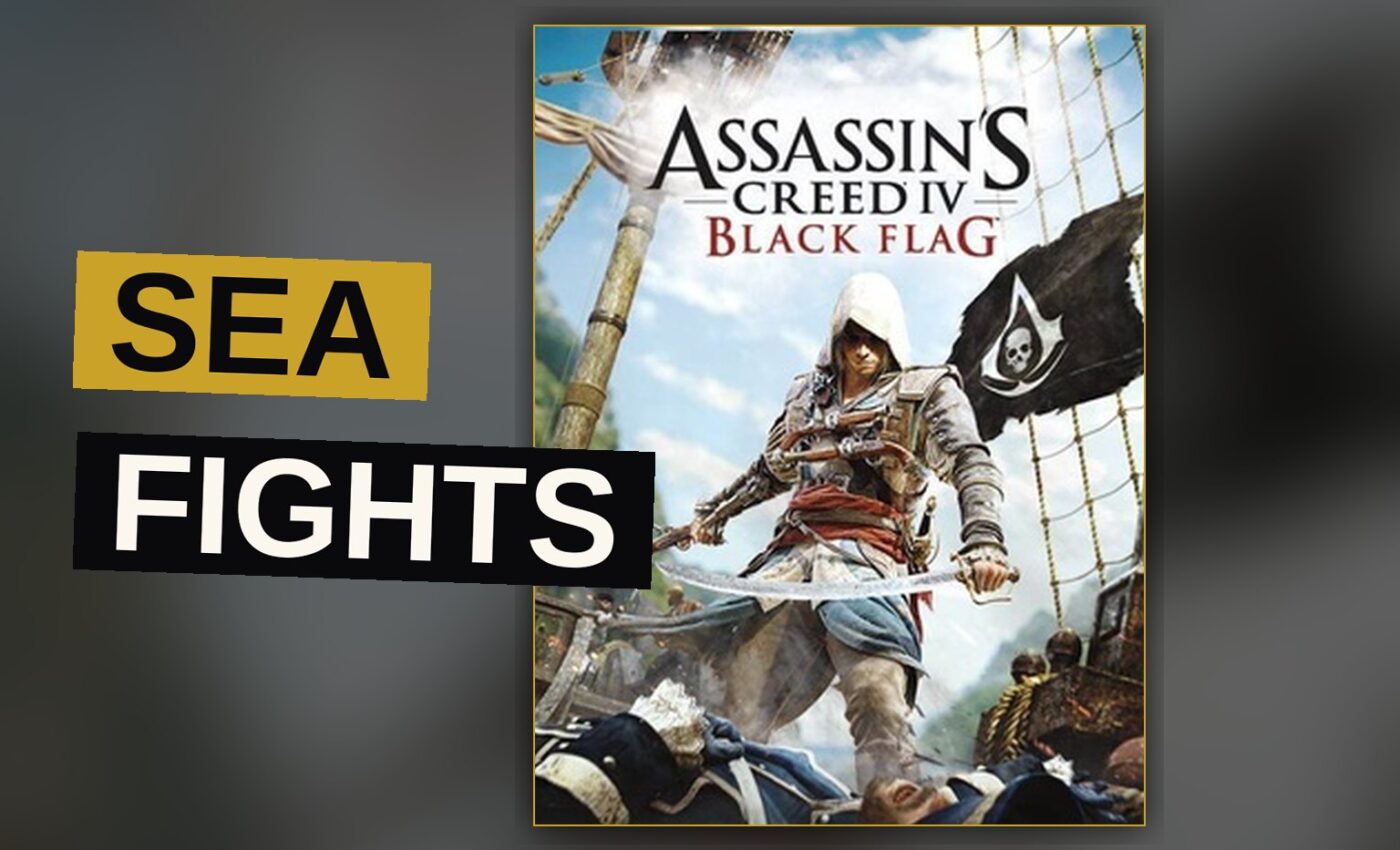
Assassin’s Creed IV Black Flag drops you into the Caribbean during the Golden Age of Piracy, and it mostly earns the praise it received back in 2013. Ubisoft Montreal built a game around a pirate named Edward Kenway who wants revenge on the Templars, and the result is the best entry in the series since the original. It is a sprawling adventure that asks you to sail, fight, and explore a world that feels genuinely lived-in. It is also a technical showcase that pushed the PS3 and PS4 hardware to their limits at the time.
The game follows Kenway as he captains the Jackdaw, a ship that becomes his base of operations across the open sea. You spend equal time on land, sneaking through cities like Havana and Nassau, and at sea, directing naval battles against enemy ships. That split structure is the core of the design, and it holds together better than any previous Assassin’s Creed installment.
Trailer, via IGDBcom.
The Jackdaw and Naval Combat
The ship itself is a character. You upgrade it with loot from sunken treasure and enemy vessels, making it faster, more maneuverable, and deadlier in battle. Naval combat is the highlight of the game. You direct broadsides, ram enemies, and board them with your crew. The pacing is frantic, and the sense of weight when two ships collide is satisfying.
The AI is smart enough to make the fights feel fair. Enemies will target your weak points, and you need to manage your resources carefully. Running low on cannonballs means you have to get creative. That tension carries over to the open ocean, where storms, pirates, and merchant convoys make every journey unpredictable.
Cities, Side Quests, and the Animus Problem
On land, the cities are dense and detailed. Havana is a hotbed of political intrigue, and Nassau is a lawless haven. Both are packed with side quests, collectibles, and hidden caches. The main story is solid, but the best moments come from wandering off the beaten path. You can find a smuggler’s den, a buried treasure map, or a letter from a past assassin.
The story is told through a framing device called the Animus, which shows Kenway’s memories to a present-day character. This is a familiar trick in the series, and it works here because Kenway is a compelling protagonist. He is a man of action, not a philosopher, and his desire for revenge drives the plot forward.
The voice acting is excellent. Patrick Wilkinson brings Kenway to life with a mix of charm and menace. The supporting cast, including the villainous Crawford Starrick, is well-drawn. The pacing is uneven, with some chapters dragging while others move at a breakneck speed.
Performance Across Platforms
The game launched on PS3, PS4, PC, and later on Stadia. The difference between the two consoles is stark. On PS3, the frame rate hovers around 30 frames per second, and the draw distance is limited. On PS4, the game runs at a smooth 60 frames per second, and the environment is far more detailed. The gap is a reminder of how much the hardware had changed in the years between the two systems.
The PC version ran at the highest settings, and it remains a strong option for those who want a steady frame rate. Stadia, the cloud-streaming service, delivered a playable experience, though it required a fast internet connection to avoid lag. The loading times on PS4 were notably shorter than on PS3, which made the game easier to jump back into.
Technical Issues
No game is perfect, and Black Flag has its share of problems. The stealth system, which is central to the land-based missions, is less refined than in other entries. Enemies can spot you from odd angles, and the game’s detection system is inconsistent. This is a step back from the precision of previous installments.
The camera can also be a problem, especially when climbing tall buildings or navigating narrow streets. It takes practice to learn the controls, and some players will find the early hours frustrating. The game’s difficulty curve is steep, and the later sections require a lot of patience.
Comparing the Platforms
| Platform | Frame Rate | Detail Level | Best For |
|---|---|---|---|
| PS3 | 30 FPS | Low | Casual play |
| PS4 | 60 FPS | High | Core gameplay |
| PC | Variable | High | Customization |
| Stadia | Variable | Medium | Streaming |
The table shows why the platform choice matters. If you want the best possible experience, PS4 is the way to go. If you want portability, Stadia works, though it is not ideal. The PC version offers the most flexibility, letting you tweak settings to match your hardware.
What Works
- The naval combat is the best in the series
- The cities are dense and full of life
- The Jackdaw upgrades give you a reason to explore
- The voice acting is strong across the board
What Does Not Work
- The stealth system is less refined than in other games
- The camera struggles in tight spaces
- Some side quests repeat the same formula
- The loading times on PS3 are slow
Final Word
Assassin’s Creed IV Black Flag is a confident, ambitious game that succeeds more often than it fails. Its strengths — the naval combat, the exploration, the setting — outweigh its weaknesses. The technical issues are real, but they do not spoil the experience. It is a game that rewards curiosity and punishes carelessness.
The game’s legacy is clear. It set the standard for open-world adventures, and its influence can be seen in countless titles that followed. It is a worthy addition to any collection, and it remains a great way to spend time in the Caribbean.