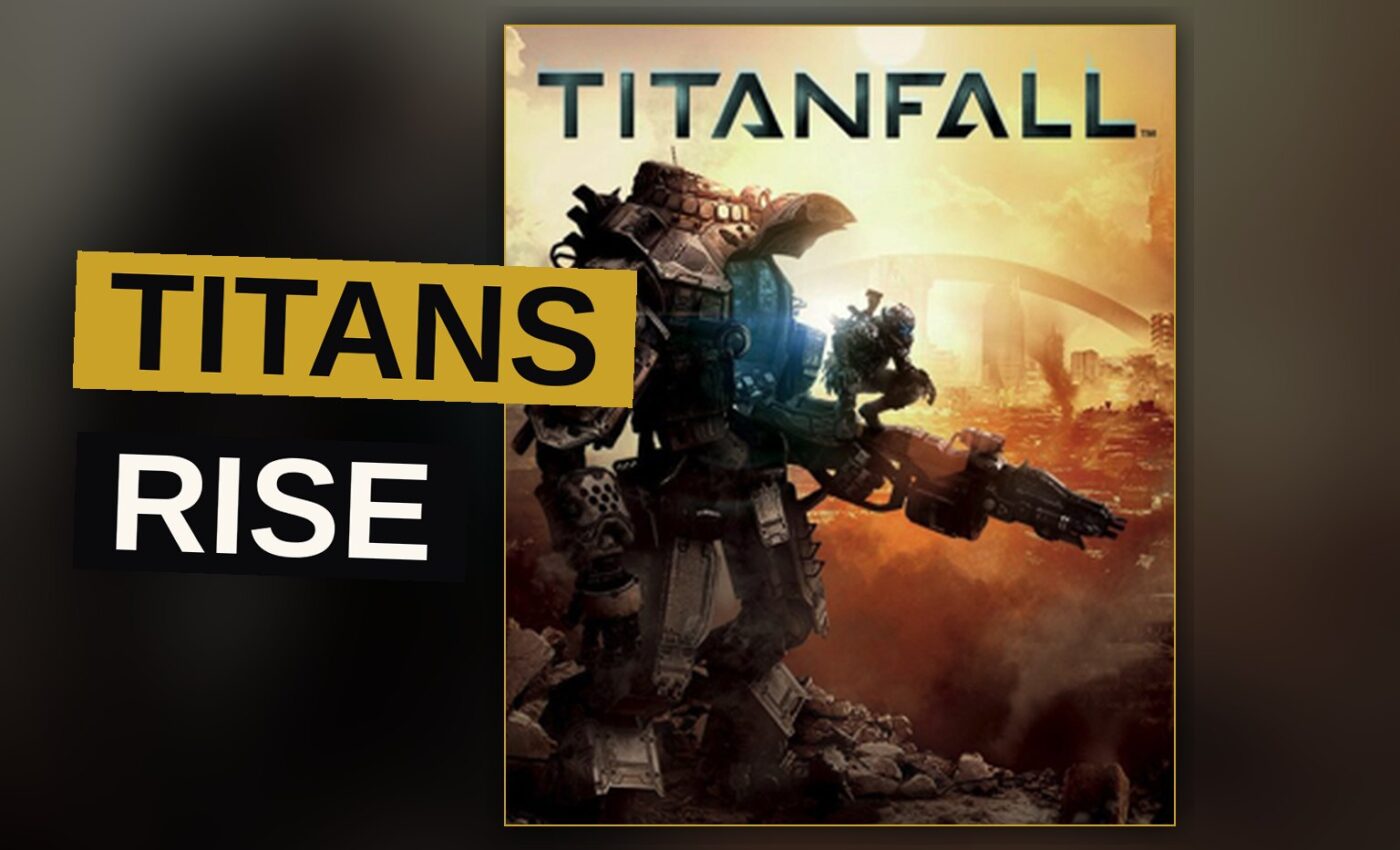
Respawn Entertainment’s debut is a shooter that refuses to stand still. Titanfall, released for Windows and Xbox One on March 11, 2014, with an Xbox 360 version ported by Bluepoint Games arriving April 8, puts players in six-on-six matches on the war-torn colonies of the Frontier. There is no offline mode, no split-screen, no LAN support. Online multiplayer is the whole game, and it is enough.
Trailer, via Titanfall Official.
Pilots Who Run on Walls
Players fight as free-running Pilots, agile foot soldiers who build momentum while sprinting, double jump with a jet pack, vault obstacles, glide ziplines, and chain combos together. The comparison to Tribes is fair. Pilot and Titan controls stay identical except in one place: the Pilot’s double jump becomes the Titan’s dash, because Titans cannot jump. It is a small design decision that keeps two very different ways of moving from feeling like two different games.
Standby for Titanfall
Titans deploy on a countdown timer. Kill other players and the clock runs down faster. When it hits zero, the game tells you to “standby for Titanfall,” and a mech drops from the sky inside a protective forcefield. The Titans sit somewhere between battle tanks and mecha: slower than Pilots, far better protected, armed with more destructive weapons and shields limited only by cooldown and reloading.
scale, verticality, and story
That is Respawn founder Vince Zampella’s description of what the game brings to multiplayer. He is right about the first two.
The Frontier and Its Full Combat Certification
The setting is the Frontier, the fringe of space exploration, where humanity’s colonies sit among uncharted worlds. Players fight as the Interstellar Manufacturing Corporation or the Frontier Militia. Titans descend from present-day military exoskeletons and see wide use beyond combat — cargo transport, deep space salvage, search and rescue. Pilots are graded by certifications, and the rarest is Full Combat Certification, a published series of tests. The fiction earns its place because it explains why these machines are everywhere.
Fifty Characters, One Match
Up to twelve human players drop onto a map, but up to 50 characters can be active in a single game. Computer-controlled soldiers fill out the populations, and that non-player activity is offloaded to Microsoft’s cloud computing services to protect local graphical performance. This is the smartest technical choice in Titanfall. The matches feel populated without asking twelve people to carry every fight.
Sixty Awards and a Real Foundation
Titanfall won over 60 awards at its E3 2013 reveal, including a record-breaking six E3 Critics Awards and “Best of Show” from several outlets, plus honors at Gamescom and the Tokyo Game Show. The 65-person project began in 2011 and drew on Blade Runner, Star Wars, Abrams Battle Tank, and Masamune Shirow of Ghost in the Shell. Those influences show, and they cohere.
What the Multiplayer-Only Bet Costs
The cutscenes, plot, character dialogue, and NPCs are all present, but they live inside online matches, and that is the compromise at the heart of Titanfall. The story never gets room to breathe, and anyone without a connection gets nothing at all. The movement and the Titan timer are strong enough to carry the game anyway.
Titanfall is the rare shooter where the best idea is not a weapon. It is the drop.
Get the Notebook.
The day's best stories and every fresh verdict, in plain English, in your inbox by seven. One email a day, no more.