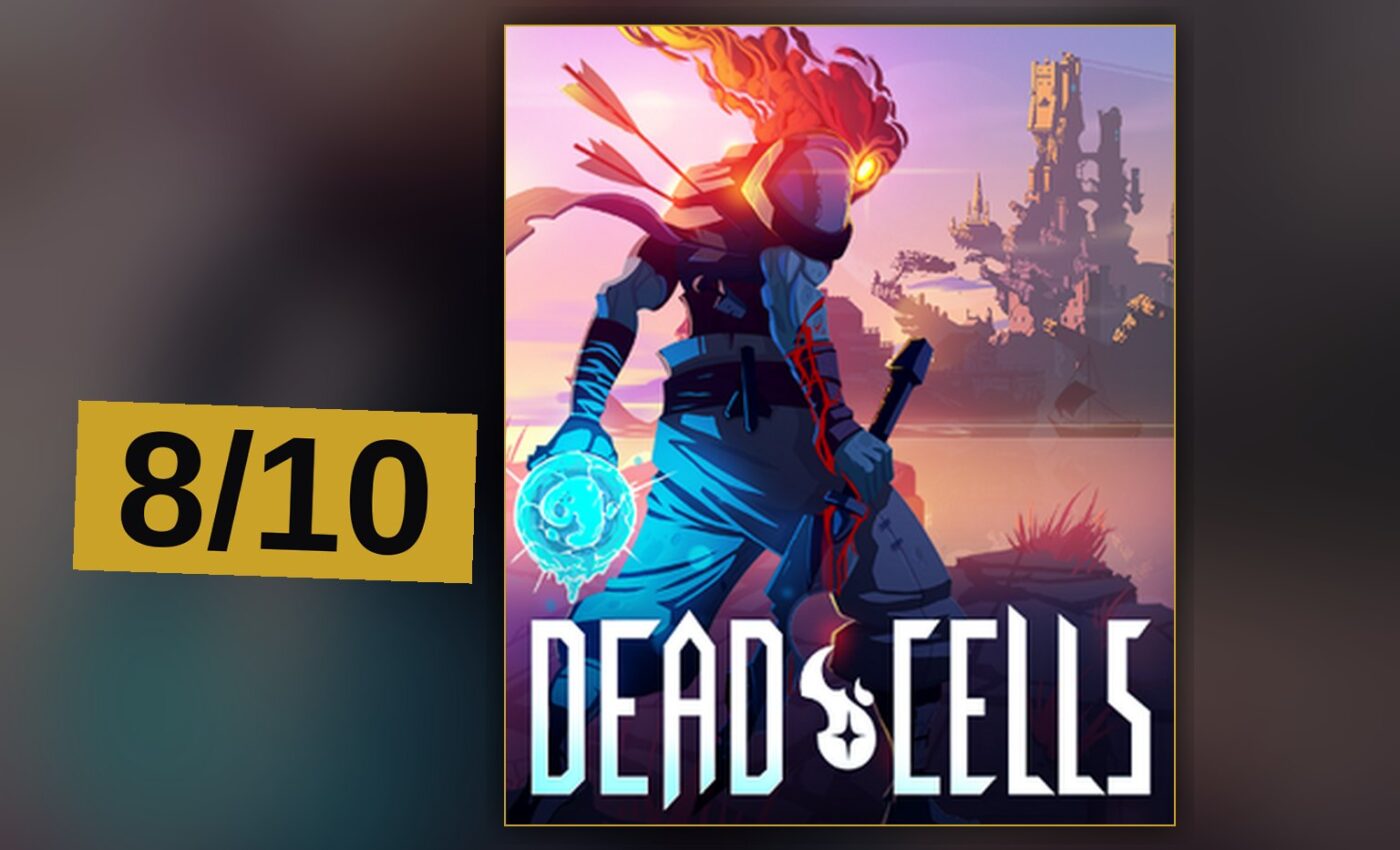
Dead Cells wastes no time explaining itself. You wake up as a head in a dungeon, you grab a body, and something with a sword comes at you. Motion Twin’s 2018 roguelike-Metroidvania shipped on August 7, 2018 for Linux, macOS, Nintendo Switch, PlayStation 4, Windows and Xbox One, and it remains one of the cleanest marriages of two genres that usually fight each other.
Trailer, via Motion Twin.
The Prisoner and the Malaise
The setup is thin on purpose. You control the Prisoner, an amorphous creature that possesses dead bodies in the depths of an island prison. The head cannot die. The bodies can. A soldier tells the Prisoner they can no longer die, and that is roughly the whole tutorial.
The island was once a mighty kingdom. A plague called “The Malaise” turned most of its citizens into mutated monsters. The Prisoner, suffering from amnesia, decides the fix is to kill the reclusive King. That is the goal, and the game never pretends it is more.
The Prisoner does not speak. Interactions with NPCs happen through gestures and body language, with occasional dialogue boxes showing the Prisoner’s thoughts. It is a smart restraint. A talking hero would have ruined this.
Swords, Bows, Shields and Traps
Combat is the reason to stay. The Prisoner dodges across the ground or jumps over attacks, and dodging into an enemy’s space lets you pass through them and strike from behind. Falling from a height lets you slam the ground to stun enemies — or land without getting stunned yourself.
Weapons break down into a few clear families:
- Swords and other melee weapons
- Bows
- Shields
- Placeable traps that harm enemies who come near them
The comparison to Dark Souls is fair. Enemies have behaviors you can learn, and death is not a failure state so much as the actual rhythm of the game. You will die a lot. The game expects it.
Between runs, Cells — the currency dropped by defeated foes — buy permanent upgrades. Potions that restore hit points. Extra weapons that may turn up randomly during a playthrough. The catch is that Cells can only be spent at the end of a dungeon section. Die before that and you lose every Cell you were carrying. Blueprints found inside dungeons must be carried out of the level to count.
A Schedule That Never Holds
Here is how a run actually paces out, and why the structure holds up:
| Stage | What you do | What you risk |
|---|---|---|
| Prisoners’ Quarters | Spend Cells with the Collector, pick a loadout | Nothing yet |
| Early dungeons | Learn enemy patterns, find blueprints | Every Cell on hand |
| Mid run | Stack weapons, traps, traversal Runes | A death erases the build |
| Throne room | Fight the comatose King | The whole attempt |
Levels are procedurally generated by merging predesigned sections in random configurations. That matters more than it sounds. The rooms are authored, not noise, so the randomization rearranges good pieces instead of inventing bad ones. New traversal abilities come from collectible Runes, which is the Metroidvania half of the deal — the map opens up as you gain the tools to cross it.
What the Ending Costs
The King fight ends badly for everyone. The Prisoner reaches the throne room and kills the comatose monarch, and the King’s corpse explodes violently, destroying the host body. The head crawls out through a fountain drain that leads back to the prison. The cycle starts again.
That ending is the whole thesis. Dead Cells is not about escaping. It is about the run, and the game is honest enough to say so.
The port history is worth noting for anyone deciding where to play. iOS arrived on August 28, 2019, Android in 2020, and a PlayStation 5 version was added on June 29, 2023. Evil Empire handled development duties on the updates and expansions that followed release, after Motion Twin’s original production began as a follow-up plan to their browser game Die2Nite — a project where they swapped cooperative play for single-player combat, taking inspiration from the Engineer class in Team Fortress 2.
Where Dead Cells falls short is where most roguelikes fall short. The procedural assembly keeps runs varied, but it also means the island rarely builds dread the way a hand-built map would. The story is delivered in fragments, and the fragments are thin. The Prisoner’s silence is a strength until it becomes a wall.
What carries it is the moment-to-moment. The dodge, the slam, the trap you placed two rooms ago finally paying off. That is the part worth watching, and it is the part that keeps pulling you back into the Prisoners’ Quarters for one more attempt.
Get the Notebook.
The day's best stories and every fresh verdict, in plain English, in your inbox by seven. One email a day, no more.