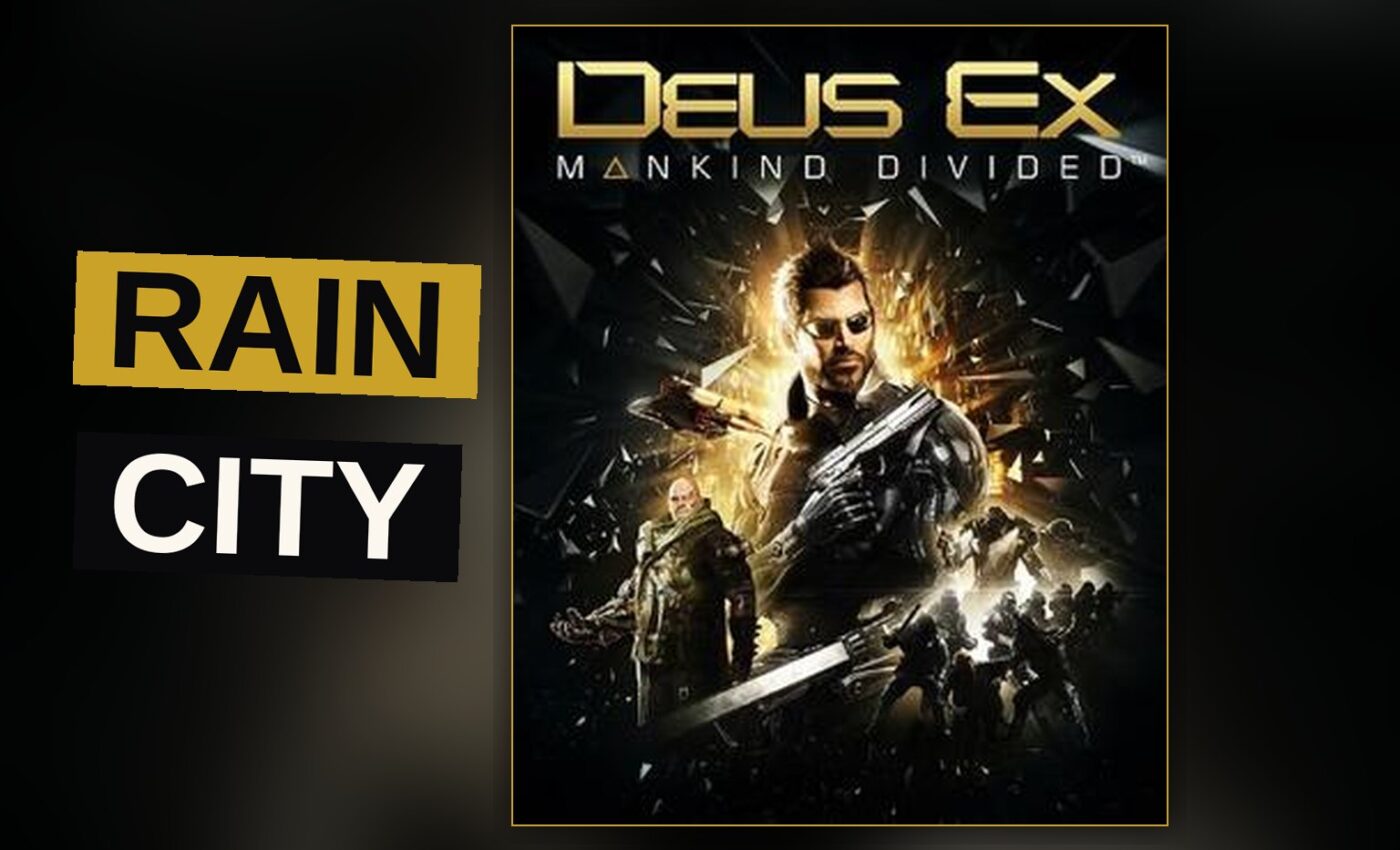
Deus Ex: Mankind Divided asks a simple question: what happens after the world decides who gets to live. The 2016 sequel picks up years after the events of Human Revolution, when augmented humans were stripped of rights, locked out of public spaces, and hunted through the streets of Prague. The answer is not pretty. It is a city full of fear, anger, and violence, and a game built around walking through it with a blade, a gun, or a conversation menu.
The game follows Adam Jensen, the augmented agent who survived the last crisis, as he investigates a terrorist attack that kills hundreds. Along the way, he meets old allies, new enemies, and a growing number of people who think he should be on the wrong side of the law. The plot moves fast, but it never loses sight of the central tension: augmentation is the cure for human suffering, and it is also the target of human rage.
Trailer, via IGDBcom.
Augmentation Returns With Teeth
The best thing about Deus Ex: Mankind Divided is the augmentation system. Players can hack security cameras, boost their reflexes, and drain energy from machines to power their attacks. This is not a small upgrade over the previous game. It is a full reworking of the core loop, one that rewards experimentation and punishes laziness.
Every mission offers multiple paths. You can sneak past guards with隐身术, knock them out with a melee strike, or shoot them down with a silenced pistol. The game tracks your approach and adjusts the difficulty accordingly. Walk in quietly and the alarms stay low. Walk in loud and the whole building knows you are there.
The systems are not perfect. Some augmentations feel underpowered compared to others, and the crafting system can be tedious. But the freedom itself is rare in games this size. Few titles let you choose your entire approach to a level and stick with it.
Prague Is A Character In Its Own Right
The setting deserves special attention. Prague is rendered in stunning detail, with neon-lit streets, rain-soaked alleys, and towering corporate spires. The city feels lived-in, full of small shops, hidden corners, and people going about their daily lives. The developers clearly spent time studying the real place, and it shows.
The districts are distinct. The wealthy neighborhoods are clean and bright, while the poorer areas are rundown and dim. The contrast is sharp, and it mirrors the game’s themes of inequality and exclusion. Walking through both in the same day is a powerful experience.
The rain effects deserve a mention too. They are some of the best in gaming, creating a wet, claustrophobic atmosphere that fits the tone perfectly.
Combat That Works, Mostly
Combat in Deus Ex: Mankind Divided is competent but not revolutionary. Enemies have health bars, dodge rolls, and cover systems. The shooting is serviceable, though the aiming can feel imprecise at times. What sets it apart is the ability to blend combat with stealth.
You can walk into a room full of guards, take them out one by one, or walk past them entirely. The game rarely forces you into a fight you don’t want, and that restraint is refreshing. When you do engage, the encounters are tense and rewarding.
The boss fights are a mixed bag. Some are memorable, like the early confrontation with a giant robot. Others feel rushed or unfair. The game’s difficulty curve is uneven, and some sections punish you for not being ready.
Story Threads That Pull Apart
The narrative is dense and sprawling. Multiple factions compete for control, and Jensen’s loyalties are tested at every turn. The game introduces new characters who become central to the plot, and it handles their arcs with care. The writing is sharp, and the dialogue options carry weight.
The game also returns to the themes of identity and choice that defined the series. Jensen’s own status as an augmented human puts him at odds with both sides, and the game never lets him forget it. The final act raises questions about free will and the nature of humanity, and it does so without lecturing.
There are moments where the pacing drags, and some plot threads feel unresolved. But the overall arc is strong, and the ending lands with real emotional weight.
Technical Rough Edges
The game is not without flaws. The frame rate drops during busy scenes, and the loading times can be long. The voice acting is solid but occasionally hammy, especially in the more dramatic sequences. The user interface is dated, and the menus feel clunky.
These issues are frustrating, but they do not break the game. They simply remind you that this is a product of its time, and the technical rough edges are part of its character.
The game is available on PS4, Linux, PC, and Mac. Performance varies across platforms, with PC offering the smoothest experience. The game supports mods, which adds replay value for dedicated players.
A Ranking Of The Best Missions
For those looking to see the best the game has to offer, here is a ranking of the standout missions:
- The assault on the Prague train station, where Jensen faces off against a massive enemy force.
- The infiltration of the corporate headquarters, a tense mission with multiple entry points.
- The rooftop chase sequence in the middle of the game, a thrilling set-piece.
- The stealth mission in the hospital, which requires careful timing and patience.
- The final confrontation with the main antagonist, a fitting conclusion to the story.
Each of these missions tests different skills and offers a unique perspective on the world. Played in order, they form the backbone of the game’s excellence.
A Schedule Of Key Events
The game’s story unfolds across several major events, each driving the plot forward. Here is a rough schedule of key moments:
| Event | Location |
|---|---|
| Attack on the conference hall | Prague |
| Investigation of the terrorist group | Various cities |
| Assault on the corporate tower | Prague |
| Rooftop chase sequence | Prague |
| Final confrontation with the antagonist | Prague |
This structure keeps the story moving, and it avoids the slow middle that plagues many sequels.
Deus Ex: Mankind Divided is a flawed but essential chapter in the series. It pushes the augmentation system further than ever before and creates a world worth exploring. The combat is solid, the setting is unforgettable, and the story carries genuine weight.
It is not a perfect game, but it is a very good one. The rough edges are forgivable because the core design is so strong. Anyone who enjoyed the original will find plenty to love here, and anyone who missed it the first time should start now.