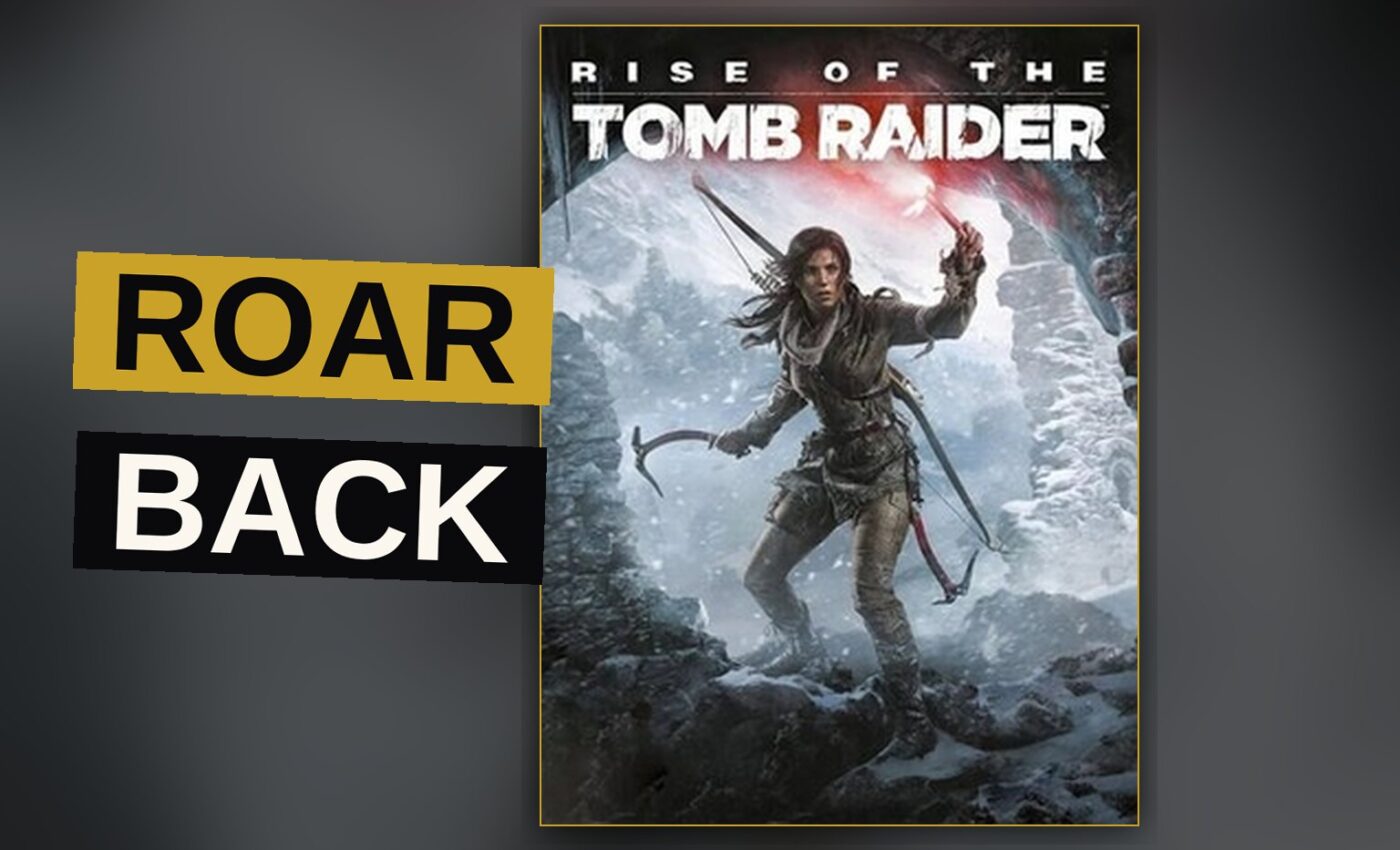
Rise of the Tomb Raider sends Lara Croft into Siberia with an ice axe, a bow and a dead father’s notebooks. Crystal Dynamics built it as the second chapter of the Survivor trilogy that began with 2013’s Tomb Raider, and it is the eleventh main entry in the series. It came out in 2015 under Microsoft Studios and Square Enix. It is the best game in that trilogy, and the one that finally understood what the reboot was for.
Trailer, via IGDBcom.
From Yamatai to the Forgotten Cities
The story picks up a year after Yamatai. Lara is struggling to explain what she saw on that island and is dealing with post-traumatic stress disorder. She turns to her late father Lord Croft’s research into the lost city of Kitezh and the promise of immortality attached to it.
Ana, her father’s partner, warns her that the obsession drove him to ruin and suicide. Lara ignores the warning and mounts an expedition to the Forgotten Cities in northwestern Syria, hunting the tomb of the Prophet of Constantinople.
The tomb is empty. Trinity arrives — an ancient order of knights turned paramilitary outfit that investigates the supernatural — led by a task force commander named Konstantin. Lara flees and spots a symbol cut into the tomb.
Back at Croft Manor she ties it to a book on Russian religious history in her father’s study. That is how she learns about the Divine Source, an artifact said to grant immortality.
This is a cleaner premise than the reboot had. It gives Lara a personal stake and a rival at the same time, and it lets the game move.
Trinity, the Remnants and the Divine Source
After an argument with her friend Jonah Maiava about whether the artifact is real, a Trinity assassin breaks into the manor and steals the book. The two head for Siberia.
An avalanche separates them on the mountain. Lara continues alone and finds Trinity has converted a Soviet-era installation into a base. She is caught trying to get the book back and imprisoned alongside Ana.
Konstantin strangles Ana slowly to force Lara to talk. When it becomes clear Lara does not know where the Source is, Ana admits she is a Trinity agent and that Konstantin is her brother. She invites Lara to join. Lara refuses and is sent to the Gulag cells.
She escapes with help from a man named Jacob, then allies with his people, the Remnants, descendants of Kitezh’s original inhabitants. Their goal and hers line up: reach the city before Trinity does.
The cast carries this. Camilla Luddington returned to do voice and motion-capture work for Lara. Rhianna Pratchett returned as writer. Bobby Tahouri replaced Jason Graves as composer.
Bows, Ice Axes and Three Skill Trees
Combat is the spine of Rise of the Tomb Raider. Lara carries assault rifles, shotguns and pistols, and some weapons have an alternate firing mode. Stealth is a real option rather than a token one: bows and arrows, distractions to pull enemy attention away from her, bushes to hide in.
The environment is a weapon too. She shoots explosive barrels, tears down rope-wrapped structures with rope arrows and ambushes from high ground. Her ice axe and combat knife handle melee.
Objectives, side content and kills all pay out experience points. Enough XP means a level-up and a skill point, spent across three trees:
- Brawler — weapon efficiency, abilities like retrieving arrows from corpses and a steady aim, plus resilience and combat skills such as dodge kill
- Hunter — advantages in dealing with environments and animals
- Survivor — a wide range including incendiary bombs and booby traps
Lara also learns new languages, which lets her find relics such as coins and trade them for new equipment. The semi-open hubs hold crafting materials, survival caches, relics and documents.
The best decision Crystal Dynamics made here was cutting back the quick time events from the 2013 game and putting puzzles and challenge tombs back in.
Kitezh, Built From Turkey
The team traveled to several locations in Turkey to design Kitezh, including Cappadocia, Istanbul and Ephesus. That research shows. The hubs feel like places rather than arenas.
Development followed closely on the 2013 reboot, and player feedback shaped it. The intent was a more personal experience, and the team wanted to explore the journey in which Lara becomes the tomb raider — determined to uncover more myths and to convince the world they are real.
Expeditions mode replaces traditional multiplayer. It lets you replay levels with modifiers. That is a smarter use of the budget than a competitive mode nobody asked for.
Here is how the three skill trees rank for a first run:
- Survivor — crafting and traps pay off earliest, when Lara is weakest and resources are thinnest
- Hunter — animal and environment skills keep the hubs from becoming a slog
- Brawler — combat perks matter most once the Trinity firefights get heavy in the back half
What Holds It Back
Rise of the Tomb Raider is a third-person action-adventure game, though the source lists first person and virtual reality among its perspectives, and it shipped across a wide spread of platforms: Xbox One, Xbox 360, PlayStation 4, PC, Mac, Linux, PlayStation VR and Google Stadia.
That spread is part of the problem. The game was published by Microsoft Studios and Square Enix Europe, and its exclusivity window made the launch messy for anyone who wanted it on a PlayStation.
The Trinity material is the weaker half of the story. Ana’s reveal lands, but the organization itself stays a paramilitary blur with a supernatural hobby. Konstantin is a threat, not a character.
The open hubs also create a rhythm problem. Scavenging for crafting materials sits awkwardly next to a plot about a race to an immortal city. The game wants urgency and keeps handing you a checklist.
None of that breaks it. The tombs are the reason to stay, and the game knows it.
The Verdict on Rise of the Tomb Raider
Here is the part that matters. Rise of the Tomb Raider is the moment the Survivor trilogy figured out its own identity.
The 2013 reboot was a survival horror game wearing a Tomb Raider costume. This one is an adventure game again. It has tombs worth raiding, a hub structure that rewards looking around, and a Lara who is driven rather than merely traumatized.
The Syria opening is the strongest stretch in the game. It is short, it sets the stakes, and it ends with Trinity walking into frame. From there the Siberian wilderness gives the game its best spaces.
The skill trees are conventional, but they are not noise. Brawler, Hunter and Survivor map onto the three ways most players actually approach the game, and the language-learning system gives collectibles a reason to exist beyond a percentage counter.
Expeditions is the quiet win. Replayable levels with modifiers extend the game without splitting the audience into a multiplayer pool that would empty in a month.
What keeps this from a higher score is the writing around Trinity. The game has a great antagonist in the idea of the Divine Source and a weaker one in the people chasing it. Ana’s turn is the exception, and it arrives late.
The platform situation also matters. A game this good should not have been a negotiation for half its audience.
Still, judged on what it is — a third-person action-adventure about an archaeologist racing a paramilitary order to a lost city — Rise of the Tomb Raider delivers. It is the high point of the Survivor trilogy, and the template the series should have kept.
Get the Notebook.
The day's best stories and every fresh verdict, in plain English, in your inbox by seven. One email a day, no more.