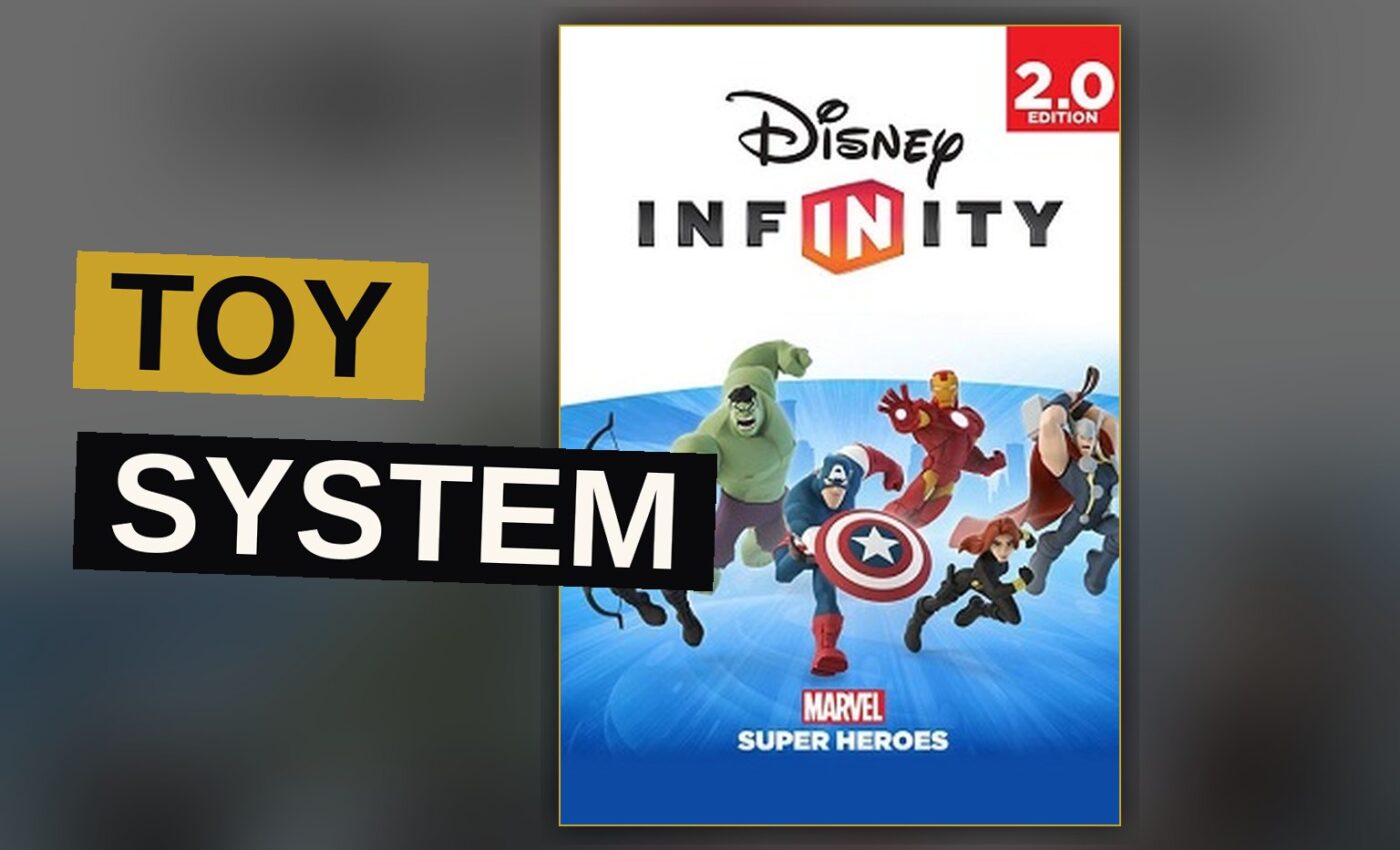
Disney Infinity 2.0: Marvel Super Heroes arrived in 2014 with a plastic problem and a comic-book solution. The toys-to-life game asks players to use real Marvel figures to activate storylines inside the game. The hook is simple: the figures you own are the characters you play.
Trailer, via PlayStation Europe.
Iron Man and the Avengers Play Set
The centerpiece is the Play Sets. These are original storylines set in the virtual worlds of Marvel franchises, and the first among them is The Avengers. Players take control of more than 20 Marvel characters, among them Captain America, Iron Man, Black Widow, Thor, Hulk and Hawkeye.
The work of writing those stories fell to Brian Michael Bendis, the Marvel comic writer. That credit matters more than most licensed-game credits do. A Play Set is a small campaign with missions, puzzles and enemies to fight, and it needs a reason to exist beyond the figures on the shelf. Bendis gives it one.
A Sandbox With Superheroes In It
Away from the Play Sets, Disney Infinity 2.0: Marvel Super Heroes is an open-world sandbox. The Toy Box mode lets players build and roam without a story pushing them forward. The game supports single player and multiplayer, and it plays from a third-person perspective.
The genre labels — adventure, sandbox, kids, open world — describe the thing honestly. The game carries a Kids theme, and the Marvel roster is aimed at players who already know these characters from comics and film.
The Platforms, and How Many There Are
Disney Infinity 2.0: Marvel Super Heroes shipped on PlayStation 3, PlayStation 4, Android, PC, iOS, Wii U, PlayStation Vita, Xbox 360 and Xbox One. That is nine platforms, and the spread tells you what the companies behind it were chasing.
Disney Interactive developed the game. Blind Squirrel Games, Avalanche Software and Heavy Iron Studios published it. The reach across consoles, mobile and PC was the point. A kid with an iPad and a kid with a PlayStation 4 could both play.
What the Toy Box Does Well
The Toy Box is where Disney Infinity 2.0: Marvel Super Heroes earns its keep. An open-world sandbox with Marvel characters in it is a durable idea. Players who do not care about the Avengers storyline can still build, roam and play with friends.
The multiplayer support helps here. Sandbox games live or die on whether a second player has something to do, and this one gives them the same tools as the first.
The Play Sets are the more authored half. Missions, puzzles, enemies and a story credited to a working comic writer. That combination is rarer than it should be in licensed games, which usually treat the license as enough.
Where the Game Stalls
The figure requirement is the wall. Disney Infinity 2.0: Marvel Super Heroes asks you to buy the game and then buy the characters you want to play as. More than 20 Marvel characters exist in the game, and the figures are how you reach them.
That is the model, not a flaw in the execution, and it is worth naming plainly. A player who wants to play as Thor needs Thor on the base.
What the Numbers Say
Disney Infinity 2.0: Marvel Super Heroes scores 7.4 out of 10. That figure comes from the IGDB critic aggregate, which covers 11 outlets.
The aggregate is a useful check on enthusiasm. It is not a rave, and it is not a dismissal. For a licensed toys-to-life game with this many platforms and this much merchandise attached, a score in the low sevens reads as a game that works without surprising anyone.
The Verdict on Disney Infinity 2.0: Marvel Super Heroes
Judged as a toys-to-life game, Disney Infinity 2.0: Marvel Super Heroes does the job. The Marvel roster is strong, the Bendis-written Play Sets give the Avengers material a real author, and the Toy Box remains a generous sandbox for players who want to build rather than follow a plot.
Judged as a game on its own, it is thinner. The nine-platform spread means the same game has to work on a Wii U and an iPad, and the figure requirement means the roster is not something you simply start with.
Here is the order that matters when weighing what the game gives you:
- The Play Sets, because they are the authored content and they carry the Bendis credit.
- The Toy Box, because it is the open-world sandbox that holds up after the storylines end.
- The Marvel roster of more than 20 characters, because it is the draw the figures and the marketing are built around.
- The nine-platform spread, because it is the widest reach and the least interesting thing about the game.
The ranking of what matters here is not close. The Play Sets are the reason to play, the Toy Box is the reason to stay, and the figures are the cost of entry. The 7.4 is fair, and it is fair for a specific reason: the game’s strongest asset is its writing, and its weakest is that the characters you want are sold separately.
If you are buying for a Marvel fan, the Avengers Play Set is the part to start with. The Bendis credit is the one piece of this game that was never going to be replicated by a competitor with a bigger toy shelf.
Get the Notebook.
The day's best stories and every fresh verdict, in plain English, in your inbox by seven. One email a day, no more.