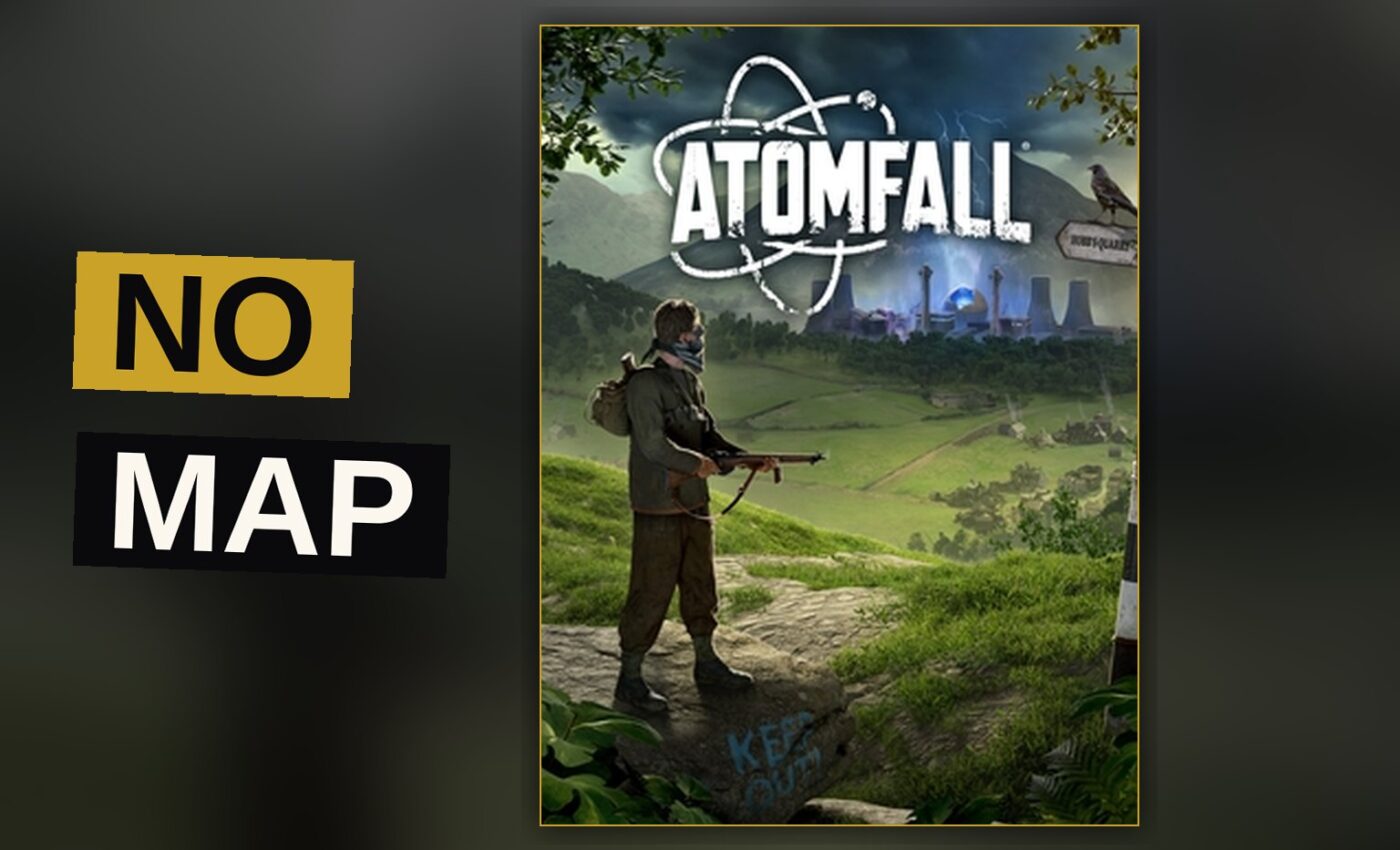
Rebellion Developments spent years building games about big, loud wars. Atomfall goes the other way. Released on 27 March 2025 for PlayStation 4, PlayStation 5, Windows, Xbox One and Xbox Series X/S, it drops you into a quarantined slice of the Lake District and asks you to walk it, listen to it, and decide who to trust. The survival-action label undersells it.
Trailer, via Rebellion.
Five Years Behind the Quarantine Wall
Atomfall is set in an alternative-history 1960s. The 1957 Windscale fire covered much of the Lake District in Cumberland with radioactive fallout, and the British government sealed the region behind a quarantine wall. You arrive five years after the event, on the wrong side of it. The area is run by the military and crowded with factions, in-fighting and a growing sense of fear.
You wake in bunker L8 of Slatten Dale with no memory of who you are. A wounded scientist hands you a keycard for the Interchange, the buried hub that once served the British Atomic Research Division, and tells you to reach it. Outside, a red telephone box rings. A voice on the line says four words: “Oberon must die.”
That is the hook, and Atomfall trusts it. There is no map marker shoving you forward, no cutscene explaining the meteorite called Oberon or the mineral Oberite pulled from it. You find those things the way the people trapped inside the zone found them.
Heart Rate, Ammunition and the Option to Walk Away
Combat here is a last resort, mostly because bullets are scarce. You scavenge resources and scraps to craft weapons, and you can use firearms when you must. Atomfall calls itself a survival game, but the only meters you manage are health and heart rate. Sprinting, fighting and kicking enemies push your pulse up, which darkens the screen and muffles the sound around you.
The game lets you finish it without killing anyone. It also lets you kill everyone. Both are real options, and neither is punished by the design.
Stealth works. Dialogue works. You talk to non-playable characters, pick responses, and collect leads that open new objectives. Once unlocked, those objectives can be pursued in any order, which makes the Lake District feel less like a checklist and more like a place you are slowly learning.
Wyndham Village, Protocol and the Voice in the Soil
The zone is full of people who have decided what the disaster meant. The trapped military reorganised into Protocol under Cpt. Grant Sims, which runs martial law in Wyndham village and operates Skethermoore Prison underground. The infected gather as Druids, claiming to hear the Voice in the Soil, secretly led by Mother Jago, a herbalist in Casterfell Woods who wants to embrace Oberon’s influence on Earth.
Others matter too. Joyce Tanner arrived with a convoy from outside. Dr. Alan Holder, the last surviving scientist from the Interchange, wants Oberon dead. Dr. Garrow, BARD’s head scientist, escaped the quarantine, came back for her research, and got locked up by Protocol for it.
| Character | Role | What they want |
|---|---|---|
| Cpt. Grant Sims | Leader of Protocol | Martial law across the zone |
| Mother Jago | Herbalist, secret Druid leader | To embrace Oberon |
| Dr. Alan Holder | Surviving Interchange scientist | To kill Oberon |
| Joyce Tanner | Convoy member from outside | Unclear allegiance |
Smaller figures fill the edges: Iris Baxter, the village baker hunting a remedy for her infected husband; Alf Buckshaw, who owns the Grendel’s Head pub and plots rebellion; Vicar McHenry, helping Dr. Moore in the church cellar against the Druids. They give quests and trade goods. They do not change how the story ends.
Atomic Batteries and the Road to the Dig Site
The Interchange needs power. Its data centers cannot run on what is left, so you hunt atomic batteries — scavenged, traded for, or pulled off the robots still walking the zone. You also need a signal redirector from Skethermoore Prison to push the signals back to the control room.
Once the Interchange is live, the way opens to the Oberon dig site beneath the Windscale plant. There you harvest a sample and make a choice: destroy it with explosives or poison, or enrich it with growth stimulant. Follow a key character’s orders and you disobey the others. That is the design’s sharpest rule, and it holds all the way to the end.
The endings split hard. Oberon can die and you can escape the quarantine, or get kidnapped instead. Oberon can grow stronger, and you can become one with the Voice in the Soil. Atomfall does not tell you which is correct.
What Atomfall Gets Right
The Lake District is a series of interconnected areas you can wander freely, and the game does not fence you in. Objectives unlock and then sit there, patient, while you decide what matters. The interference field is a fine piece of world-building: aircraft fall out of the sky, signals die at the border, and nobody outside knows what is happening in here. That single idea explains the quarantine better than any briefing would.
The heart-rate system is the smartest mechanic in the game. It turns every sprint and every scuffle into a cost, and it makes running away feel like a legitimate tactic rather than a failure. Ammunition scarcity does the same work for guns.
Where the Zone Sags
The trade-off is pace. A game that lets you go anywhere and do anything in any order will sometimes leave you going nowhere in particular. Atomfall’s leads system is meant to replace quest markers, but it can stall, and the middle hours can drift while you cross the same villages looking for a battery or a conversation you have not had yet.
The factions promise more than they deliver. Protocol, the Druids and the outsiders all have leaders with clear goals, and the game is honest that following one means defying the rest. But the smaller quest givers — Baxter, Buckshaw, McHenry — are scenery with dialogue attached. They color the zone. They do not bend it.
The Verdict on Atomfall
Atomfall is a survival game that respects your time and your intelligence, and occasionally tests your patience. Rebellion built a Britain that feels genuinely abandoned rather than merely decorated, and it built rules that make you think before you shoot, run or speak. The choice at the Oberon dig site lands because the game spent hours teaching you that every faction in the zone has a reason for what it wants.
The flaws are real but they are the flaws of ambition, not of laziness. A tighter middle act and side characters who actually change the ending would have pushed this higher. What is here is worth the walk.
7.5 of 10.
Get the Notebook.
The day's best stories and every fresh verdict, in plain English, in your inbox by seven. One email a day, no more.