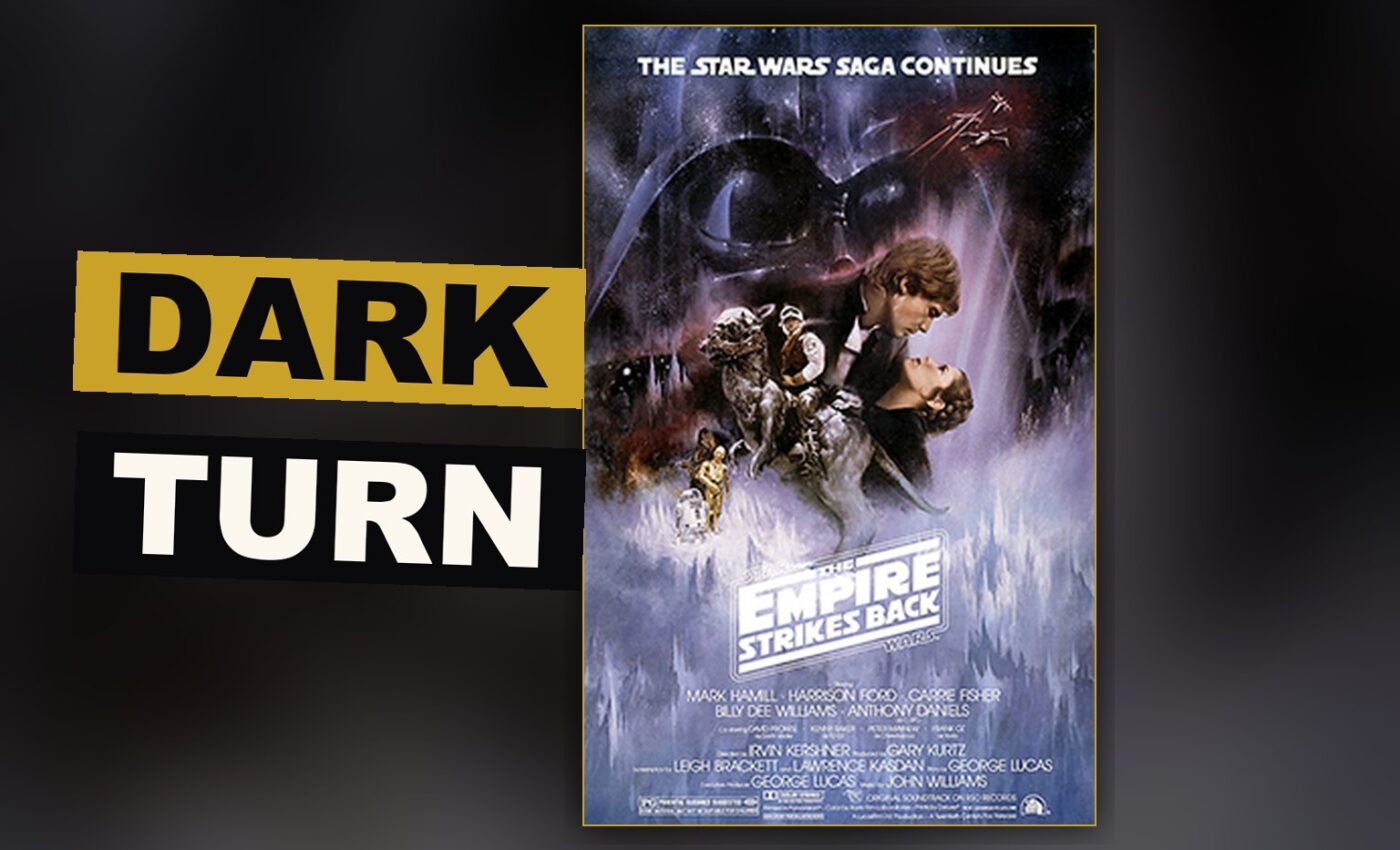
The Empire Strikes Back returns to screens as the second chapter in the imaginative film series directed by Irvin Kershner. The film opened in 1980, following the surviving fighters who must run and conceal themselves after an attack on their base on an ice world. The film trades the hopefulness of the earlier film for something colder and harder, and that change is what makes it work.
The Opening Attack
The first act throws the fighters into disorder. Enemy walkers cross the snow, the young hero is forced down, and the group splits into two paths: one toward a wet, low world far away, the other toward a floating city in the clouds. Kershner keeps both threads moving at a steady pace, never letting either feel like a side path.
On the wet, low world, the young hero trains under a small, wise teacher, a character whose introduction changes how the audience understands the strange power at the heart of the story. The scenes are quiet, calm, and patient. That patience pays off.
The Pilot and the Princess
The pilot and the princess carry the other half of the film, and their scenes together give The Empire Strikes Back its best lines. The two actors play off each other with a friction that reads as real. A new figure arrives at the floating city, charming and hard to read, and his introduction adds a new kind of doubt: is he friend, or is he a problem.
The final scene, a fight between the young hero and the masked enemy, lands because everything before it earns the weight of that moment.
Running Order
Here is how the film’s major scenes unfold:
| Scene | Place | Key Figures |
|---|---|---|
| Opening attack | Ice world | The young hero, the pilot, the fighters |
| Escape and split | Open space | The pilot, the princess, the loyal companion |
| Training | Wet, low world | The young hero, the small teacher |
| Arrival | Floating city | The pilot, the princess, the new ally |
| Fight | Floating city | The young hero, the masked enemy |
That arrangement, moving between two places and two tones, keeps the film from ever feeling like a simple middle chapter.
The score by John Williams does heavy lifting throughout, particularly in the final fight, where the music carries information the lines keep back.
Where It Lands
The Empire Strikes Back is not a bigger film than the one before it. It is a darker one, and that darkness is deliberate. Kershner lets loss sit on screen without rushing to fix it. The fighters lose. The pilot is taken. The young hero learns something about his own family that changes the shape of the whole story.
That willingness to end on loss, rather than triumph, is what has kept the film talked about for decades. It does not resolve. It makes things harder.
The Empire Strikes Back earns its reputation as the strongest film in the series, and it holds up scene by scene, performance by performance.