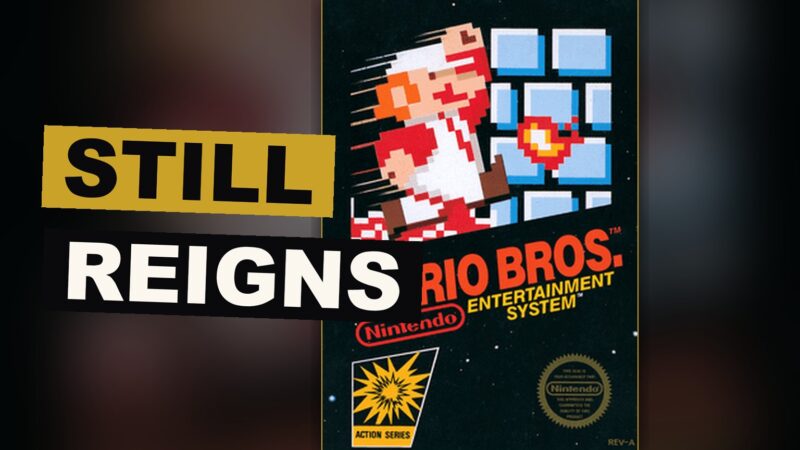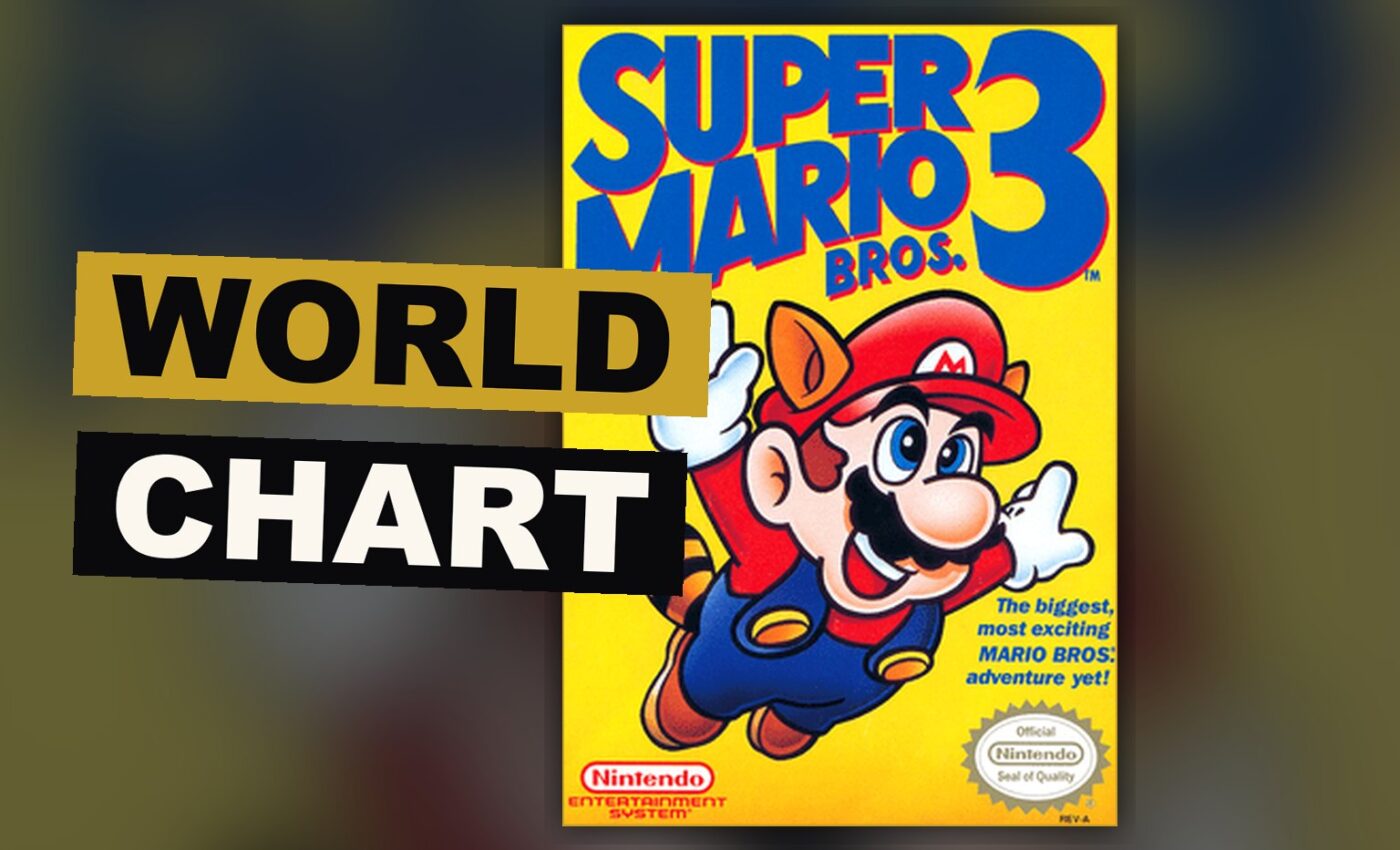
Super Mario Bros. 3 did not arrive on the NES in 1993. That was the Super NES remaster, folded into the Super Mario All-Stars bundle. The game that changed what a platformer could be came out in Japan on October 23, 1988, reached North America on February 12, 1990, and landed in Europe on August 29, 1991. More than 17 million copies sold worldwide make it the third best-selling NES game ever. It is also, by any fair measure, the best thing ever released on the platform.
A Stage Play You Could Hold in Two Hands
Shigeru Miyamoto has said Super Mario Bros. 3 was conceived as a stage play. You can see it before you press start: a curtain draws open on the title screen. In the original NES version, objects hang from off-screen catwalks. Some are bolted to the background. Some cast shadows on the skyline. When Mario finishes a level, he walks off the stage.
That single idea explains why the game still feels different from everything that followed it. Miyamoto and Takashi Tezuka led development at Nintendo Entertainment Analysis and Development, and they built a world that knows it is being watched. The curtain, the catwalks, the exit walk — none of it is decoration. It is the game telling you that a level is a scene, and that a scene ends.
Eight Kingdoms, One Map, No Wasted Steps
The structure is eight kingdoms, each split into multiple levels. The first world is grass. The second, Desert Land, runs on sand and pyramids. The fourth, Giant Land, doubles the height and width of its obstacles and enemies. You move between them on an overworld map, an overhead view of the current kingdom with paths that branch from the entrance to a castle.
Those paths connect to action panels, fortresses and other icons. They let you take different routes to the same goal. Step onto a panel or a fortress and you enter the course — a linear stage full of enemies and obstacles. Most of the game happens there: dashing, jumping, flying, swimming, dodging or stomping whatever is in front of you.
The map is the quiet revolution. It turns a run of levels into a journey with choices, and it gives failure a geography. You always know where you are and how far you have come.
The Suit That Taught Mario to Fly
The running and jumping carry over from Super Mario Bros., The Lost Levels and Super Mario Bros. 2. What is new is everything else. Mario and Luigi slide down slopes. They pick up and throw certain items. They climb vines freely.
Then there are the power-ups. The Super Leaf and the Tanooki Suit let Mario fly and float. Flight is not a gimmick here. It changes how you read a level, because the ceiling is no longer a wall. A stage that looked like a corridor becomes a room with a second floor.
The game also introduced two things that never left the series: Bowser’s children, the Koopalings, and the world map itself. Both arrived here first, and both still shape how a Super Mario game is built.
Seven Kings, Seven Wands, One Kidnapping
The plot lives in the instruction booklet, and it is worth restating plainly. In the Mushroom World, Bowser’s seven children conquer the seven kingdoms. In each one, a Koopaling steals the king’s magical wand and uses it to turn the king into an animal.
Princess Toadstool hears what Bowser has done and sends Mario and Luigi to each kingdom. Their job is to retrieve the stolen wand and restore the king. After the first six rescues, Toadstool sends notes and special items. After the seventh, the note comes from Bowser instead. He boasts that he has kidnapped Toadstool and imprisoned her in the castle of his own realm, Dark Land.
The brothers cross Dark Land, enter the castle, and beat Bowser in a battle. The game ends with Toadstool freed. It is a thin story, told in text, and it does not need to be more. The levels are the argument.
What the Game Asks of You
Super Mario Bros. 3 was praised for its challenging gameplay, and the praise was earned. The difficulty curve is not a ramp. It is a set of stairs with gaps in it. Desert Land will teach you patience. Giant Land will teach you scale, because an enemy twice your size changes the math of a jump.
Players start with a set number of lives and can earn more by collecting green spotted 1-Up mushrooms. That economy matters. It makes you careful in a way that modern checkpoint-heavy platformers never ask you to be.
The controls are exact. The physics are readable. When you die, you know why, and that is the whole contract of a great platformer.
The 1993 Remaster and What It Cost
The 1993 Super NES version is a remaster of the original, released exclusively inside the Super Mario All-Stars bundle. It runs on the Super Nintendo Entertainment System and the Super Famicom. It is not a separate game you could buy on its own.
That matters for anyone tracing the history. The 1993 release is how a generation met Super Mario Bros. 3, but it is not the version that earned the reputation. The NES original is. A 2003 remake followed for the Game Boy Advance as Super Mario Advance 4: Super Mario Bros. 3, and later rereleases arrived on the Virtual Console for Wii, Wii U and 3DS.
For the record, the original release schedule:
| Region | Date |
|---|---|
| Japan | October 23, 1988 |
| North America | February 12, 1990 |
| Europe | August 29, 1991 |
And the remakes, in order:
- Super NES, inside Super Mario All-Stars, 1993
- Game Boy Advance, as Super Mario Advance 4: Super Mario Bros. 3, 2003
- Virtual Console, Wii, Wii U and 3DS
Why It Still Holds
Super Mario Bros. 3 is regarded as one of the greatest video games ever made and the greatest title released on the NES. That is not nostalgia talking. It is structure.
The game has no filler. Eight kingdoms, each with a distinct visual theme, each teaching a different lesson. A map that gives you routes instead of a corridor. Power-ups that expand what a level can be rather than just making you stronger. A stage-play frame that turns every level into a scene with an entrance and an exit.
The animated television series from DIC Entertainment followed. The game was advertised during the final scene of the 1989 film The Wizard. None of that is why it lasts.
What lasts is the Tanooki Suit, the Koopalings, the world map, and the feeling of walking off the stage after a level you barely survived. Super Mario Bros. 3 set the template the series still uses, and it did it on hardware that had no business running something this precise. The 1993 remaster is a fine way to play it. The 1988 original is the reason to.
Get the Notebook.
The day's best stories and every fresh verdict, in plain English, in your inbox by seven. One email a day, no more.