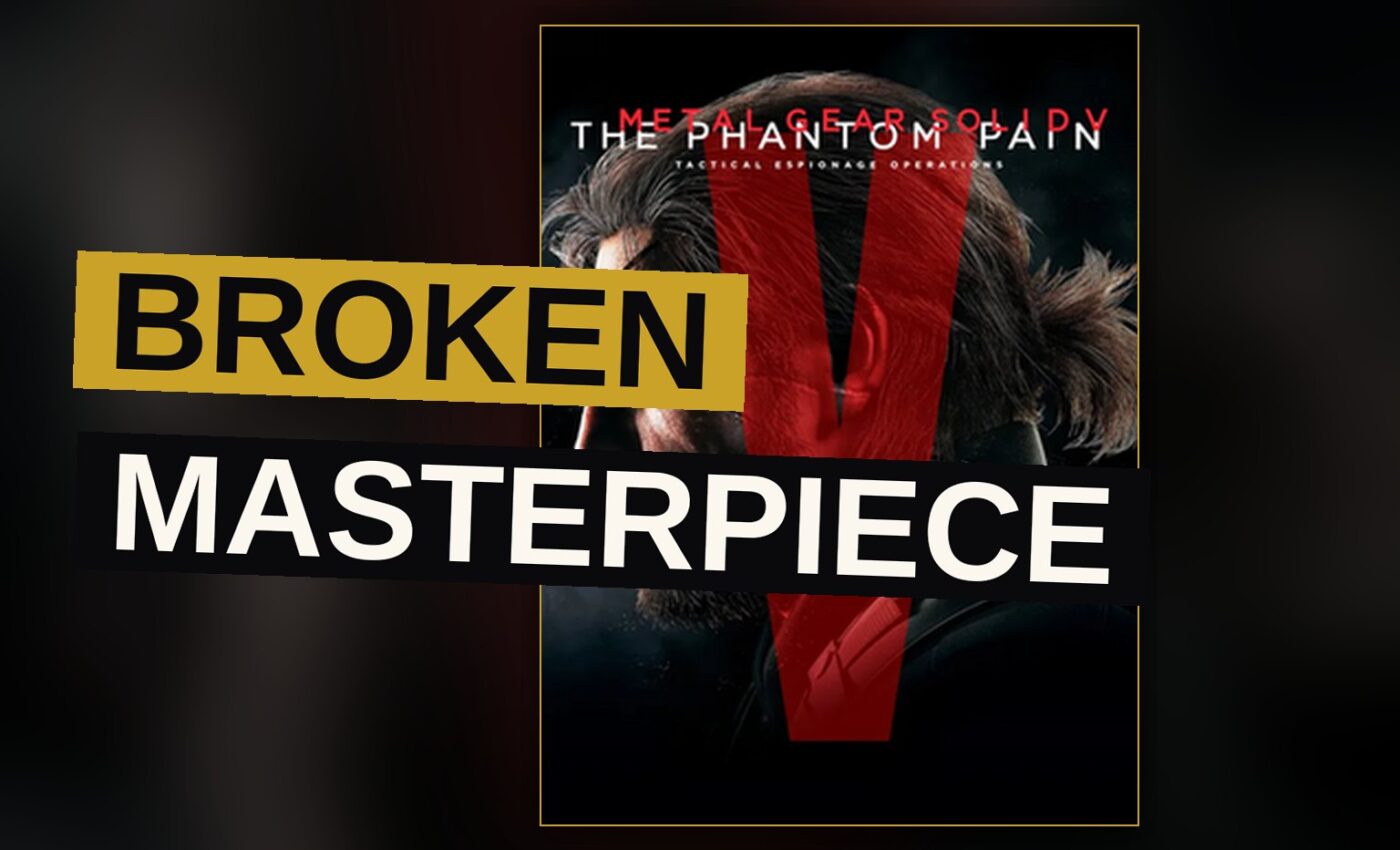
Metal Gear Solid V: The Phantom Pain is a game about unfinished business. It is also the most complete open-world stealth game ever built. Released in 2015 for PS3, PS4, PC, and Xbox 360, it closes the loop on Hideo Kojima’s long-running series while leaving its own scars. The result is a masterpiece with a missing limb.
That missing limb is the story. It is famously incomplete, its third act cut short by the developer’s split from Konami. Narrative threads dangle. Characters vanish without resolution. The central villain, Skull Face, appears, delivers one of the most chilling monologues in the series, and then is gone. Frustrating, yet strangely fitting: a game about loss that is itself a loss.
Trailer, via KONAMI公式.
An Open World That Works
The game drops you into Afghanistan and Africa, sprawling maps that are not empty — a toy box, not a theme park. Every outpost, guard post, and road is a puzzle, approachable from any angle: go in at night with a silenced tranq pistol, or call in an airstrike. The game never punishes your method.
The Fulton recovery system is the heart of it: attach a balloon to a soldier, a vehicle, or even a shipping container, and it lifts off to Mother Base, which grows with every extraction — new platforms, new staff, new gear. Infiltrate, extract, upgrade, repeat: the most addictive loop in the genre.
Quiet and the Companions
The rotating cast of companions each changes how you play: DD the dog marks enemies, D-Horse gets you across the map, and the walker gear is a mini-mech. The standout is Quiet, a sniper who cannot speak.
Quiet is controversial: she is dressed in almost nothing, and the camera lingers on her. But her gameplay is superb — she picks off enemies from a distance, covers your flanks, and creates the best buddy dynamic in the series. Her story arc, told mostly through optional missions, is one of the few emotionally complete pieces in the game.
Combat and Stealth
Gunplay is tight. Weapons have weight. Recoil is manageable. The slow-motion reflex mode gives you a split second to react when spotted — forgiving, but never cheap. The enemy AI is sharp: they call for backup, flank, use night vision, and learn your habits if you rely on the same tricks.
Stealth is the real star. Crouch, crawl, hide under a bed, or hold a guard at gunpoint — the mechanics are fluid. The game rewards patience and punishes recklessness, but never forces one style. You can go loud with a rocket launcher and still finish every mission. The freedom is the point.
Ranking the Missions
The mission structure is uneven, and worth ranking.
- “V” — the prologue. Linear, bloody, and a perfect hook.
- “Where Do the Bees Sleep?” — a sniper duel that tests your patience and skill.
- “The War Economy” — a sprawling infiltration that shows off the map.
- “Skull Face” — the narrative peak, with a quiet, horrible payoff.
- “A Quiet Exit” — an escort mission that drags.
- “Total Stealth” replays — padding, pure and simple.
The best missions let the systems breathe; the worst force a scripted sequence. It is at its best trusting you to make your own plan.
Comparing the Versions
The four platforms are not equal.
| Platform | Performance | Visuals | Notes |
|---|---|---|---|
| PS4 | 60 fps | Sharp | The best console version |
| PC | 60+ fps | Best overall | Mods and max settings |
| PS3 | 30 fps | Soft | Playable, but dated |
| Xbox 360 | 30 fps | Soft | Same as PS3, fewer effects |
The PS4 and PC versions are the ones to play. The last-gen ports are functional but lose the game’s sense of scale: draw distance suffers, and the frame rate dips during firefights.
Audio and Silence
The soundtrack is excellent: licensed 1980s songs play from your cassette player, and “The Man Who Sold the World” is used to devastating effect. Ambient sound is precise — footsteps crunch, wind howls, gunfire cracks.
Silence is the real tool: quiet moments build tension. You hear a guard’s radio chatter before you see him, a helicopter long before it arrives. The audio design is a masterclass in anticipation.
The Pain and the Pleasure
Metal Gear Solid V: The Phantom Pain is a broken masterpiece. Its story is incomplete, its characters underserved, its final act missing. But its gameplay is flawless. It is the best stealth game ever made, and one of the best open-world games ever made. The pain is real, but so is the pleasure.
You will not forget it, even when it forgets itself.
Get the Notebook.
The day's best stories and every fresh verdict, in plain English, in your inbox by seven. One email a day, no more.