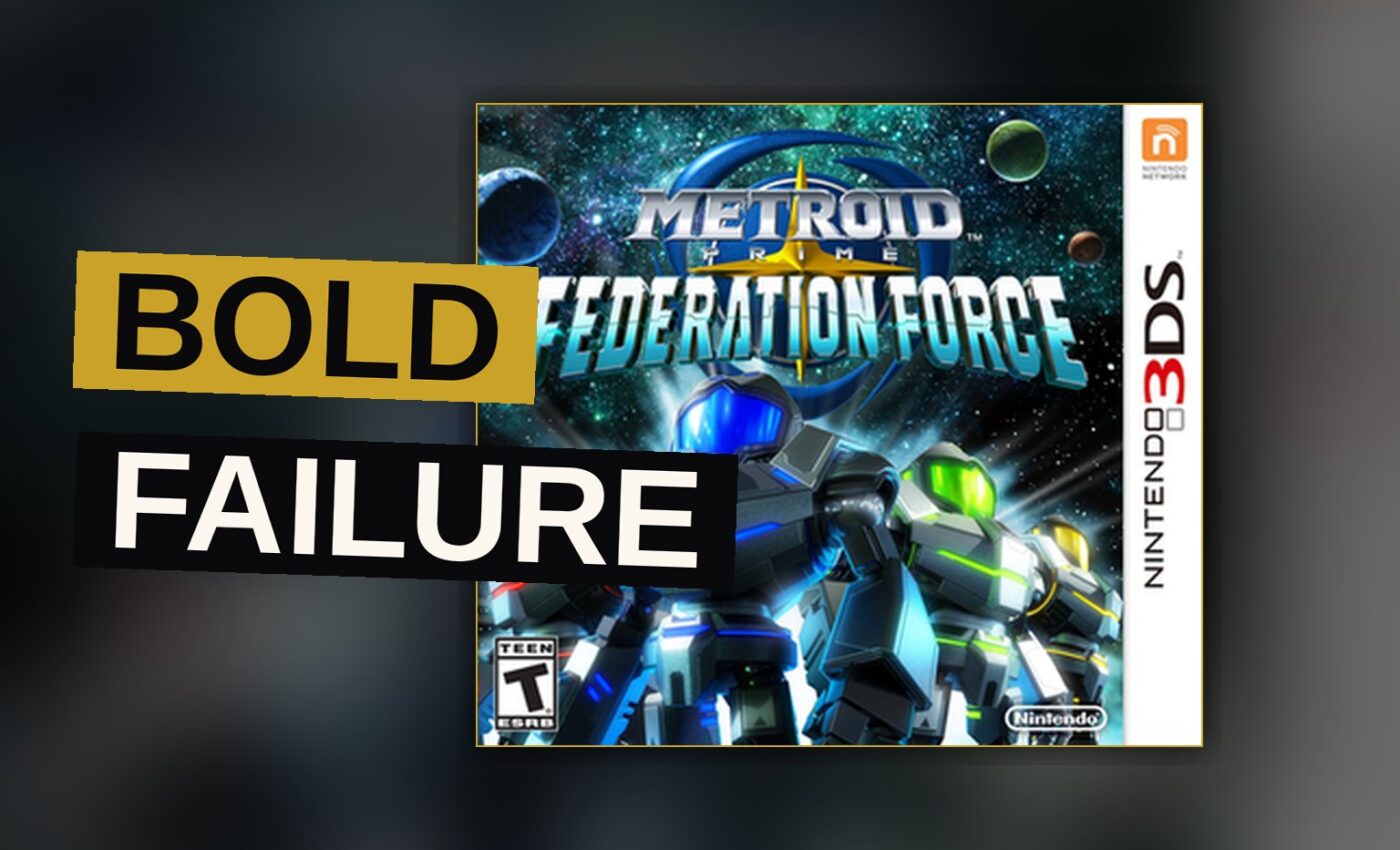
Metroid Prime: Federation Force arrives on 3DS as a strange detour in the series. It is not a Metroid game in the way fans expect. It is a multiplayer shooter built around teams of three bounty hunters, and it trades the series’ tense, solitary exploration for fast, chaotic combat. The shift is bold, and it is also deeply divisive.
The game splits players into three-man squads tasked with clearing out Pirate forces across a series of maps. The core loop is simple: gather intel, eliminate enemies, secure objectives, and hold out against Pirate counterattacks. It sounds familiar because it is. This is not a new idea, and the game never tries to disguise that.
Trailer, via Nintendo of America.
The Bounty Hunter Teams
Each player takes on a role within their squad: Scout, Engineer, and Gunner. The Scout spots enemies and scans objects to reveal hidden paths. The Engineer repairs shields and boosts squad speed. The Gunner deals damage and clears crowds. The roles are distinct, and they push players toward a shared sense of purpose. That is the game’s best idea.
But the roles are also limited. A Scout who wants to deal damage is stuck scanning objects instead of shooting. A Gunner who wants to help heal the team can only repair their own gear. The system rewards cooperation, but it punishes players who want to break free of their assigned duties.
Classic Metroid Locations
The maps themselves are drawn from classic Metroid locations. Players move through Brinstar, Norfa, and other familiar names, though the design is far less elaborate than what players know from the main games. The levels are linear, with clear paths and few secrets to find. That simplicity is a relief after years of dense, layered worlds, but it also strips away the series’ identity.
Shooting, Shields, and the Pirate Forces
Combat is fast and loud. Players move quickly, dodge enemy attacks, and fire at Pirates while calling out their positions to teammates. The shield mechanic is central: players build up a shield over time, which can be used to block attacks or boost movement. It adds a layer of risk management, since holding a full shield means losing the benefit of moving faster.
The Pirate forces are generic foes dressed in pirate uniforms. They do not feel like the alien threats of earlier Metroid games. They are obstacles, not memorable villains. The game leans heavily on spectacle over substance, and that is a problem when the spectacle is not particularly memorable.
“It is a bold experiment that fails to land.”
That line captures the game’s central tension. It is a bold experiment in multiplayer design, but the execution falls short of the ambition.
What Works
The game’s strengths are its multiplayer systems and its sense of teamwork. Players who commit to their roles and communicate with each other tend to have positive experiences. The game rewards coordination, and it is at its best when a squad works together.
The map design is also worth noting. While it lacks the depth of mainline Metroid levels, the layouts are readable and fair. Objectives are easy to locate, and the pacing keeps matches moving. There is little room for wandering or getting lost, which suits the game’s focus on fast play.
The presentation is solid. Character models are detailed, and the environments are rendered with care. The game does not look revolutionary, but it looks competent, and that counts for something in a genre that often relies on spectacle over substance.
What Falls Short
The game’s biggest flaw is its lack of identity. Metroid Prime: Federation Force feels more like a generic shooter wrapped in Metroid branding than a genuine spinoff. The lore is thin, and the story is barely present outside of brief mission briefings. The game does not give players a reason to care about the characters or the world they inhabit.
The difficulty curve is uneven. Early matches are forgiving, but later ranks ramp up pressure sharply. New players can feel overwhelmed by the pace and the complexity of the shield and repair systems. The game does not explain its mechanics clearly, and players are left to learn by trial and error.
There is also a noticeable drop in quality when playing solo. The game is designed for teams of three, and a single player feels lost. There is no AI support to fill out the squad, so solo play becomes a lonely affair. That is a significant drawback for players who want to jump in without friends.
The Verdict
Metroid Prime: Federation Force is a mixed bag. It succeeds as a multiplayer shooter, but it fails as a Metroid game. The game’s attempt to reinvent the series as a team-based shooter is brave, but the result is a product that feels more like a cash grab than a creative statement. The game borrows the name and the setting of Metroid, but it delivers something very different from what longtime fans expect.
The game’s best moments come when players work together, calling out enemy positions and coordinating attacks. Those moments are rare, however, and they are overshadowed by the game’s shortcomings. The lack of identity, the uneven difficulty, and the poor solo experience all weigh heavily against it.
Key Facts
- Title: Metroid Prime: Federation Force
- Platform: 3DS
- Genre: Team-based multiplayer shooter
- Release Date: 2016
- Critical Score: 6.6/10
Metroid Prime: Federation Force is a bold experiment that fails to land. It offers a competent multiplayer shooter with a strong emphasis on teamwork, but it fails to capture the spirit of the Metroid franchise. The game is worth a look for players interested in team-based shooters, but it is not essential for fans of the series.
The game’s 6.6/10 critical score reflects that middling position. It is a game that is neither terrible nor great, but one that fails to live up to the legacy of the franchise that bears its name.