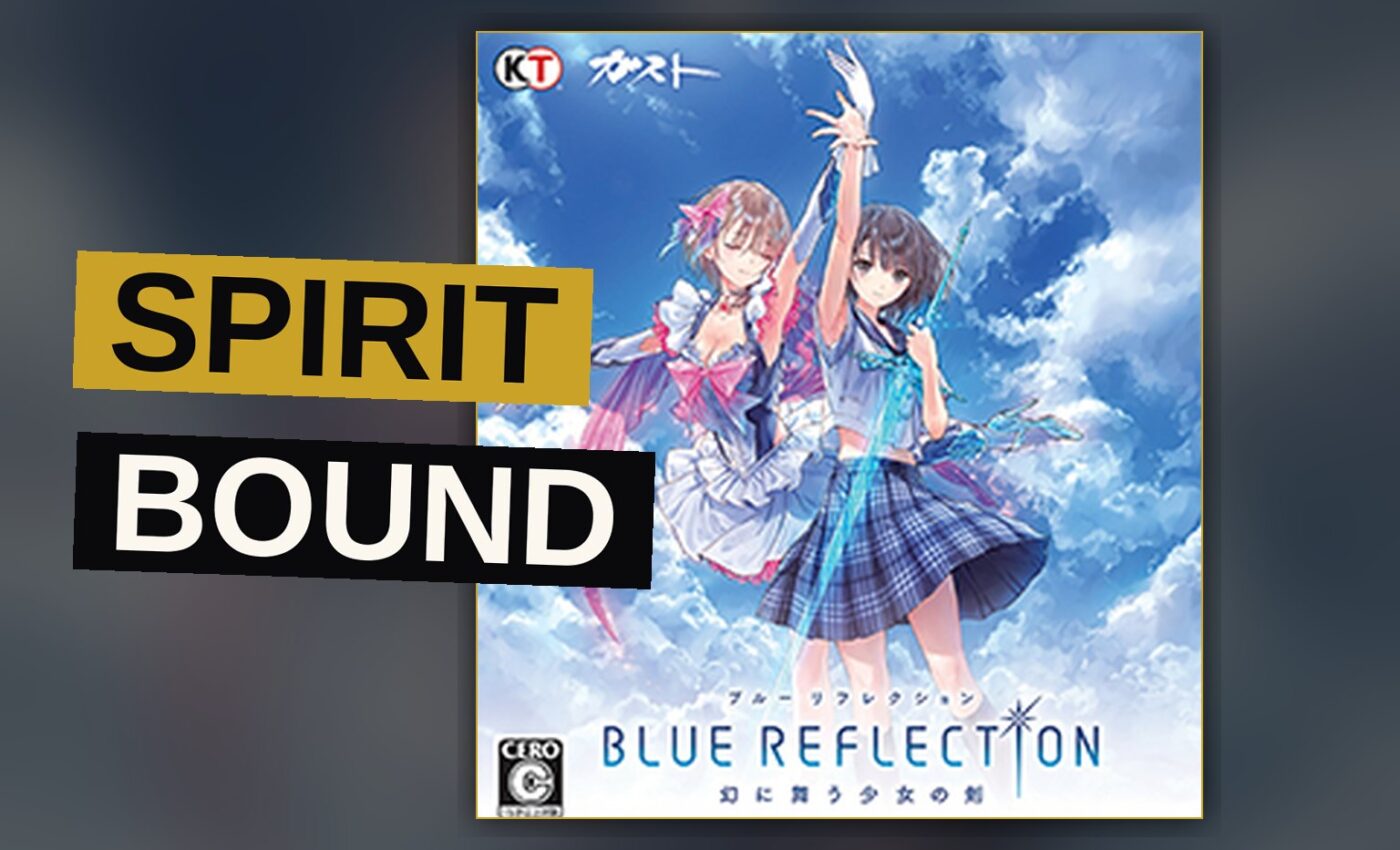
Blue Reflection arrived in 2017 as the closing act of Gust’s “Beautiful Girls Festival” project, a three-game run that also included Atelier Firis and Nights of Azure 2. It stars Hinako Shirai, a ballet dancer who injured her knee a year before the story starts and has been unable to dance since. Then two sisters, Yuzuki and Lime Shijou, hand her the power to fight as a magical girl called a “Reflector” — one who can move freely again, provided she’s willing to fight for it.
That’s a strong premise. The game built around it is a quieter, stranger thing than the premise promises.
Trailer, via KOEI TECMO AMERICA.
Hinako Shirai and the Knee That Ended a Career
Blue Reflection is set at Hoshinomiya Girls High School in modern-day Japan, in the middle of summer. Hinako is a seemingly ordinary student with one extraordinary problem: her body quit on her. The Reflector power gives her back the movement she lost, and the game treats that gift as the emotional engine for everything else.
It’s a smart choice. Most magical girl stories hand their hero a transformation and skip past what she gave up to earn it. Blue Reflection doesn’t skip. Hinako’s injury is the reason she says yes, and the game keeps circling back to what it cost her.
Gust developed the game. Koei Tecmo published it, with Koei Tecmo Europe and Koei Tecmo America handling their regions. It hit PlayStation 4 and PlayStation Vita in Japan in March 2017, then came to North America and Europe in September 2017 for PlayStation 4 and Microsoft Windows. The western release was for PlayStation 4 and Microsoft Windows.
The production team is worth naming. Junzo Hosoi produced. Keiichi Sigsawa, Yūsaku Igarashi and Kouji Natsumi organized. Mel Kishida supervised and designed the characters. The stated goal was to depict female youth in a true-to-life way, focused on how girls interact and how they grow through shared experience. That ambition is visible in the writing, even when the game’s structure fights it.
A Day Cycle That Actually Means Something
The game runs on a day cycle, and the loop is the whole design. Mornings go to school. Hinako sometimes runs into other students on the way. Scenes play out during the school day, and some of them put questions to the player — classmates ask things, and the answer you pick shifts your relationship with them.
Those relationships aren’t decoration. Close friendships unlock support abilities Hinako can use in battle, and they change how characters treat her during story sequences. Gust built a system where being liked has mechanical weight, which is rarer than it should be.
After school, the game opens up. Hinako can move around freely, spend time with classmates, or craft items. There’s an in-game mobile app for messaging characters, viewing profiles, and playing minigames. When the day ends, she goes home and sleeps.
Then there’s the dimension the game calls The Common, also known as the Other World. Classmates have problems, and those problems sometimes have causes that live outside the real world. Hinako visits The Common to hunt emotion fragments — the things causing defects back in reality. Find the fragments, clear the challenges, and you learn what the person you’re helping is actually thinking. You come back with reward items and fragments.
Blue Reflection is a role-playing game, which follows a day cycle: in the morning, the player character goes to school, and sometimes meets other students on the way.
Emotion Fragments and the Turn-Based Loop
Combat is turn-based, fought in The Common against monsters. Growth points drop from missions, and the player invests them into attack, defense, support, or technic stats. Those investments make characters stronger and teach them new skills.
Fragments do double duty. You can equip them to character skills to add effects, which turns the collection loop into a build-crafting loop. It’s a tidy piece of design — the thing you’re hunting for story reasons is also the thing you’re slotting into your kit.
Missions carry different rewards, and some of them give the player growth points. The variety keeps The Common from flattening into a single grind, though the underlying rhythm — visit, fight, collect, return — never really changes.
The comparison that matters here is between the two halves of the game, because they don’t pull in the same direction.
| System | What it does | Where it lives |
|---|---|---|
| School day cycle | Builds relationships, triggers story scenes, gates support abilities | Hoshinomiya Girls High School |
| The Common (Other World) | Turn-based combat, emotion fragment collection, growth points | The Common |
| Mobile app | Messaging, character profiles, minigames | In-game phone |
| Fragment equipping | Adds effects to character skills | Battle system |
The school half is where the game’s stated theme lives. The Common half is where the game’s combat lives. They share a cast and a calendar, but they don’t share a pace.
What the Sequel and the Anime Changed
Blue Reflection didn’t end in 2017. An anime television series spin-off made by J.C.Staff, Blue Reflection Ray, aired from April to September 2021. A sequel, Blue Reflection: Second Light, came to PS4, Switch, and Microsoft Windows in Japan in October 2021 and worldwide in November 2021. A third entry, Blue Reflection Sun, stayed Japanese exclusive.
That’s a real franchise now, built on a game that scored 6.8 out of 10 across eight outlets on the IGDB critic aggregate. Sequels and a spin-off followed, and Second Light reached more platforms than the original did.
The original, though, is the one that has to stand on its own. And it mostly does, in the parts nobody markets.
Where Blue Reflection Actually Lands
The relationship system is the best thing here. Gust took the stated goal — female youth depicted honestly, growth through shared experience — and wired it into the mechanics instead of leaving it in the cutscenes. When a friendship unlocks a support ability, the game is saying something concrete: knowing someone makes you stronger in a fight. That’s a real idea, and Blue Reflection commits to it.
The day cycle supports that idea well. Messaging classmates through the phone app, reading their profiles, playing the minigames — it’s small stuff, but it’s the texture of a life. Hinako’s injury gives all of it a weight the genre usually skips. She can’t dance anymore. The freedom she gets in The Common is the trade, and the game never lets you forget it.
Where it stumbles is The Common itself. Turn-based combat with stat investment and equippable fragments is competent, and competence is the ceiling. The fragments are a clever hook, but the missions around them settle into a pattern early and hold it. The game asks you to care about the story reasons for each trip, then hands you the same fight with different numbers.
The two halves never quite fuse. The school day is warm, specific, and character-driven. The Common is abstract, repetitive, and mechanical. You spend hours in each, and the seam between them stays visible the whole way through.
The Verdict on Hinako’s Trade
That’s the honest shape of Blue Reflection: a game with a genuinely good idea at its center, executed unevenly. The premise, the cast, and the relationship system earn their keep. The combat and The Common do their job without ever exceeding it.
Gust’s stated ambition — true-to-life girls, growth through shared experience — is met in the school half and only gestured at in the combat half. For a game that closes out a project called Beautiful Girls Festival, that’s a fitting note: the girls are the point, and the fighting is the delivery mechanism.
Worth playing for Hinako and the friendships she builds. Worth tolerating The Common to get there.
Get the Notebook.
The day's best stories and every fresh verdict, in plain English, in your inbox by seven. One email a day, no more.