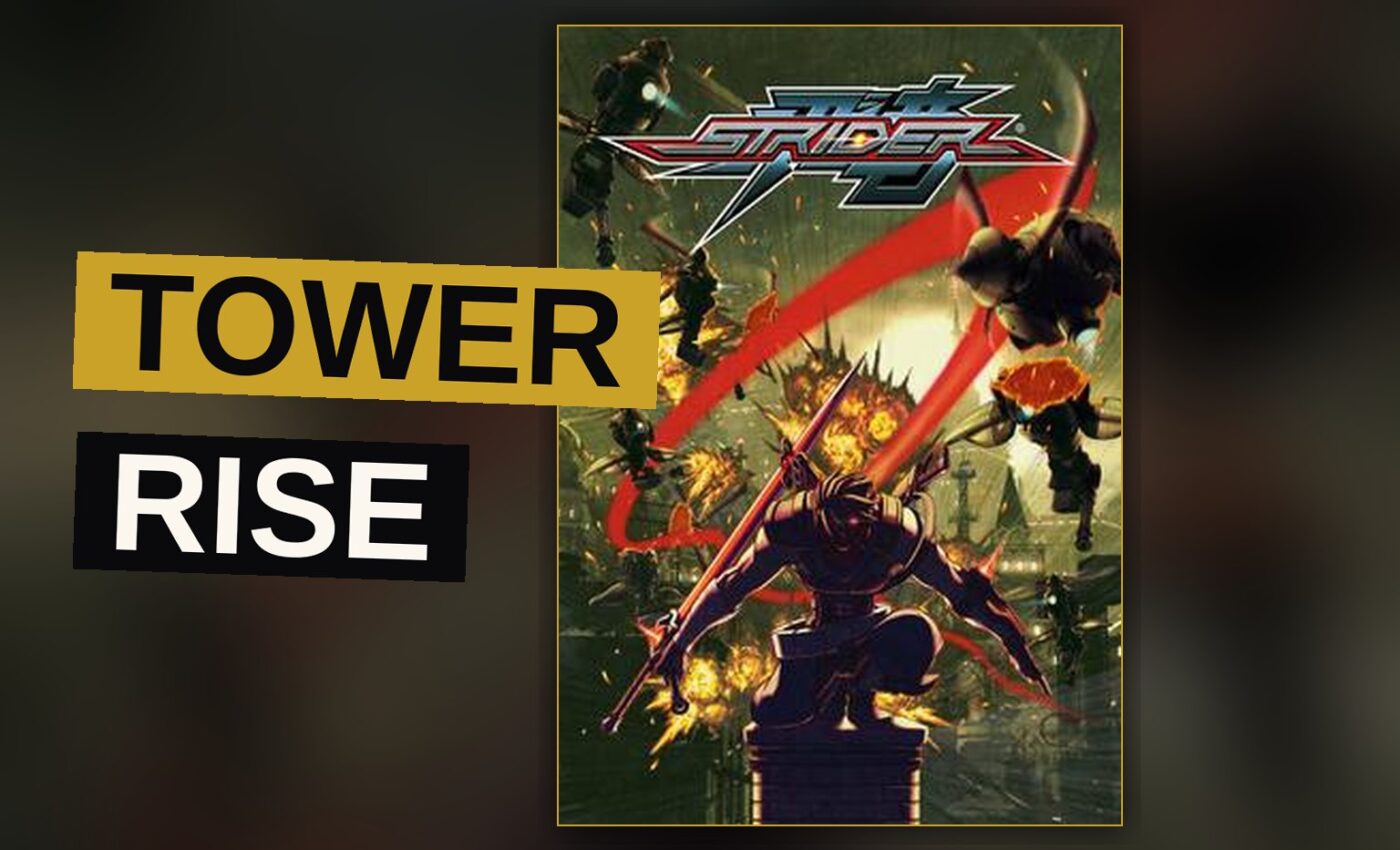
Strider drops players into a crumbling tower ruled by a giant, snake-like enemy and asks them to fight through it. The 2014 game, built for PS3, PS4, PC and Xbox 360, puts a fast sword and a grappling hook in players’ hands and trusts them to move and fight at full speed. The game’s core idea is simple: move, swing and fight your way up a ruin that keeps changing shape as you climb.
Trailer, via PS360HD.
The Tower
The setting is a tall, ruined tower that changes shape as players climb it. Each floor holds enemies, puzzles and secret paths that reward returning later. The design pushes players to move quickly, and the game rarely slows down to explain itself. That constant forward push gives the tower a feeling of motion and scale that few games manage.
The Grappling Hook
The grappling hook is the heart of Strider. Players can swing across gaps, strike enemies from distance and pull themselves into the air to avoid danger. It takes practice to master, but once learned it opens the whole level up. Players who master the hook can clear obstacles that would otherwise stop them dead.
Combat
Fights are quick and hard. Enemies hit hard and punish careless play. The sword strikes fast, and learning the rhythm of each enemy is necessary to survive. Boss fights demand precision, and some of them take repeated attempts before they fall.
Difficulty
The difficulty curve rises sharply near the middle of the game, and some boss fights demand precise timing and repeated attempts. New players may find the harder parts frustrating. That difficulty is part of why the game doesn’t feel like a long one.
Visual Style
The art direction draws on classic anime and horror film influences. The tower’s decay and the giant enemy at the top give the game a strong sense of dread. The lighting is used well to set mood, making every ruined corridor feel lived-in and dangerous.
Sound
The music matches the tone of the setting, mixing tense synth passages with quieter, brooding moments. Sound effects for strikes and movement are well done, adding to the sense of motion. Every strike lands with weight, and every swing carries real force.
Length
Strider is not a long game. Players who move through it without searching for secrets can finish in under six hours. That pace suits its design, even though some players will want more content. The game never drags because there’s always something new to see around the next corner.
Comparing the Platforms
| Platform | Strength | Weakness |
|---|---|---|
| PS4 / PC | Smooth performance, high frame rate | None noted |
| PS3 / Xbox 360 | Lower frame rate, less stable | Performance issues |
Final Word
Strider succeeds best when it lets players move fast and swing freely. The grappling hook system is inventive, the combat is demanding and the tower’s design rewards curiosity. Its difficulty and short length keep it from greatness, but the core loop remains satisfying.
Get the Notebook.
The day's best stories and every fresh verdict, in plain English, in your inbox by seven. One email a day, no more.