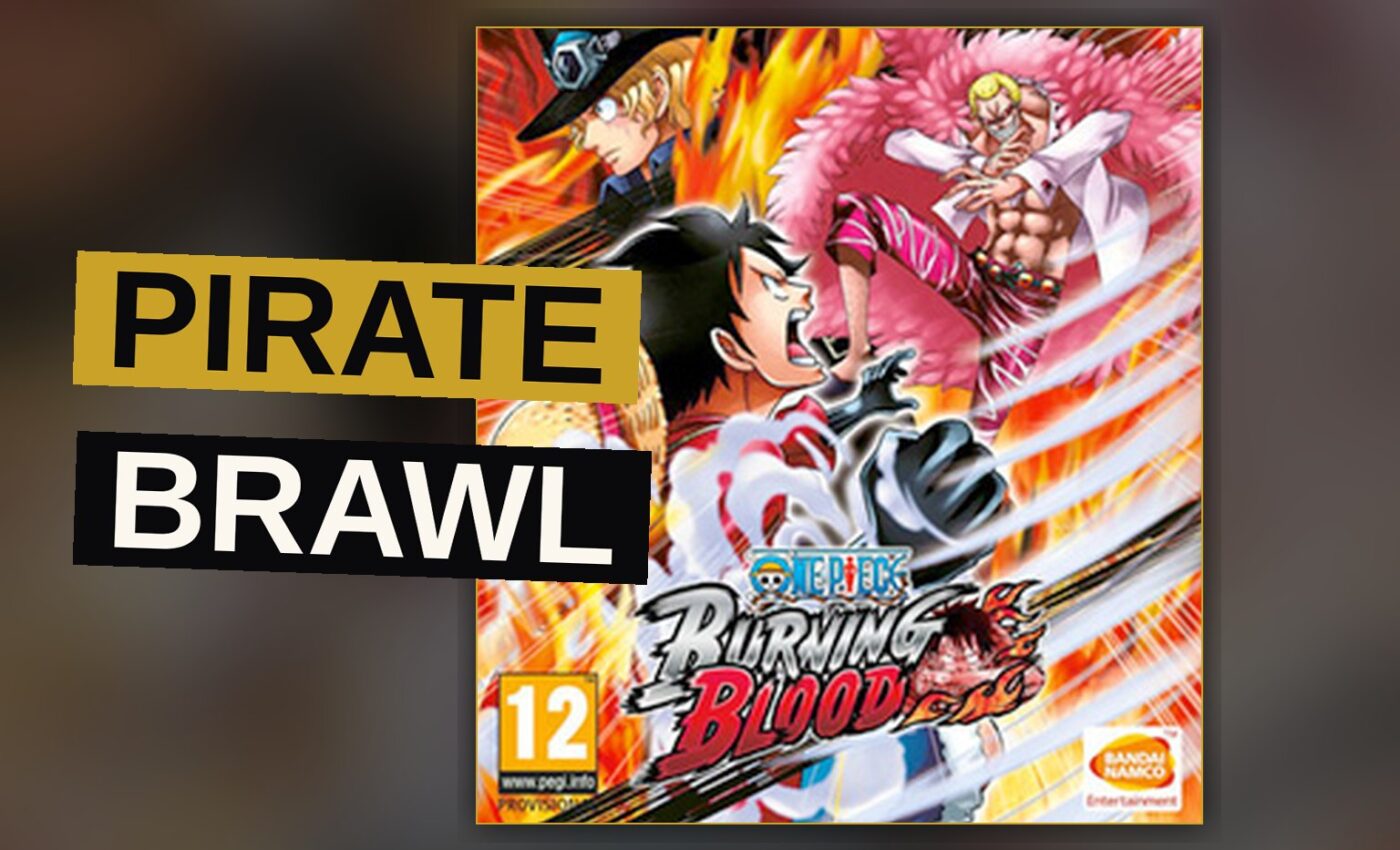
One Piece: Burning Blood is a fighting game, and it is the first One Piece game ever to land on an Xbox console. Spike Chunsoft developed it. Bandai Namco Entertainment published it. It came out for PlayStation 4, PlayStation Vita, Xbox One, and Windows, and it carries a 6.5/10 from the IGDB critic aggregate across nine outlets.
That score is about right. Burning Blood has the bones of a real fighting game and the skin of a fan disc, and which one you notice depends on how much you already care about Monkey D. Luffy.
Spike Chunsoft Crosses Over To Microsoft Hardware
The release itself is the quiet milestone here. Burning Blood is the first One Piece video game to appear on an Xbox video game console. That matters more than any single mechanic in it. This is the title that crossed over.
The rollout was staggered and uneven. Japan got the PlayStation 4, PlayStation Vita, and Xbox One versions on April 21, 2016. North America followed on May 31, 2016, and Europe on June 3, 2016. The Windows version arrived later, on September 1, 2016 in North America and September 2, 2016 in Europe.
One oddity stands out. The game was not released for Xbox One in Japan. So the first One Piece game on an Xbox console was, in the franchise’s home market, not on an Xbox console at all.
| Region | Platform | Release date |
|---|---|---|
| Japan | PlayStation 4, PlayStation Vita (no Xbox One version) | April 21, 2016 |
| North America | PlayStation 4, PlayStation Vita, Xbox One | May 31, 2016 |
| Europe | PlayStation 4, PlayStation Vita, Xbox One | June 3, 2016 |
| North America | Windows | September 1, 2016 |
| Europe | Windows | September 2, 2016 |
The Paramount War Runs On Four Perspectives
Burning Blood’s story mode is the Paramount War. You pick one of four characters — Luffy, Whitebeard, Akainu, or Ace — and play through a run of missions told from that character’s own point of view. Side missions unlock as you go.
That structure is the smartest thing in the game. Four perspectives on one war is a real idea, not a costume. It gives the mode a reason to exist beyond replaying a fight you already watched.
It also means the mode lives or dies on whether those four angles feel distinct. The record does not say how much they diverge, and that gap is the whole question. A four-lane story mode with one lane’s worth of content is a menu, not a narrative.
Cel-Shading And A Nine-On-Nine Mode
The art style is cel-shaded, built to match the One Piece anime. It works. Burning Blood looks like the show, and for a licensed fighter that is half the job done before a single punch lands.
The fighting is 1-on-1, with support for up to 9 vs 9. That is a wide spread. Spike Chunsoft built something closer to the Grand Battle! series than to a traditional one-on-one fighter, and the scale is the pitch.
There is an “advanced battle system” that lets players throw stronger attacks and block normal ones from enemies. Devil fruit abilities are central to the combat, and Logia users can use their powers to avoid damage entirely.
That last detail is the one to watch. Logia users dodging damage through their powers is faithful to the source, and it is also a balance problem waiting to happen. A fighter where some characters can simply not be hit is either the best idea in the game or the thing that breaks it.
A Licensed Fighter Pulled In Two Directions
Here is the tension. Burning Blood is a fighting game, and fighting games live on their competitive scene. One Piece is a franchise whose fans mostly want to see Luffy hit Akainu, not to lab out frame data.
The game tries to serve both. The 9 vs 9 mode sounds like chaos, the kind of thing you play with friends who do not play fighters. The advanced battle system and the Logia mechanic sound like the opposite — systems with real depth that reward practice.
Very few licensed fighters thread that needle. The ones that do tend to pick a lane and commit. Burning Blood, from everything in the record, looks like it tried to do both at once rather than choosing.
The 6.5/10 aggregate across nine outlets sits in that same territory. It is not a bad score. It is the score of a game that is competent at two things and excellent at neither.
Where The Score Comes From
A 6.5 is a specific kind of number. It is not a pan. It is not a recommendation. It is the score you give something that works, that you would hand to a fan without hesitation, and that you would not hand to anyone else.
Burning Blood earns that. The cel-shaded look is right. The Paramount War mode has a structure. Luffy, Whitebeard, Akainu and Ace are the four characters it builds around. The first-Xbox-release milestone gives it a place in the franchise’s history regardless of how it plays.
What it lacks is a reason to exist outside the fandom. Nothing in the record suggests Burning Blood pushed the fighting genre anywhere. Nothing suggests it failed at what it attempted either. It is a licensed fighter that did the licensed-fighter job.
The Xbox Detail Outlasts The Combat
Strip away the mechanics and the most interesting fact about Burning Blood is the platform list. First One Piece game on an Xbox console. Not released on Xbox One in Japan.
That combination tells you what this release was. It was Bandai Namco putting the game on Microsoft hardware outside Japan. The Xbox version existed there. In Japan, it did not.
So Burning Blood sits in an odd place. It is a footnote in platform history and a mid-tier entry in the One Piece game catalog. The Xbox milestone is the part that will be remembered. The fighting game around it will not.
What Burning Blood Gets Right
The four-character story mode is the best argument for the game. Luffy, Whitebeard, Akainu, and Ace are the right four. They are the war’s center, and playing it from each side is a genuine idea.
The cel-shaded art is the second argument. Matching the anime is not a small thing for a licensed game, and Burning Blood does it.
The 9 vs 9 mode is the third, and the most speculative. On paper it is the mode that could carry the game past its fan base. In practice, the record does not tell us whether it did.
Those three things are enough to justify a 6.5. They are not enough to justify more.
One Piece: Burning Blood is a competent licensed fighter with one good idea and one historic footnote. The Paramount War mode’s four perspectives are the good idea. The first-Xbox-release milestone is the footnote, and it is the more durable of the two.
The 6.5/10 aggregate is fair. Burning Blood does not embarrass the One Piece name, and it does not elevate it. It shows up, looks right, and lets you play as Luffy, Whitebeard, Akainu, or Ace through a war you already know. For a fan, that is enough. For anyone else, the score is the score.
Get the Notebook.
The day's best stories and every fresh verdict, in plain English, in your inbox by seven. One email a day, no more.