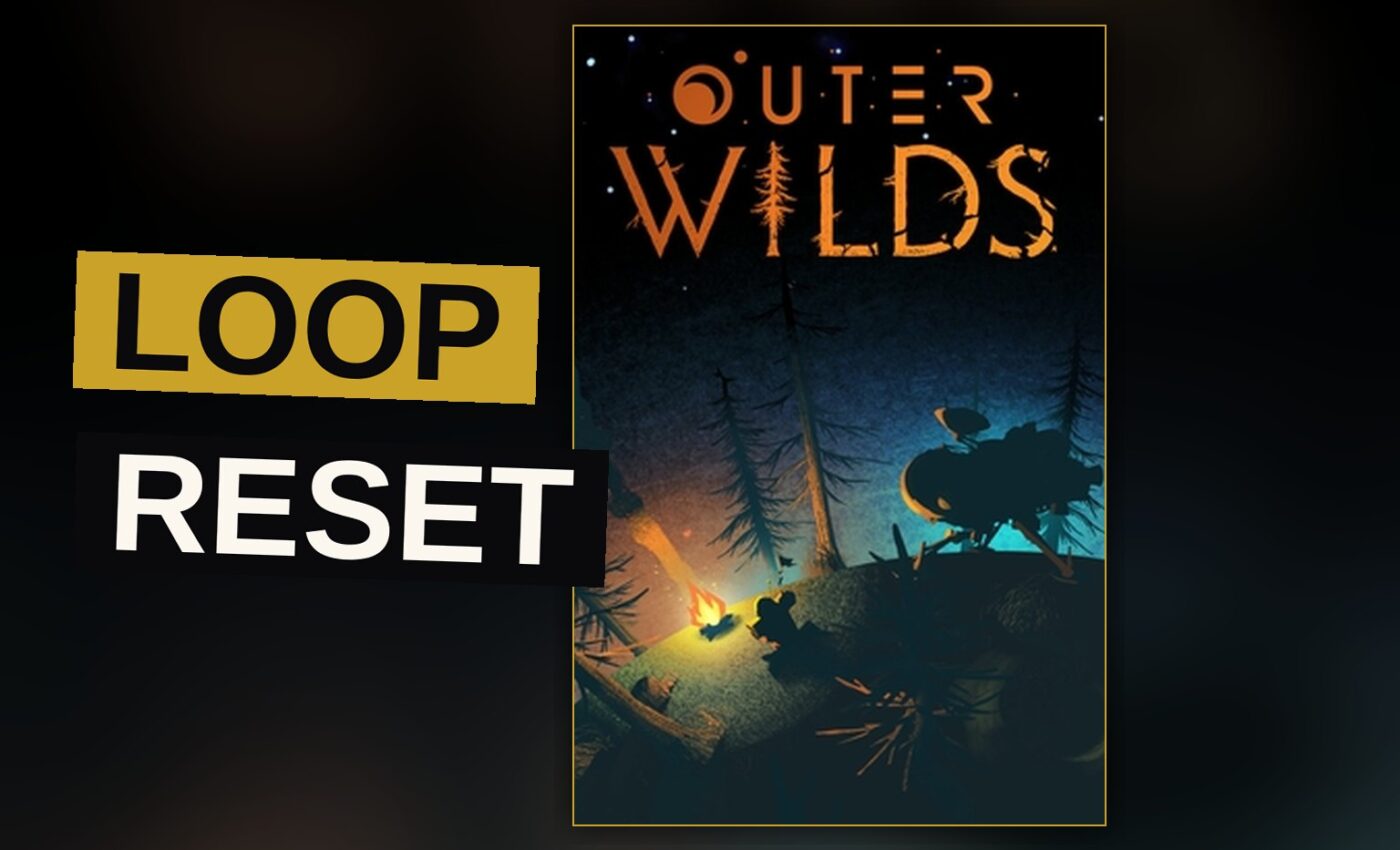
Outer Wilds is a game about the end of the world, but it never feels like a tragedy. You are a Hearthian, a four-eyed alien from a small village on the planet Timber Hearth, just handed the keys to a rickety spaceship. Your mission is simple: fly into the unknown and learn what you can before the sun goes supernova. That happens every 22 minutes, and you wake up back at the campfire, ready to try again.
Trailer, via Annapurna Interactive.
The 22-Minute Loop
The loop is the whole game. Nothing you do physically carries into the next cycle; what carries over is knowledge. You learn a route through a maze of twisting tunnels, a code to open a sealed door, the reason a moon vanishes at a certain hour. The game never gives you a map marker or a quest log; that trust in your memory is the core of the design.
Outer Wilds is a detective story where the evidence is the universe itself, and the notebook you keep is the only inventory you will ever need. Developer Mobius Digital built a clockwork solar system, and every planet moves on its own schedule.
The Planets in Motion
The planets are puzzles with moving parts, not just scenery. The Hourglass Twins trade sand between them, burying and unearthing ruins. Giant’s Deep hides a storm-tossed ocean with a secret at its core. Dark Bramble is a maze of fog and anglerfish that will swallow your ship whole if you are careless. Learning each world’s rhythm is how you make progress.
Falling Into Brittle Hollow
Take Brittle Hollow, a planet whose crumbling crust falls into a black hole at the center — and you can fall in too. The first time, I panicked. The second, I realized the black hole spits you out on the other side of the system, a shortcut if you know where you are going. That is Outer Wilds in a single moment: terror turning into a tool.
Music From the Nomai
The story you uncover belongs to the Nomai, an ancient race whose scattered messages, carved in stone across the system, you piece together like a conversation overheard across centuries. The banjo score by Andrew Prahlow gives every discovery a warm, melancholy weight, and the moment a melody snaps into place with a location is the game at its best.
Reaching the Ending
Outer Wilds is not a long game — under 20 hours if you know what you are doing — but the ending does not feel short. It feels earned. The final sequence asks you to use everything you have learned, and it lands with a quiet grace that most games cannot touch.
The game runs on a strict timetable — not fixed minutes but cause and effect you discover by watching — and knowing it is the difference between progress and spinning in place.
| Event | How It Unfolds |
|---|---|
| Sun expansion | Swells gradually across the loop |
| Hourglass Twins | Sand shifts between the pair |
| Brittle Hollow | Crust collapses into the black hole |
| Quantum Moon | Becomes reachable under certain conditions |
| Supernova | Ends the loop at 22 minutes |
It is a game about curiosity, and it rewards it absolutely.
8.9 of 10.