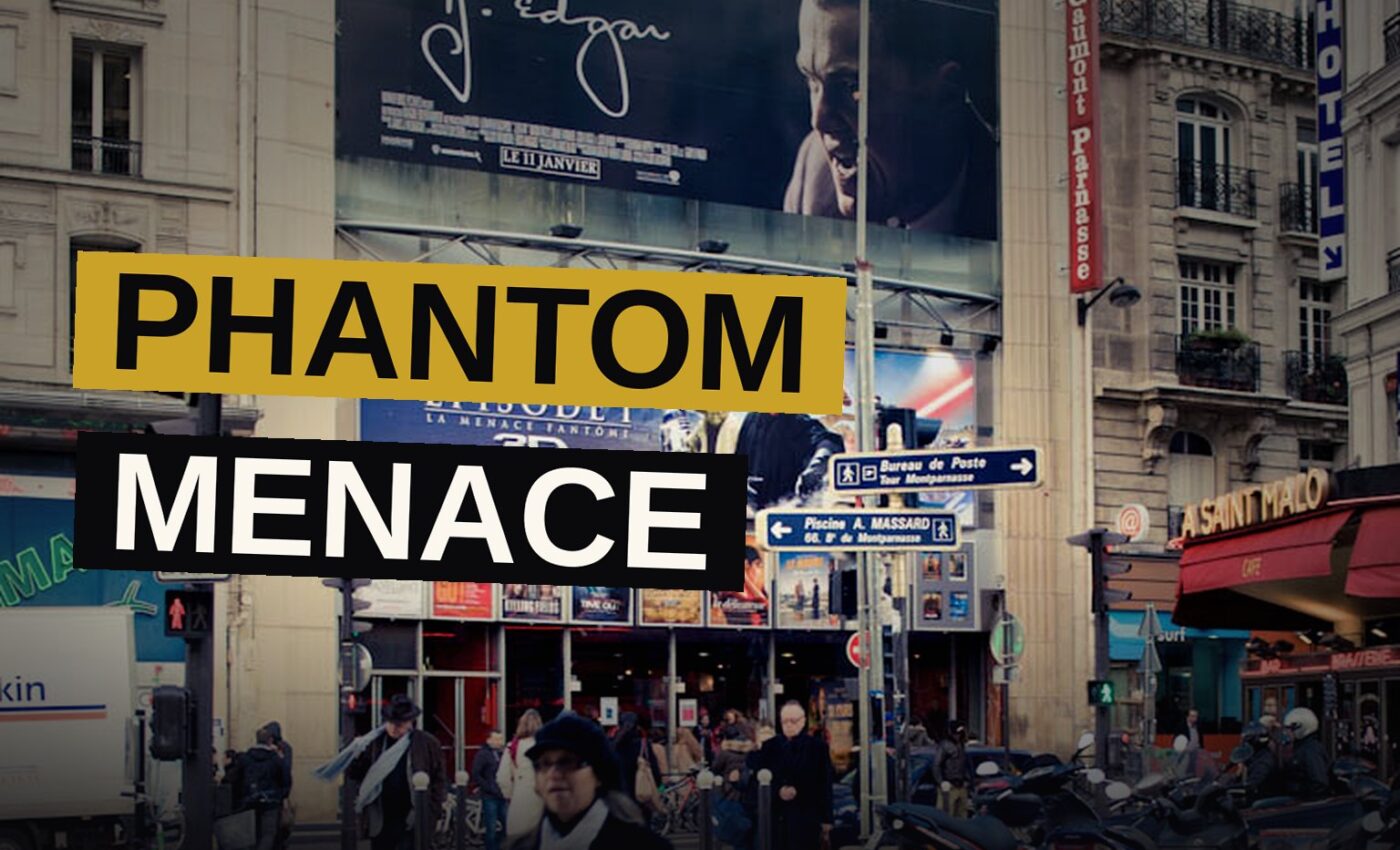
“Star Wars: Episode I – The Phantom Menace” opens a new chapter in the saga with a promise of spectacle and politics. It delivers on neither fully, settling instead for a children’s adventure story with occasional flashes of grandeur. The film introduces audiences to a younger generation of heroes while leaving the weight of the galaxy mostly off screen.
Trailer, via Star Wars.
The Queen of Naboo
The plot centers on Queen Amidala of Naboo, whose planet falls into conflict with the Trade Federation after she refuses to pay its taxes. She flees to Coruscant, the galactic capital, seeking help from Supreme Chancellor Valorum. There she meets Qui-Gon Jinn, a Jedi Knight, and Obi-Wan Kenobi, his apprentice, who agree to protect her.
The political setup is the film’s most promising element. It sets up a world of trade disputes and Senate debates, hinting at the larger conflicts to come. But the dialogue is often stilted, and the Senate scenes feel more like exposition than drama.
The Battle of Naboo
The action picks up when the queen returns to her planet to fight back. The battle sequence is the film’s high point, with podracing, lightsaber duels, and a climactic chase through the swamps. These moments show what George Lucas can do when he lets the spectacle breathe.
The podracing scene, in particular, earns its place as one of the film’s best sequences. The race itself is thrilling, and the final confrontation between Qui-Gon and Darth Maul is a tense highlight. The chase through the swamps that follows is less successful, relying too heavily on computer effects that strain the eye.
The New Characters
The supporting cast carries much of the film’s charm. Jar Jar Binks, a Gungan played by Ahmed Best, becomes a comic relief character who critics have argued over ever since. He is clumsy and loud, but he also has a heart, and his scenes with the young characters are some of the film’s warmer moments.
The young leads, Jake Lloyd as Anakin Skywalker and Natalie Portman as Padmé Amidala, play the romance between them with sincerity. Their bond feels genuine, even if the script never quite gives them enough room to develop. Lloyd, in particular, gives a performance that suggests real talent despite being surrounded by adult actors playing children.
The Problems
The film’s weakest elements are structural. The pacing drags in the middle, and the story spends too much time on backstory and setup. The villain, Darth Maul, is introduced late and killed early, leaving the audience wanting more. And the humor, especially in the form of Jar Jar, often lands flat.
The dialogue is another weak point. Lines like “The force is strong in my family” and “You were the chosen one” sound awkward on paper and worse on screen. They try to tie the new characters to the old saga, but they fall short of the elegance of the original trilogy.
Ranking the Sequences
- The podracing scene
- The battle of Naboo
- The chase through the swamps
- The lightsaber duel between Qui-Gon and Darth Maul
- The Senate scenes
The ranking reflects how well each sequence holds up under repeated viewing. The podracing and the duel remain the film’s strongest moments, while the chase and the Senate scenes suffer from pacing issues.
“Star Wars: Episode I – The Phantom Menace” is a mixed bag. It introduces new characters and settings with potential, but it fails to deliver the scale and depth promised by its premise. The action is thrilling, the humor is hit-or-miss, and the politics are underdeveloped.
It is a film that works best as a stepping stone rather than a destination. Its flaws are numerous, but its strengths are real, and they point toward a saga that would grow stronger in later installments.