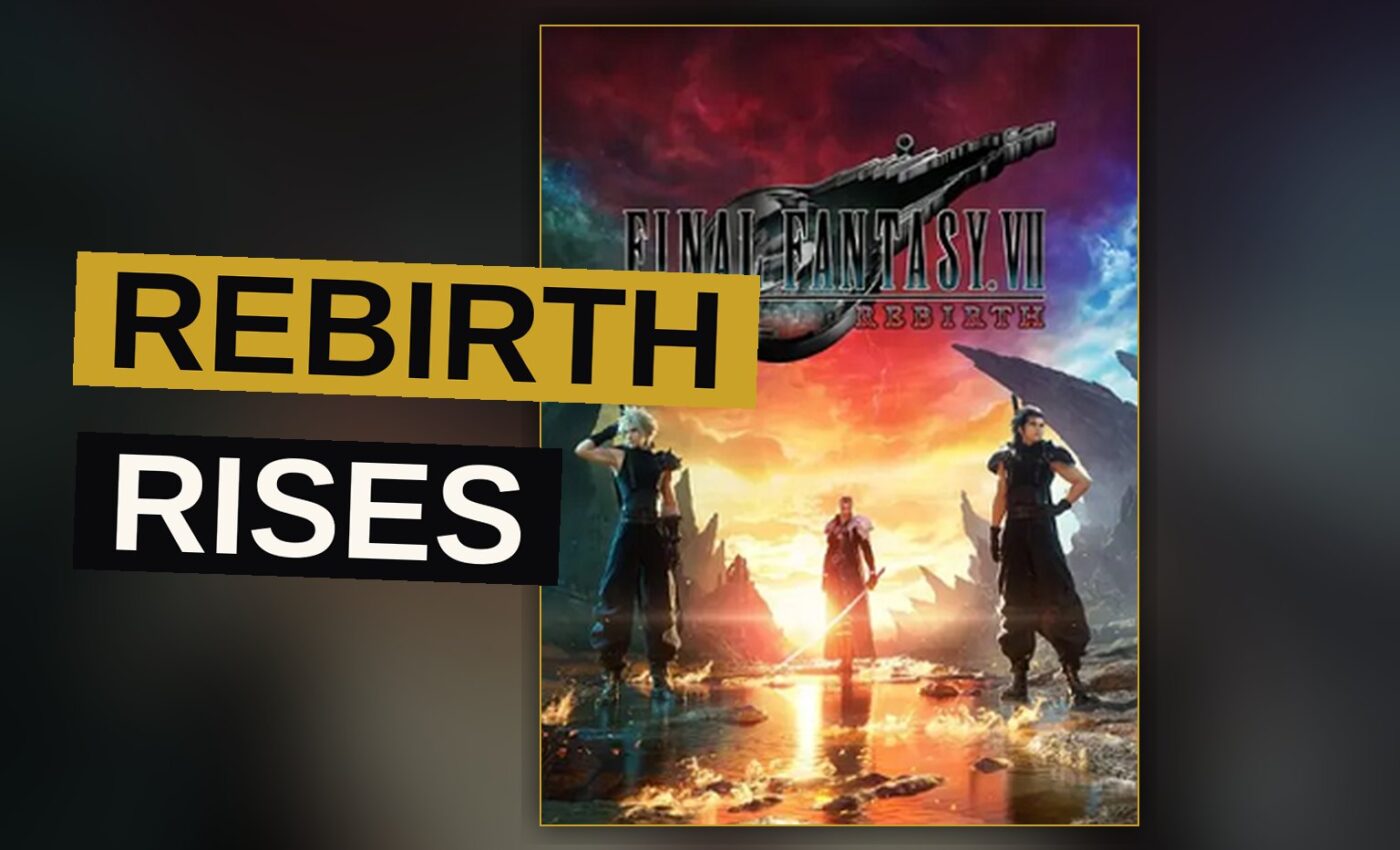
Final Fantasy VII Rebirth picks up where Final Fantasy VII Remake left off, and it does not waste time proving it belongs among the best releases of the year. Square Enix has built a game that stretches across open fields, mountain passes and city streets, and somehow keeps the momentum of the original 1997 story intact while adding hours of new material.
Trailer, via FINAL FANTASY.
Cloud Strife and the Opening Chapters
Cloud Strife leads the party out of the sprawling opening city and into a world that keeps growing with every region. The trip to the next major location shows off the scale Square Enix is aiming for: wide-open zones, side content scattered across the map, and a main story that keeps pulling the group forward. Combat carries over the real-time-meets-command hybrid from Remake, but it feels sharper here, with each character controlling differently enough that switching between them mid-battle changes how a fight plays out.
The pacing dips in places. Some side quests amount to errand tasks dressed up with new dialogue, and a handful of activities feel like filler stitched onto an otherwise tightly written plot.
The Amusement Park
The amusement park is the biggest set piece outside the main story, and it earns the reputation the original game gave it. It is packed with smaller games, races and side attractions, and the game leans into the change of tone without breaking the momentum built up to that point.
A racing game, a rhythm game, a shooting gallery — the park throws all of it at the player at once, and most of it works.
Queen’s Blood
Queen’s Blood, the card game introduced in Rebirth, might be the single biggest surprise in the entire package. It is not required. It is also deep enough that it could easily eat as many hours as the main story.
Matches are quick, the rules are easy to pick up, and the reward structure keeps pulling players back into it across every region. Square Enix could have made this a minor diversion. Instead it built a full side game inside a much bigger one.
The Story’s Heart
The emotional core of Final Fantasy VII Rebirth rests on two characters: Cloud Strife and a central female party member who gets more space here than she ever had in the 1997 original. The extra time pays off. Her scenes with Cloud Strife carry real weight, built up over dozens of hours rather than rushed through.
Flash-forward sequences tied to a soldier from Cloud Strife’s past raise questions the game does not fully answer yet. That is by design — this is the second entry in a three-part remake project — but the choice to hold back some answers may frustrate players who want them now rather than later.
The Supporting Party
One party member, known best for comic relief, gets more screen time than longtime fans might expect, and the game uses that character for both laughs and some surprisingly tense story beats. The rest of the party members all get moments to shine, and the game rotates them through the active line-up often enough that nobody feels left out.
An AI research assistant from the first game returns as the main vehicle for side content. This assistant hands out research tasks tied to the open-world activities scattered across each region.
The tasks assigned range in quality:
- Combat trials that test party builds against tough enemy combinations
- Puzzle tasks built around each new region’s features
- Tracking and scanning tasks that reward exploration
- Tower-style reveal points that show map activities, a structure familiar from other open-world games
Some of these feel like filler. Others hand out truly useful rewards, including new orbs and combat abilities that change how battles play out later in the story.
The World Map
Moving between regions on the world map is one of the clearest upgrades over Remake. Riding a large bird across open ground, swimming, gliding — the ways to move multiply as the story goes on, and each new region introduces a fresh method of getting through it.
The visual variety helps too. Each area has its own identity, from the busier northern stretches to the natural landscapes further out, and the game rarely repeats itself in look across its full length.
Combat, the Ability System and Its Flaws
The combat system carries the heaviest technical improvements. The orb-based ability system returns and expands, letting players build out each character’s role in a fight in far more detail than Remake allowed.
Synergy abilities, new to Rebirth, let two characters combine attacks for extra damage or utility. They add another layer to fights that already ask players to manage vulnerability meters, type weaknesses and limit breaks in real time.
Boss fights stand out as some of the best in the series. Square Enix has clearly built certain encounters around the new mechanics rather than bolting them onto old fight patterns.
Not everything lands, though. The open-world structure occasionally repeats itself across regions, with similar activity types recurring often enough to notice. Some side content feels like it exists to fill out play time rather than to deepen the story or the world. The frame rate can dip during the busiest combat encounters on PS5, though it rarely affects how a fight plays out. None of that takes away from the scale of what Square Enix has built here.
Release Information
- Platform: PS5, PC
- Release: 2024
- Developer/Publisher: Square Enix
- Score: 9.3 of 10
Final Fantasy VII Rebirth takes the foundation Remake built and expands it into something far bigger, without losing the story’s emotional center. Cloud Strife and the rest of the cast carry a plot that stretches far beyond the confines of the opening city, and the world built around them gives players dozens of hours of side content worth returning to. Queen’s Blood alone could have carried a smaller game. Combined with the amusement park, an expanded ability system and some of the best boss fights in the series, Final Fantasy VII Rebirth earns its place as one of the standout releases of the year.