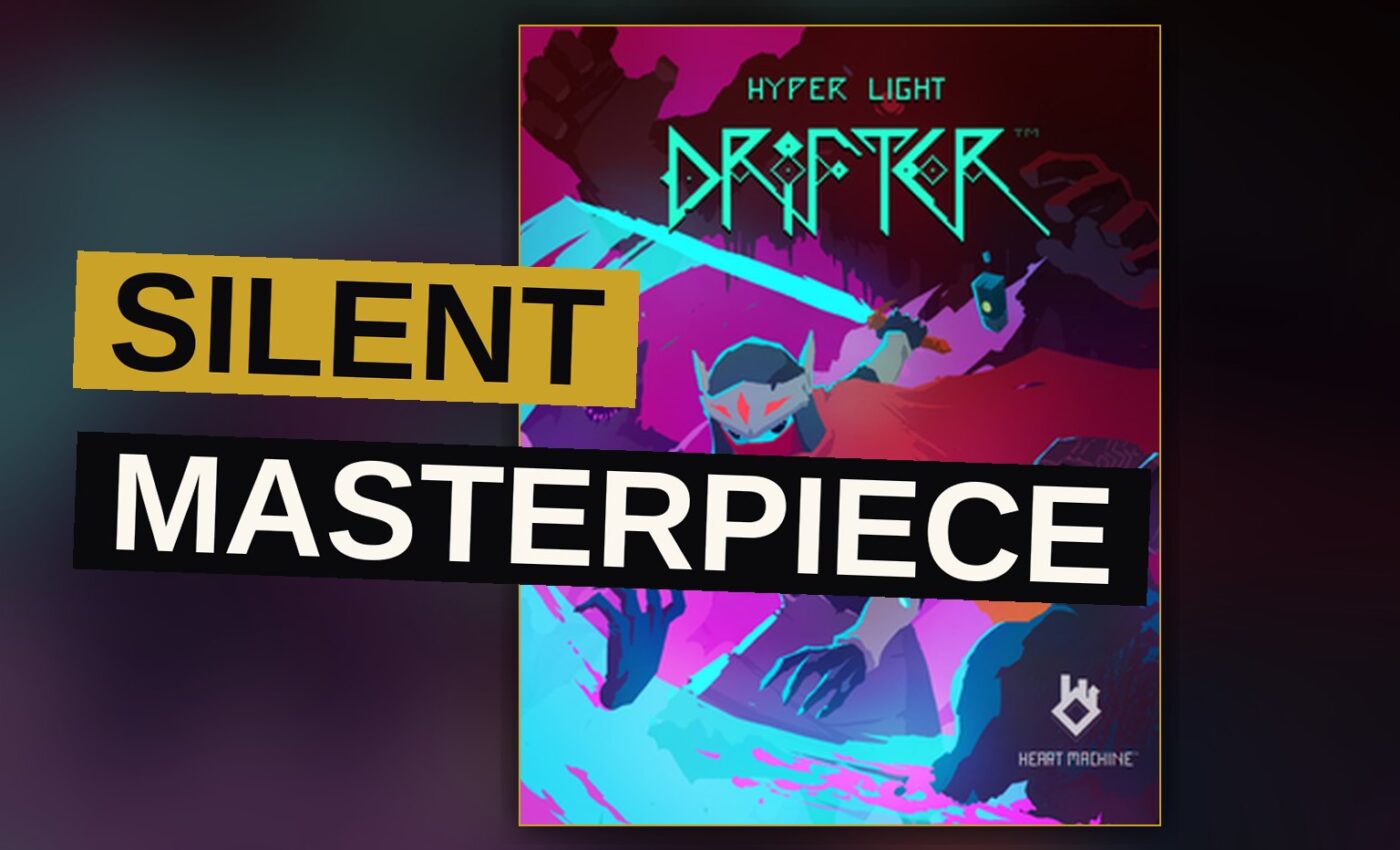
Hyper Light Drifter is a hard game to describe, and an even harder one to forget. It arrived in 2016 for PS4, Linux, PC, and Mac, carrying the weight of a difficult development and a personal health crisis for its creator. What emerged was not a story told in words, but a story told in light, color, and the silence between battles. It is a game that asks you to pay attention, and it rewards that attention with some of the most memorable moments in the genre.
The game opens with a sickly protagonist, the Drifter, wandering through a ruined world. The screen is a wash of pinks and purples, the air thick with static. You hold a sword and a gun, and you have almost no idea what you are supposed to do. That is the point. Hyper Light Drifter trusts you to find your way, to piece together the fragments of a fallen civilization through murals, monoliths, and the shapes of the enemies you face.
Trailer, via Heart Machine.
Silence as Storytelling
There is no dialogue in Hyper Light Drifter. No text boxes, no quest markers, no voice acting. The story is told entirely through environmental detail and the occasional cutscene rendered in a pixel-art language that feels ancient. This absence of language is not a limitation; it is a strength. The world feels lonely and vast, and your place in it is uncertain.
You play as a figure who is dying, a fact communicated through a simple visual: your heart monitor pulse, a small line that beats on your chest. When you rest at a save point, the line steadies. When you fight, it races. The game never tells you this, but you feel it. The narrative is a puzzle, and the pieces are scattered across four distinct zones, each with its own palette and its own set of horrors.
The central mystery involves a giant, monolithic structure at the heart of the map. You collect keys, activate pillars, and unlock doors, but the why is never stated. It is a haunting approach, and it works. By the time you reach the final confrontation, you are not sure what you have done or why, but you are certain it mattered.
Cutting Combat
The combat is where Hyper Light Drifter earns its reputation. It is fast, precise, and unforgiving. You have a dash, a sword swing, and a limited supply of ranged ammunition. Enemies swarm from all sides, and your health bar is small. One mistake can cost you a quarter of your life. Two mistakes can end you.
The dash is the key. It grants a few frames of invulnerability, and it is your only real defense. Master the dash, and you can weave through a hail of bullets. Miss the timing, and you will be punished. The game is fair, but it is not kind. It demands reflexes and pattern recognition, and it does not hold your hand.
Boss fights are the highlight. Each one is a distinct test of your skills, from a giant beetle that charges in straight lines to a hulking figure that rains down projectiles. The final boss, a towering, winged creature, is a brutal crescendo that requires everything you have learned. There is no music in these fights, only the sound of your sword and the thrum of the environment. The silence makes the tension unbearable.
A Palette of Ruin
Visually, Hyper Light Drifter is a masterpiece of restraint. The pixel art is not dense or noisy; it is sparse and glowing. The color palette shifts dramatically between zones. The first area is a lush, overgrown green with ruins peeking through the foliage. The second is a stark, cold blue, a frozen tundra with hidden paths. The third is a burning red, a volcanic landscape that feels hostile. The fourth is a sickly yellow, a place of decay and infection.
Light is the game’s primary language. Glowing orbs mark your path, but they also hide secrets. The Drifter’s own light, a small flare that illuminates dark corners, is essential for finding hidden rooms. The game rewards curiosity. A suspicious wall might hide a health upgrade. A dark pit might contain a key fragment. Exploration is not optional; it is the only way to become strong enough to survive.
The soundtrack, composed by Disasterpeace, is a low, droning synth score that never overpowers the action. It hums and pulses, creating a sense of dread and wonder. In the rare moments when a track swells, it feels like a revelation. The audio design is just as careful as the visuals, with every slash and explosion carrying weight.
The Overworld’s Friction
Hyper Light Drifter is not perfect. The overworld, the space between combat arenas, can feel like a chore. You will spend time wandering, looking for the next door or the next switch, and the game does not always communicate your objective clearly. You might find yourself circling the same area, unsure if you have missed a hidden path or if you are simply not ready to progress.
This is a deliberate choice, but it is also a frustrating one. The game’s difficulty is not only in its combat; it is in its navigation. Some players will find this rewarding, a true sense of discovery. Others will find it tedious. There were moments, especially in the middle of the game, when I put the controller down, not because I was stuck on a fight, but because I was stuck on a map.
The game also has a stamina system that can feel restrictive. Your dash and your gun share a limited energy pool. In the heat of a fight, you will run out of juice at the worst possible moment. This is a tension builder, but it can also feel cheap when you are surrounded and have no way out. The game wants you to be deliberate, not frantic.
Secrets and Second Chances
The game’s collectibles are more than simple trinkets. You will find four modules that upgrade your health, your dash, and your gun. You will also find keys that unlock a hidden area at the end of the game. The most valuable find is the monoliths, which, when activated, reveal fragments of the backstory. These are short, cryptic flashes, but they add depth to the world.
There is a hidden boss, a giant, armored knight, that is harder than anything in the main path. Finding it requires a keen eye and a willingness to explore every corner. Defeating it grants a special weapon, but the real reward is the challenge itself. The game respects your time by making the hardest content optional, but it also tempts you with the promise of power.
The New Game Plus mode is a true test. Enemies hit harder, and your health is reduced. This mode is not for everyone, but it offers a reason to return. The base game takes about eight hours to complete, but a thorough playthrough, one that finds every secret, can easily stretch to twelve.
From Sickness to Screen
Hyper Light Drifter was made by Alex Preston, who designed, animated, and programmed the game largely on his own. During development, Preston was diagnosed with a serious heart condition, and the game’s themes of sickness and mortality are not abstract. The Drifter’s struggle is a reflection of Preston’s own. This is not a fact that changes the game, but it explains its emotional weight.
The game was funded through a Kickstarter campaign and was delayed several times. The final product, however, is polished and complete. It stands as proof that a singular vision can thrive outside the machinery of big studios. In an era of bloated AAA titles, Hyper Light Drifter is a lean, focused experience that says exactly what it wants to say and nothing more.
Why It Sticks
Hyper Light Drifter is a game that demands patience and skill, and it rewards both with an experience that is genuinely moving. Its combat is sharp, its world is beautiful, and its silence is powerful. It is not a game for everyone; its difficulty and its opaque storytelling will push some players away. But for those who stick with it, it is a journey worth taking.
- The combat rewards mastery, not button-mashing.
- The world rewards exploration, not rushing.
- The silence rewards attention, not distraction.
- The difficulty rewards persistence, not quitting.
It is a game about a dying man in a dying world, and it does not flinch from that fact. The ending is not triumphant; it is quiet and resigned. But there is a sense of completion, of having seen something true. The game does not explain itself, and that is its greatest strength. It leaves you with questions, and those questions linger long after the screen goes dark.
The flaws are real. The navigation can be a slog, and the stamina system can be cruel. But these are minor stains on a canvas that is otherwise brilliant. Hyper Light Drifter is a work of art, a game that understands that sometimes the most powerful stories are the ones that are never told.
Get the Notebook.
The day's best stories and every fresh verdict, in plain English, in your inbox by seven. One email a day, no more.