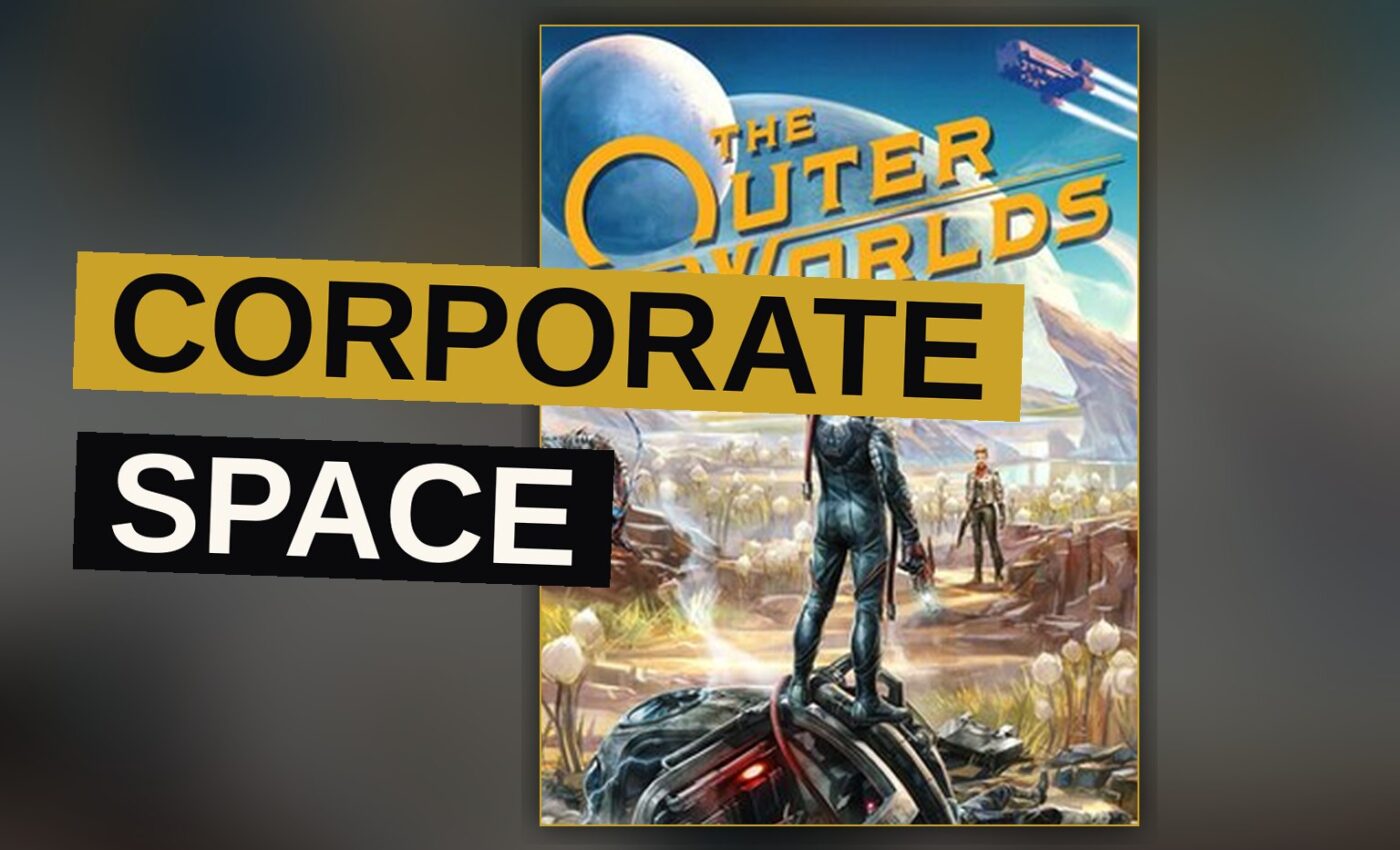
The Outer Worlds is a space-faring role-playing game from Obsidian Entertainment, the studio behind Fallout: New Vegas. It launched in 2019 for PC, PS4, Xbox One, and Switch, and it plays like a love letter to the genre’s golden age. It is sharp, funny, and dense with choice, though it never quite reaches the heights of its inspirations.
Trailer, via Obsidian Entertainment.
Halcyon’s Corporate Colony
The game is set in Halcyon, a distant colony run by a handful of mega-corporations that have turned society into a grim parody of workplace culture. You play as a colonist who wakes up decades late, thanks to a malfunctioning cryopod, and you are quickly thrown into a conflict between the board that runs everything and the people who want to tear it down. The premise is bleak, but the tone is not. The writing leans heavily on satire, and it lands more often than it misses.
Your ship, the Unreliable, becomes home base. From it, you recruit a crew of misfits, each with their own quests and opinions. The companions are memorable, but the real star is the dialogue system. Almost every conversation offers multiple paths, and your character’s skills in persuasion, lying, or intimidation open up new routes.
Combat is functional but not revolutionary. You have guns, melee weapons, and a slow-motion ability called Tactical Time Dilation that lets you target specific body parts. The game’s real hook is the Flaw system. When you take enough damage from a specific source, the game offers you a negative trait — like a fear of robots — in exchange for a permanent skill boost.
Flaws, Perks, and a Second Run
The RPG mechanics are where the game shines. You earn experience, level up, and pour points into skills like tech, stealth, and science. Perks are simple but effective. The Flaw system makes every character feel personal, and it rewards the kind of messy play that other games punish.
A single playthrough takes about 25 to 30 hours. That is a comfortable length, and it leaves room for a second run. The branching choices mean you will see different endings, different quests, and different companion reactions if you play again. The game rewards curiosity, and its best moments are hidden behind optional paths.
The Switch version is a technical compromise. It runs at a lower resolution and frame rate than the PC, PS4, or Xbox One versions, and loading times are longer. It is playable, but if you have another platform, that is the better way to play.
The Abrupt Climax
The game stumbles in its final act. The climax is abrupt, and the ending slides by without the weight it should carry. It is not a broken conclusion, but it is a quiet one.
The Outer Worlds is not a revolution. It is a refinement. It takes the structure of a classic RPG and tightens it, removing the filler and focusing on choice. The main story is shorter than many of its peers, but it is also denser. No quest feels like a fetch task, and even the side missions tie back into the world’s central conflict.
- The dialogue is the best feature.
- The Flaw system is a fresh twist.
- The combat is serviceable but unremarkable.
- The ending feels rushed.
That ranking explains why the whole is good but not great. The Outer Worlds is a game you will enjoy, then think about, then want to play again.
- Game: The Outer Worlds
- Developer: Obsidian Entertainment
- Platforms: PC, PS4, Xbox One, Switch
- Release: 2019
- Playtime: 25–30 hours per run
- Score: 8.6/10
The Outer Worlds earns an 8.6/10.
Get the Notebook.
The day's best stories and every fresh verdict, in plain English, in your inbox by seven. One email a day, no more.