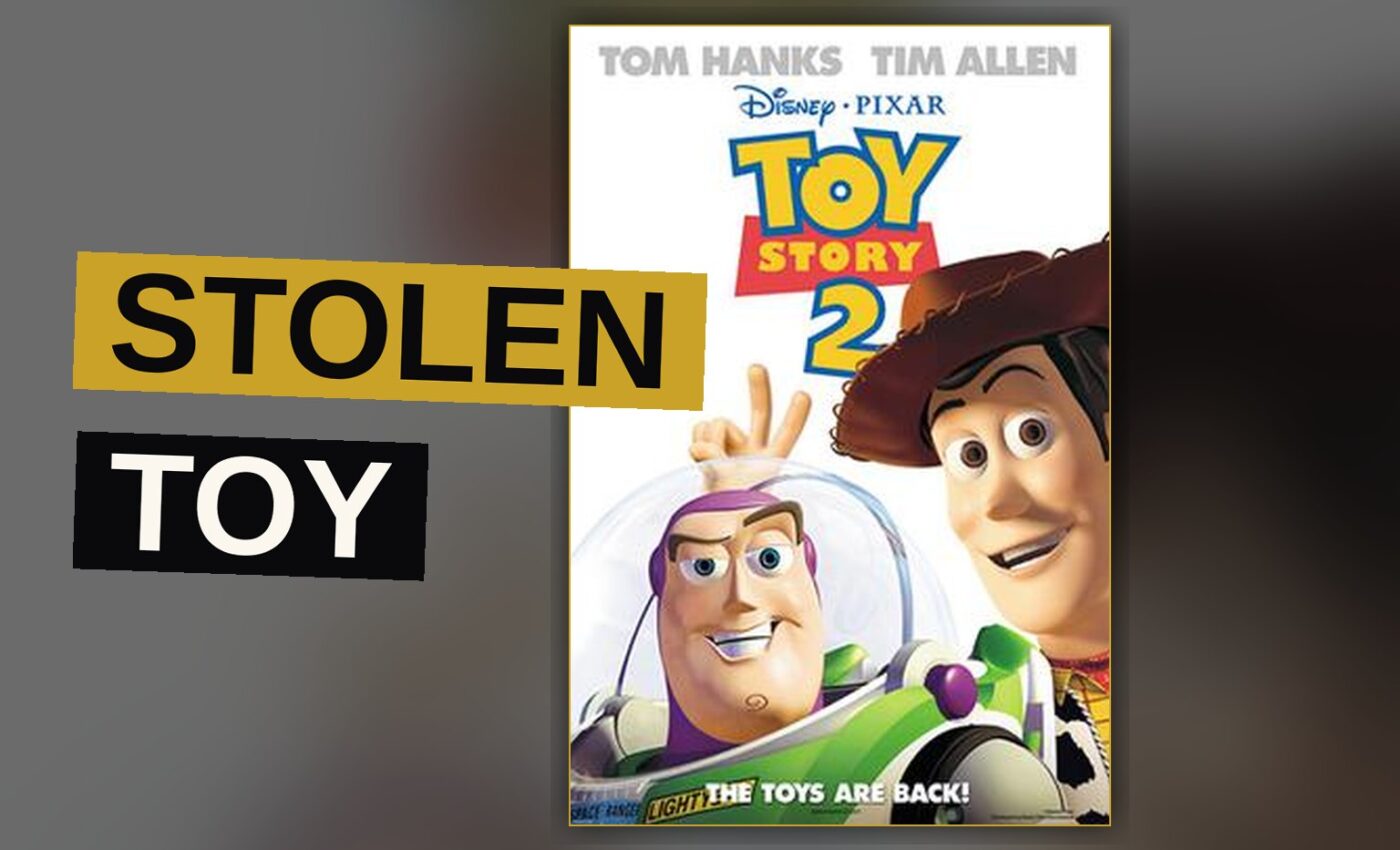
Toy Story 2 arrives at cinemas as a sequel built on the bones of Pixar’s first animated success. The movie follows Woody, Buzz Lightyear and the rest of Andy’s toys through a kidnapping that threatens to separate them from the boy who owns them. It is a story about attachment, loss and the fear of being left behind, dressed in bright colors and jokes aimed at children and adults alike.
The film opens with a quiet moment. Andy leaves his toys behind while he heads off to school, leaving them on the floor of his room. Woody, the lead toy, watches him go, and the scene sets the tone for everything that follows. The toys are not just objects. They are characters with feelings, fears and ambitions, and the movie treats them that way from the first frame.
Trailer, via Disney UK.
The Kidnapping That Drives the Plot
The plot turns on a single act of theft. Al McWhiggin, the owner of a toy store, takes Woody away after a visit to Andy’s home. He believes Woody is a rare collectible worth thousands of dollars, and he plans to sell him at an auction to make enough money to buy back a business he lost. The other toys, led by Buzz, set out to rescue Woody before the sale can happen.
This setup puts the toys in motion across several locations. They travel through a hotel, a moving van, a truck stop and a toy store, each place adding new dangers and new comic moments. The pacing stays fast, and the film rarely lets a beat sit too long before moving to the next crisis.
Characters Worth Caring About
The strength of Toy Story 2 comes from its characters. Woody remains the center of attention, a character whose loyalty to Andy never wavers even as he faces personal doubts about his place among the toys. Buzz, meanwhile, grows from a hero with delusions of grandeur into a more humble figure who learns to accept his past as a space ranger.
Other toys get their moments too. Mr. Potato Head delivers some of the film’s funniest lines, while Hamm the piggy bank serves as the group’s voice of reason. Slinky Dog, Rex and the rest of the gang each get small scenes that let viewers see them as individuals rather than a crowd.
Comedy That Lands With Everyone
The humor in Toy Story 2 is broad but precise. Some jokes are aimed directly at children, like the running gag about Buzz’s inability to bend properly. Others are aimed at adults, such as a scene where a toy store employee mistakes Buzz for a real space ranger. The film trusts its audience to understand both levels of comedy at once, and it rarely misses.
One sequence stands out. Woody gets separated from the group and finds himself trapped in a toy museum, surrounded by pristine action figures and dolls that treat him as an artifact. This is a dark turn for a children’s film, and it works precisely because the movie has spent its earlier scenes building a sense of dread around the idea of being forgotten.
Animation That Sets the Standard
Pixar’s animation in Toy Story 2 is a step forward from the first film. The characters move with greater fluidity, the backgrounds are richer in detail, and the overall look of the movie feels more polished. The film also introduces new techniques, such as the use of computer-generated lighting that gives scenes a warmer, more natural feel.
The toy store sequence, in particular, is a showcase for the studio’s skills. Toys fill every shelf, aisle and counter, and the camera moves through them with a confidence that suggests the filmmakers know exactly what they are doing. The scale of the set is impressive, and it adds to the sense of danger when the toys face capture.
Music and Voice Work
The music, composed by Randy Newman, fits the tone of the film perfectly. The main theme is warm and nostalgic, and it plays over scenes of Andy playing with his toys. The songs placed in the museum sequence add a layer of melancholy that suits the film’s darker moments.
The voice cast returns from the first film, and their performances remain strong. Tom Hanks voices Woody with warmth and conviction, while Tim Allen brings a mix of bravado and insecurity to Buzz. Don Rickles voices Mr. Potato Head with his usual energy, and Wallace Shawn’s Hamm remains a sharp-tongued presence throughout.
Comparing the Two Films
Toy Story 2 improves on its predecessor in almost every way. The story is tighter, the animation is better, and the jokes land harder. It also takes risks that the first film did not attempt, such as the museum sequence and the kidnapping plot, which give the film a sense of stakes that the original lacked.
That said, the first film remains the stronger character study. Toy Story 2 is more focused on action and spectacle, which works to its advantage in a sequel but leaves less room for the quiet character moments that made the original special. Both films share the same heart, but they serve it in different ways.
What Stays With You
Toy Story 2 ends on a note of hope, with the toys reunited and Andy promising to keep them safe until he leaves for college. The final image of Woody looking at a picture of Andy shows that the toys’ journey is not over, even though the film itself has reached its conclusion.
The movie also carries a message about the value of old friends and old possessions. Woody’s struggle to return to Andy is not just about physical safety. It is about preserving a connection that has shaped his identity.
The Numbers Behind the Film
- Release Year: 1999
- Director: John Lasseter
- Running Time: Approximately 92 minutes
- Critical Score: 8.8/10
Toy Story 2 is a sequel that earns its place alongside the film that started it. It is a confident, polished piece of animation that knows exactly what it wants to say and says it well. The jokes land, the characters matter, and the emotional payoff is earned through careful storytelling rather than cheap tricks.
It is not perfect. Some of the middle stretches drag, and the focus on action occasionally overshadows the quieter character work that made the first film so memorable. But those flaws are minor compared to the strengths. Toy Story 2 stands as one of the best sequels ever made, a film that respects its audience and rewards their trust.
The film holds an 8.8/10 critical score, a mark that reflects its standing as a landmark of animated cinema.