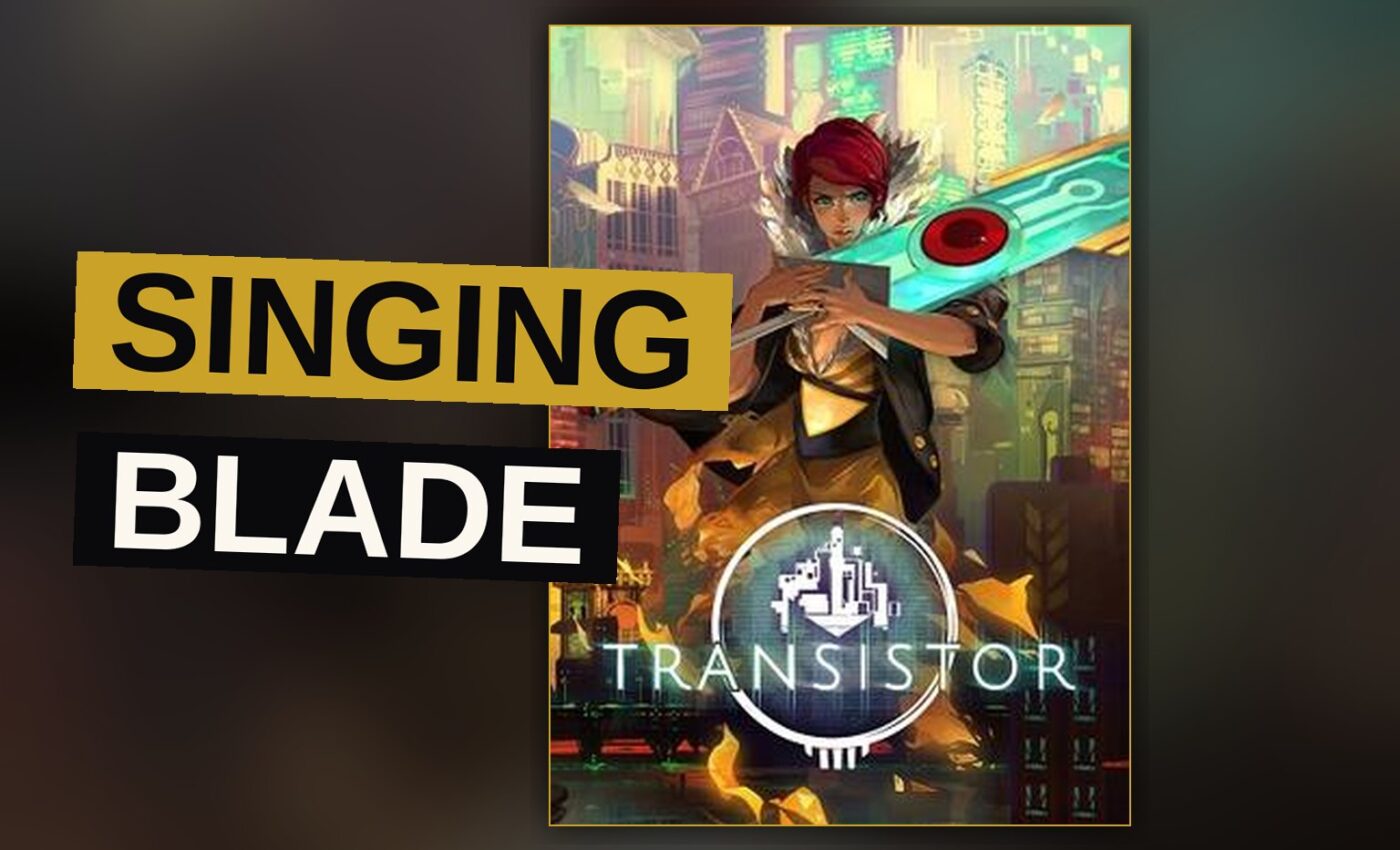
Transistor puts players in control of a singing blade and a city under siege. The game asks players to fight, switch blades, and listen to a full album of music while doing it. That mix of combat, gear switching, and sound design holds together better than it should.
Trailer, via IGDBcom.
The City and Its Blade
Players move through a dying city as Red, who carries a blade that sings. The blade is not just a weapon — it is a character in its own right, with a voice and a history that unfolds through dialogue and song. The city itself is rendered in clean, flat lines, and the art direction leans heavily on color and shape over detail. It is a striking look, and it fits the tone of the game’s music.
Combat and Gear Switching
The core loop is simple to explain but hard to master. Players build up energy by hitting enemies, then spend it to activate attacks tied to the blade’s songs. Switching between blades mid-combat changes attack types and routes through enemy formations. The system rewards patience and punishes carelessness in equal measure. Fights can feel generous early on but tighten into demanding tests later.
“Transistor” is built around a system of blades and songs, and it trusts players to learn it.
Music as Design
The soundtrack is not background noise here — it is the heart of the design. Each blade’s song plays during its attack, and the music changes the feel of the fight. This is a rare case where the audio actually shapes the gameplay, not just the mood. It works. Some tracks stand out more than others, but the whole album holds together as a single listening experience that complements the story.
Story and Pace
The narrative follows Red as she tries to stop the city’s destruction. It is a story about memory, loss, and the weight of power. The writing leans on silence and image as much as dialogue, and the pacing shifts between quiet moments and intense fights. It is not a long game, and it does not need to be.
Final Word
Transistor is a tight, confident package that succeeds where many games fail — it turns a central idea into a complete experience. The combat is deep, the city is beautiful, and the music stays with you after the credits roll. It is not perfect — some fights feel too easy and others too hard — but the highs outweigh the lows.