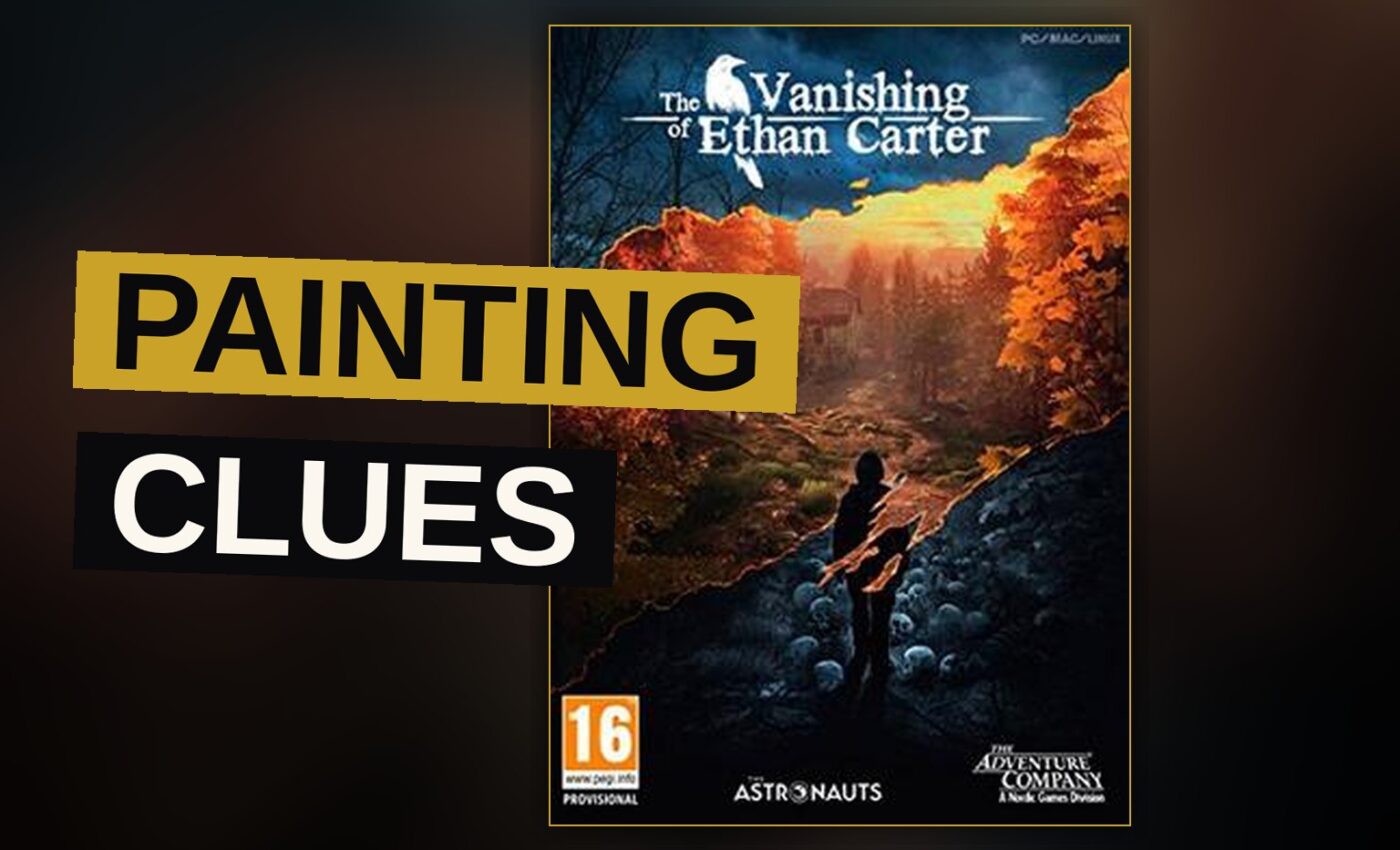
The Vanishing of Ethan Carter is a first-person detective game about looking at paintings, reading letters, and walking through empty houses. Made by Madmind Studio and published by Bloober Team, it launched in 2014 for PS4, PC, XONE, and Switch. It asks players to solve a mystery by studying the world around them rather than shooting anyone. That approach pays off more often than it stumbles.
Trailer, via IGDBcom.
The Setup
Players take on the role of Paul Prospero, a paranormal investigator who travels to a small town after receiving strange drawings from a man named Ethan Carter. Those drawings depict scenes from the town, and Paul uses them as clues to find his way through the village. The goal is to uncover what happened to Ethan and why he sent those pictures.
The premise is simple. A man sends an investigator pictures of a town. The investigator follows them. The town hides the answer. That simplicity is the strength of the game. It does not complicate the setup with unnecessary twists or side quests. It simply presents a town, a man, and a mystery, and trusts the player to piece them together.
Looking at Paintings
Most games hide information behind dialogue trees or locked rooms. The Vanishing of Ethan Carter hides its answers behind paintings. Players find small oil portraits scattered throughout the town, and each one offers a clue about the story. Reading the painting requires noticing details that don’t match the scene around it — a shadow that doesn’t belong, a color that isn’t there.
This mechanic rewards patience. Players who stop to look at a wall will see something that players who rush past it will miss. The game trusts players to pay attention, and that trust is rare in games this genre. It does not spoon-feed clues; it expects the player to slow down and look carefully.
Letters and Notes
Alongside the paintings, the game fills its world with letters, diary entries, and scraps of paper. These documents offer context for the events of the story, but they also create a sense of place. The town feels lived-in because it is filled with personal artifacts — a child’s drawing, a note left on a desk, a photograph of a family.
The letters are not just lore. They are the evidence. Players piece together the mystery by collecting and comparing these documents, and the game structures its puzzles around this process. Every note, every letter, and every diary entry feeds into the central mystery.
The Town Itself
The setting is a fictional American town, and the game renders it with a painterly quality. Buildings have rough, hand-painted textures that give the world a dreamlike feel. The lighting is dim and moody, with long shadows stretching across empty streets. The town looks beautiful, and that beauty carries the game when its puzzles drag.
The environment design is the star of The Vanishing of Ethan Carter. Every building, every field, every path holds a clue. The game never wastes a space. Nothing in the town is merely decoration. Everything has a purpose, whether it is a painting, a letter, or a hidden object.
Pacing Problems
The puzzle design is where the game falters. Some clues are obvious, while others require players to backtrack across the entire map. There is no map marker, no compass, no hint system. Players are left to wander until they find the next clue, and this can stretch the middle hours of the game into frustration.
The difficulty curve is uneven. Early puzzles are generous, offering multiple paths to the solution. Later puzzles are harsher, demanding exact observation and memory of previous locations. This shift can feel jarring to players who settle into the rhythm of the early game.
| Puzzle Type | Difficulty | Clue Density |
|---|---|---|
| Early town | Easy | High |
| Middle fields | Moderate | Medium |
| Late mansion | Hard | Low |
That table shows the full range of the game’s difficulty. It moves from easy puzzles with many clues in the early town to hard puzzles with few clues in the late mansion. The middle fields sit somewhere in between, moderate in difficulty with a medium density of clues.
Sound Design
The music in The Vanishing of Ethan Carter is sparse and effective. A piano score accompanies the player through most of the game, and the quiet adds to the eerie atmosphere. The sound design is subtle — footsteps, wind, distant dogs — but it works. Nothing here is wasted.
The audio complements the visual style, keeping the game’s tone consistent from start to finish. The music and sound effects work together to build the game’s sense of place, making the town feel both lived-in and mysterious.
Performance Across Platforms
The game performs well on all its platforms, though the Switch version runs at a lower resolution due to hardware limits. The load times are short, and the frame rate holds steady during exploration. None of the versions suffer from major technical issues.
Switch owners get a portable version of a game built for larger screens, and the port holds up. It is not a full copy of the original, but it is playable. The performance is solid enough that players who want to carry the game with them can do so without losing much of the experience.
Where It Falls Short
The Vanishing of Ethan Carter is not a long game, but its middle section drags. The pacing problems mentioned earlier extend the playthrough beyond what the content supports, and some players will put the game down before finishing. The lack of a hint system is a deliberate choice, but it also means players who get stuck have no recourse.
The story itself is thin. The mystery is resolved by the end, but the characters remain shallow. Ethan Carter is a ghost whose motivations are never fully explained, and the townspeople who populate the game are mostly background figures. The game is better at setting a mood than telling a complete story.
Final Verdict
The Vanishing of Ethan Carter succeeds because it trusts players to look closely. Its best moments come from finding a clue in a corner of a room that no one expected to hold one. The game is at its strongest when it slows down and lets players examine a single object.
It is weaker when it demands too much patience. The pacing issues and the harsh late-game puzzles keep it from greatness.
The Vanishing of Ethan Carter earns an 8.2 out of 10.