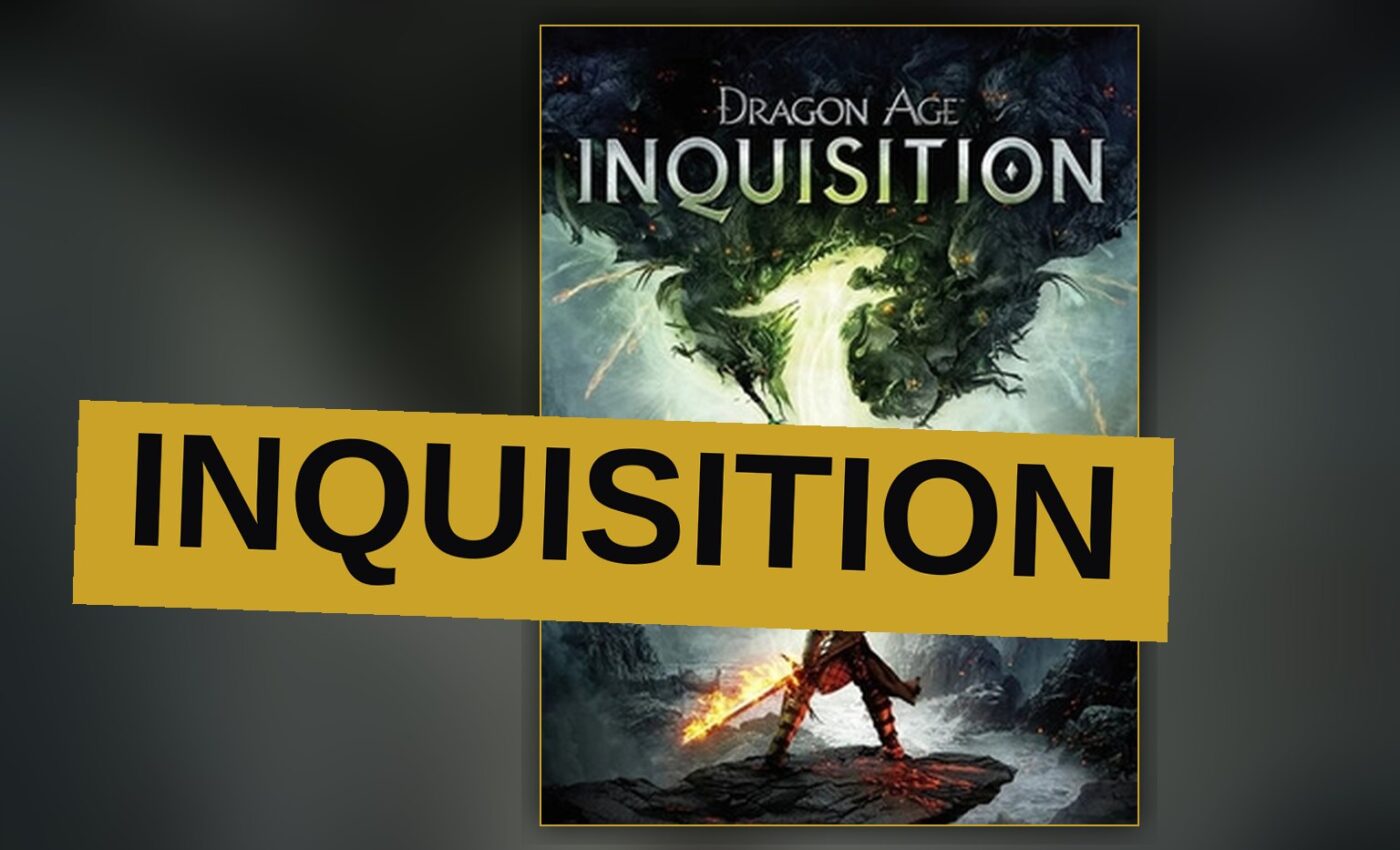
Dragon Age: Inquisition is the biggest game BioWare has ever made, and it shows. Released in 2014 for PS3, PS4, PC, and Xbox 360, it sends you to a dying world to stop an ancient force from consuming everything in it. That mission turns out to be a cover for something far larger: building a new nation, gathering allies, and deciding who gets to lead it. The result is a game about power, faith, and the people who wield both, and it mostly earns its ambition.
Trailer, via IGDBcom.
The World of Dragon Age: Inquisition
The setting is Thedas, a fantasy realm of empires, kingdoms, and holy wars. You arrive in the middle of a crisis. A rift in the sky, known as the Breach, is swallowing magic and the souls of those caught near it. You are the Herald of Andraste, a prophet whose return was foretold centuries ago, and the game spends hours letting you walk through the ruins of the empire to find the people who can fix it.
The map is huge, packed with side quests, secret lairs, and fast-travel points. You can ride a horse across open fields, climb mountains, or swim in lakes. The wilderness is dense with life, from bandit camps to ancient temples, and the game rewards curiosity. Finding a hidden cache or a rare ingredient feels like a small victory, even when the main plot grinds overhead.
The city of Haven serves as your base camp. Here you recruit companions, craft gear, and plan your next move. It is a quiet hub, but it carries weight because the game trusts you to spend time there. The world itself is the character, and it speaks louder than any dialogue box.
Building the Inquisition
The core loop of Dragon Age: Inquisition is simple: gather intelligence, recruit agents, and build a network. You send scouts to enemy territories, negotiate with rival factions, and train your followers in combat and diplomacy. This system replaces the traditional quest hub with a living machine of war. It is slow at first, but it pays off once you have a full roster of spies and soldiers.
Your choices shape the game’s ending. Who leads the Inquisition? What alliances survive? These questions drive the final act, and the game lets you answer them in ways few games of its era did. The dialogue system is deep, letting you flatter, threaten, or charm your way through conversations. Each companion reacts to your words, and their opinions shift over time. This is the best conversation system BioWare has built, and it makes every decision feel personal.
The combat is a mix of real-time action and tactical positioning. You command a party of three companions, each with a unique skill tree. You can shield bash enemies, cast fireballs, or summon a spirit to fight alongside you. The camera can be awkward during fights, and the difficulty spikes in later dungeons, but the chaos of a five-on-five battle is thrilling. The game respects your choices. If you build a tank, you can stand in the front line. If you build a mage, you can rain down damage from afar.
The Characters You Recruit
The cast of Dragon Age: Inquisition is large, and the game asks you to care about all of them. Each companion has a past, a fear, and a secret, and the game takes time to show these moments outside the main plot. Sera, a former slave turned soldier, carries guilt over her family’s death. Iron Bull, a Qunari mercenary, hides a soft heart behind a rough exterior. Dorian, a mage from a noble house, struggles with his own magic. These characters are not just tools for combat. They are people with arcs, and the game tracks them closely.
The romance system returns, and it is more complex than in previous entries. You can pursue multiple romances, but only one ends happily. The game warns you early that some relationships will fail, and it delivers on that promise without cheapening the loss. The intimacy scenes are tasteful, and the writing treats desire as a serious subject rather than a joke.
The villains are also memorable. Corypheus, the god of the Breach, is a walking embodiment of corruption. He is a master of manipulation, and his schemes test your trust in everyone around you. His final confrontation is a highlight of the game, a battle that forces you to question everything you thought you knew.
The Long Campaign
The campaign runs long, and it drags in the middle. The early hours are sharp, with a clear sense of urgency. The Breach is growing, and the world is falling apart. But the middle stretch slows down. You chase a lead, wait for a message, and then chase another lead. The pacing dips, and the game loses momentum. Some players will find the second half tedious, especially if they are not invested in the political intrigue.
The voice acting is strong throughout. Jennifer Hale voices the female protagonist with conviction, and Malcolm McDowell brings a chilling presence to Corypheus. The music, composed by Clint Balog, shifts between epic themes and intimate ballads. The score is a constant presence, and it never overstays its welcome.
The game’s technical performance varies across platforms. On PS3 and Xbox 360, the frame rate drops during busy battles. On PS4 and PC, the visuals shine, with detailed environments and expressive character models. The loading times are long, and the game stutters during fast travel. These issues are minor compared to the scale of the game, but they are noticeable.
Where It Falls Short
Not everything lands. The writing can be uneven, with some lines feeling forced or silly. The game’s tone shifts without warning, moving from tragedy to comedy to melodrama within a single scene. This can be jarring, especially in the final act, where the stakes are highest.
The side content is hit-or-miss. Some quests are clever, with branching paths and meaningful choices. Others are filler, sending you to fetch an item or kill a named enemy. The game’s structure encourages you to complete side content before the main plot, and this can extend your playthrough by dozens of hours. Whether this is a strength or a weakness depends on your patience.
The game’s difficulty curve is steep. The final dungeons require precise positioning and quick reactions. Some boss fights are unfair, and the game expects you to know its patterns before you can win. This is a complaint that has followed the series, and Dragon Age: Inquisition does not fully escape it.
A Landmark in Its Field
Despite its flaws, Dragon Age: Inquisition is a landmark game. It set a high bar for role-playing games, blending deep systems with a compelling story and a vast world. The game’s influence is visible in the genre today, and it remains a standard for what a single-player RPG can achieve.
The game is not perfect. It is too long, too uneven, and too demanding in places. But its strengths are real. The companions, the choices, and the world are reasons to play it again. The game is a product of its time, and it shows. The camera struggles, the load times drag, and the middle hours stall. But the final act is a triumph, and the journey to get there is worth taking.
| Platform | Release Date | Performance |
|---|---|---|
| PS3 | November 2014 | Low frame rate, lower detail |
| PS4 | November 2014 | Smooth, detailed |
| PC | November 2014 | Highest detail, mod support |
| Xbox 360 | November 2014 | Low frame rate, lower detail |
The game is a product of its time, and it shows. The camera struggles, the load times drag, and the middle hours stall. But the final act is a triumph, and the journey to get there is worth taking.
Dragon Age: Inquisition is a flawed masterpiece. It is ambitious, beautiful, and occasionally exhausting. It asks for your time, and it gives you back a world you will not forget. The game is a landmark in its field, and it stands as one of the best RPGs of its generation.
Get the Notebook.
The day's best stories and every fresh verdict, in plain English, in your inbox by seven. One email a day, no more.