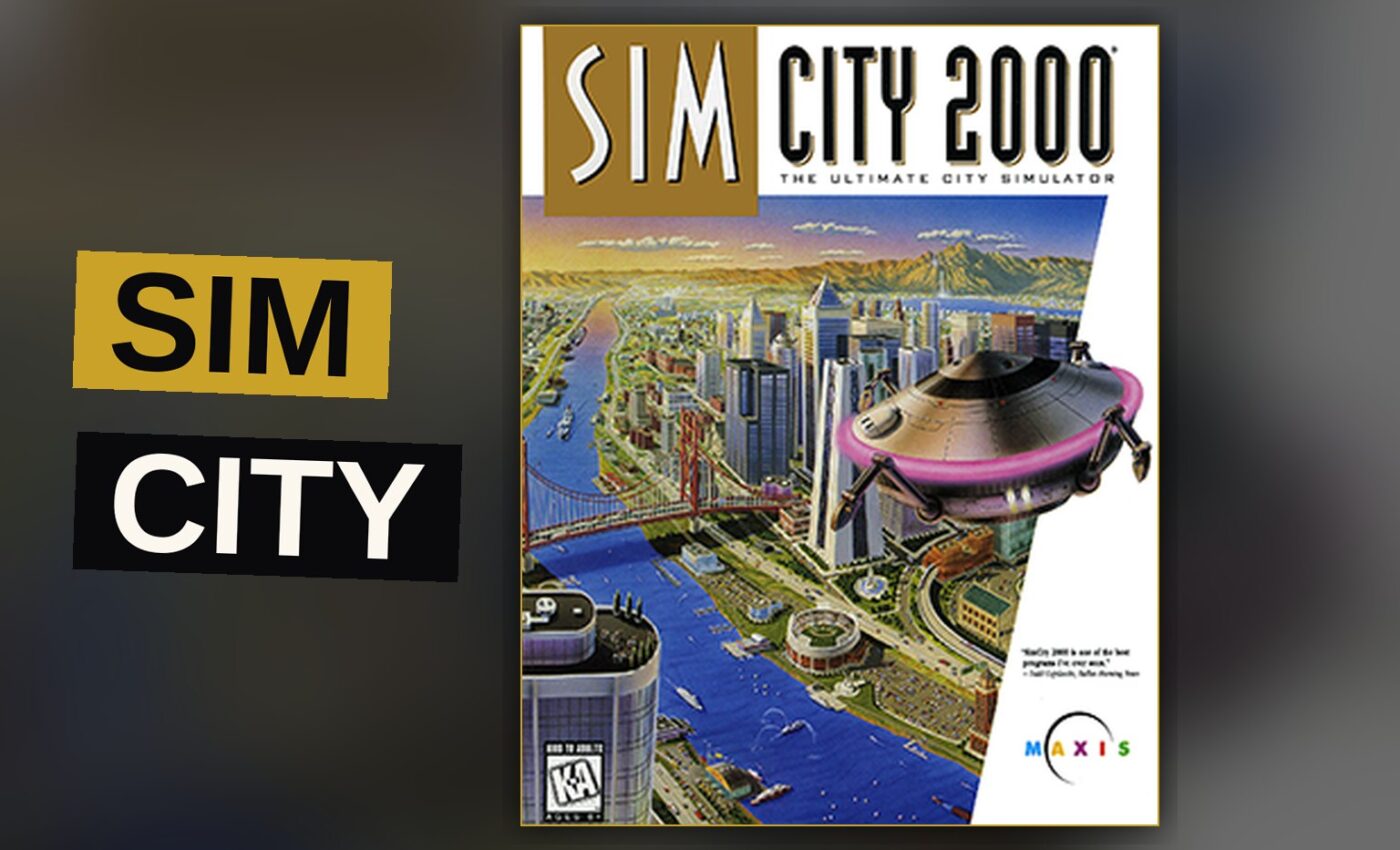
SimCity 2000 arrived on the SNES in 1995, two years after Will Wright and Fred Haslam’s sequel first hit Macintosh and MS-DOS machines. The console port kept the core of what made Maxis’ city-builder a landmark: an isometric view of a living city, underground layers for water pipes and subways, and a budget that punishes anyone who spends past their means. It is a dense, demanding game, and it remains one of the best management sims ever put on a cartridge.
Nine Power Plants and a Water Table
SimCity 2000 asks players to build a city and keep it solvent. Residential, commercial and industrial zones each carry their own tax rate. Power and water facilities must be built and maintained. Highways and roads connect to neighboring cities, and trade and population rise when those links exist.
The simulation runs deeper than its predecessor. Power plants come in nine varieties: coal, oil, natural gas, nuclear, wind turbines, hydroelectric dams, solar, fusion and satellite microwave. Most have a limited life span and must be rebuilt. Dams can only sit on waterfall tiles. Land has elevation, and underground layers hold subways and road tunnels.
The query tool is the quiet star. Select a tile and it reports structure name, type, altitude and land value. Query a power plant and it shows the percentage of power being consumed. Query a road and it shows traffic on that tile.
What the Cartridge Costs You
The SNES version trims the experience. The mouse-driven interface of the computer original does not translate cleanly to a gamepad, and the later PlayStation release in 1996 had more room to breathe. Menus take longer to navigate and the pace suffers for it.
The systems that carry the most weight, in this paper’s view:
- The budget and finance controls, which decide whether a city survives.
- The nine power plant types and their limited life spans, which force constant rebuilding.
- The query tool, which turns guesswork into data.
- The isometric view, which makes a dense city readable at a glance.
A Model for Everything After
SimCity 2000 was praised for its graphics, its control menu, its music and its gameplay. Roughly 4.23 million copies sold across platforms, mostly in the United States, Europe and Japan. The original SimCity pioneered the genre. This sequel became the template that urban simulators copied for decades.
The SNES port is not the definitive version. It is, however, a complete one. Every system that made SimCity 2000 endure is present: the tax rates, the arcologies, the prisons and hospitals and marinas, the slow slide toward bankruptcy if you overspend. The game does not flatter you. It hands you a region and a deficit and lets you find out what kind of planner you are.
That is the achievement worth naming. SimCity 2000 turned city planning into a set of readable numbers and gave players the tools to interrogate them. The query tool alone puts it ahead of most management games released since.
Get the Notebook.
The day's best stories and every fresh verdict, in plain English, in your inbox by seven. One email a day, no more.