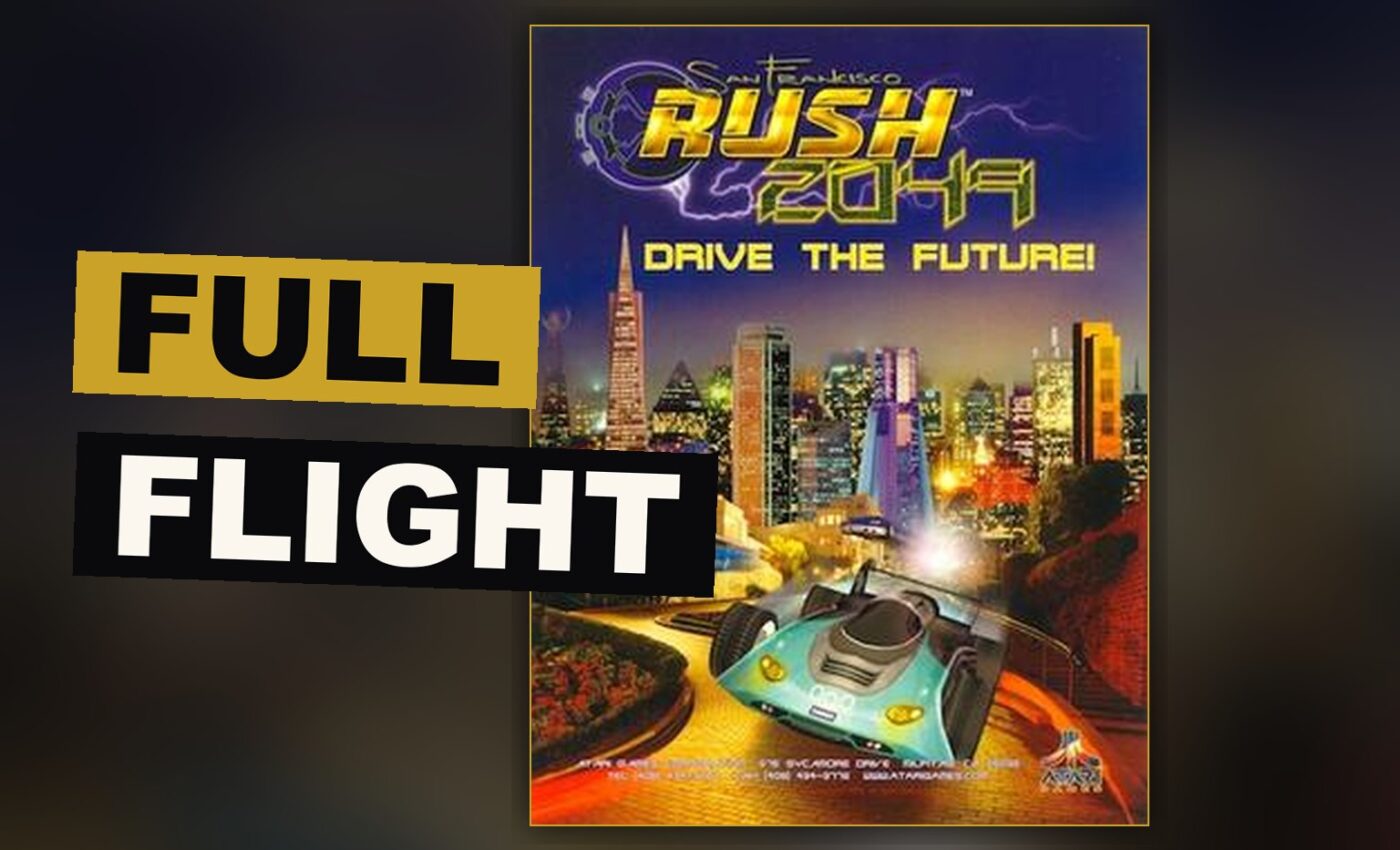
Rush 2049 lands on the Nintendo 64 with a promise: cars that fly, tracks that twist, and a city built for pure competition. It delivers on all three.
The Tracks
The tracks in Rush 2049 wind through a city that never sits still. Ramps launch cars over buildings. Secret paths run behind walls and through openings, and finding them rewards players who roam instead of following the obvious line. Every course contains at least one secret path, and finding it changes how the race feels the second time through.
The car handling favors instinct over strict control. Turn too hard and the car twists off course; ease too late and the car flies past a turn into open air. That is by design. Rush 2049 wants cars flying as often as possible, and the engine supports it.
Four Players, One Screen
Multiplayer is where Rush 2049 earns its reputation. Four racers can compete at once on a single screen, each view smaller but still clear. The frame rate holds steady even when all four cars are in the air at once over a ramp.
Battle mode adds something the main game lacks: a direct struggle. Players can strike other cars, cut off their paths, and turn a race into a fight for position. It plays like a different game inside the same game.
Career Mode and Rewards
The career mode turns the disorder into something like a ladder. Players earn new cars and new tracks by finishing well in a run of events, and the rewards matter. Later cars handle in new ways, faster but harder to hold steady, and the career mode pushes players to change how they drive rather than settle into one car.
| Feature | Career Mode | Multiplayer |
|---|---|---|
| Max racers | Against cars driven by the game itself | Up to 4 on one screen |
| Focus | Earning cars and tracks | Direct competition and battle mode |
| Pace | A set order of events | Open and full of disorder |
| Frame rate | Steady | Steady even at full capacity |
Presentation
The city itself pushes the Nintendo 64 toward its limit. The buildings carry detail rare for the console, with shining surfaces and layered scenery that suggest a living place rather than a still picture. Sight lines hold up well enough that players can see a ramp coming before they reach it.
The music matches the tone: fast, electronic, and quiet beneath the action. It does not try to stand out. It tries to keep pace with the cars.
Waiting time between races is short.
Where It Falls Short
Not every part holds up. The cars driven by the game itself can feel easy to read once players learn how they act, and some tracks rely too much on the same tricks rather than fresh ideas. A few courses feel too close to ones players have already raced.
None of that changes the heart of the game. Rush 2049 is built to be played with friends in the same room, and that is where its choices make the most sense. The career mode mainly prepares players for the real event: four racers on one screen, cars in flight, secret paths contested, and music pushing every driver toward the line.
Rush 2049 earns its place among the Nintendo 64’s strongest racing games not through strict accuracy but through full devotion to its own rules: fast, loose, and built for competition. The tracks reward roaming, the multiplayer mode holds up under pressure, and the presentation goes beyond what the hardware usually allows. It has its faults, but it knows exactly what kind of game it wants to be, and it succeeds at being that game.