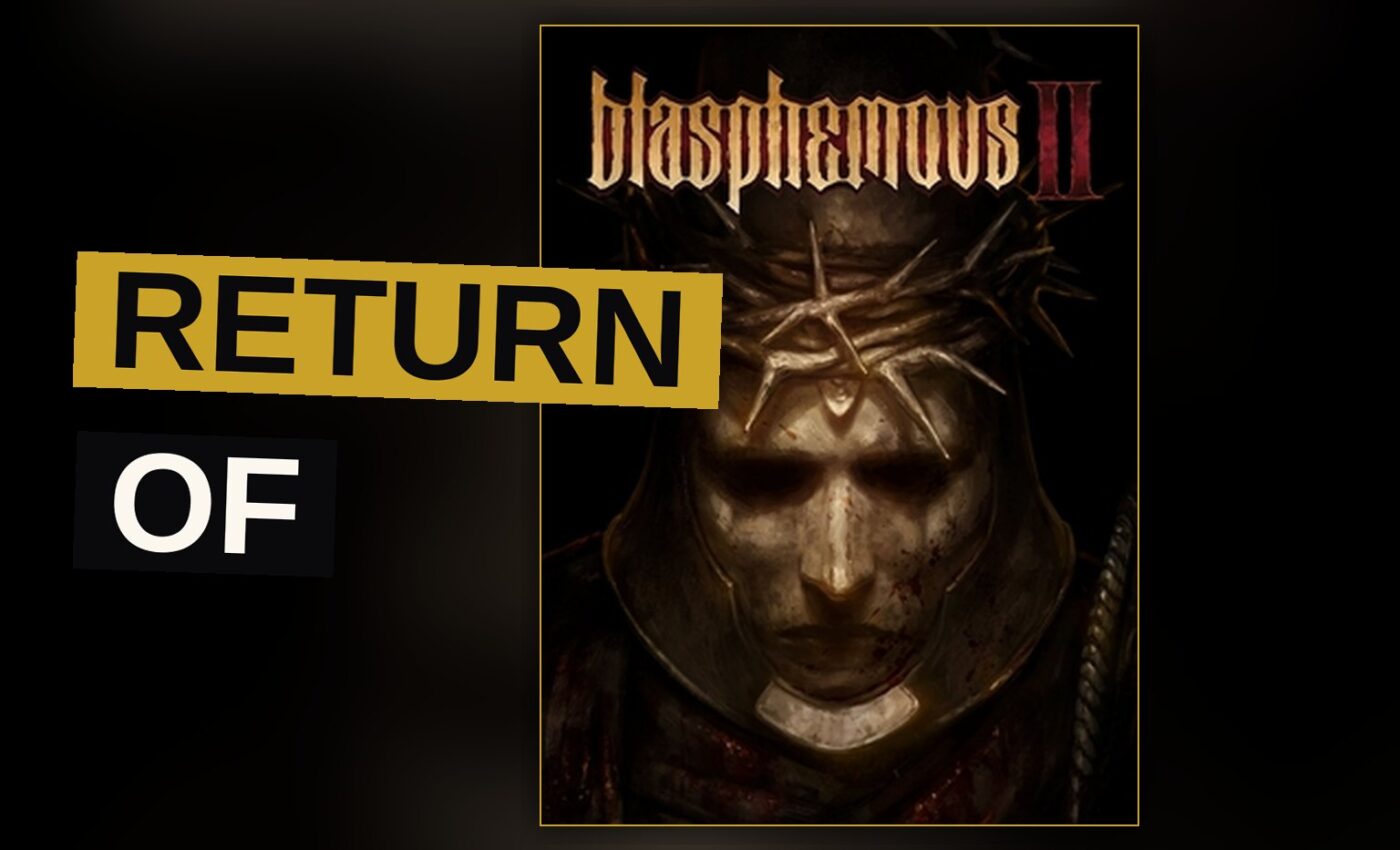
Blasphemous 2 arrives as a sequel that sharpens nearly everything about its predecessor. The Penitent One returns to a new nightmare built from twisted faith and bone, and the result earns an 8.4 out of 10.
The Penitent One’s New Arsenal
The biggest change is weapons. Instead of one blade, players now switch between three main tools, each with its own reach, speed and puzzle use.
That variety changes how fights feel from room to room. A sword handles crowds fast. A mace crushes single targets. A censer-flail hits at range and opens up platforming routes older fans never had.
Miasma and the World Map
The world of Blasphemous 2 is dense with shrines, secrets and grim shortcuts. Areas loop back on each other in the genre’s usual style, but the new tools mean old paths open into new rooms once players unlock a fresh weapon.
Fast travel is smoother this time. Backtracking still happens, but it rarely drags.
Combat and Difficulty
Bosses hit hard and demand pattern recognition over button mashing. Enemies punish careless dodges, and the game leans on ritual-like buildup before big fights, matching the grim tone set by its world.
Here is how the two Blasphemous games compare on a few key points:
| Feature | Blasphemous | Blasphemous 2 |
|---|---|---|
| Main weapons | One sword | Three weapons |
| Traversal | Limited | Expanded via weapon abilities |
| Fast travel | Present | Smoother |
| Boss design | Tough | Tougher, more varied |
The extra weapons do more than add options. They reshape exploration, since certain doors and ledges only give way once a specific tool is in hand.
Art and Sound
The pixel art holds up. Character and enemy designs stay grotesque and specific, never generic gore for its own sake.
Environments shift from ruined cathedrals to rot-covered caverns, each with its own color mood. The soundtrack backs this with choral, heavy tones that fit the setting without overplaying the drama.
Where It Falls Short
Some sections still lean too hard on backtracking, even with the improved fast travel. A few late-game enemies feel like reused patterns dressed in new skins rather than genuinely new threats.
Newcomers might find the lore thin on explanation, even if the world is thick with imagery. That is a decision the game leans on, but it is worth noting for anyone jumping in fresh.
Blasphemous 2 is currently available on PS4, PS5, Xbox One, Xbox Series X/S, PC and Switch, giving nearly every player a way to get into the world of the Penitent One.
Combat rewards patience.
Across platforms, performance stays steady, and load times between areas are short. Switch players get a slightly softer image, but frame rate holds during boss fights, which matters most given how demanding some of those battles are.
For players who found the first Blasphemous rewarding but rough around the edges, this sequel answers most of the criticism. The three-weapon system alone justifies replaying older areas, and boss encounters push players harder without becoming unfair.
Blasphemous 2 does not reinvent its world so much as expand and polish it. That expansion, paired with tighter combat and stronger traversal options, makes it a clear step forward for the series.