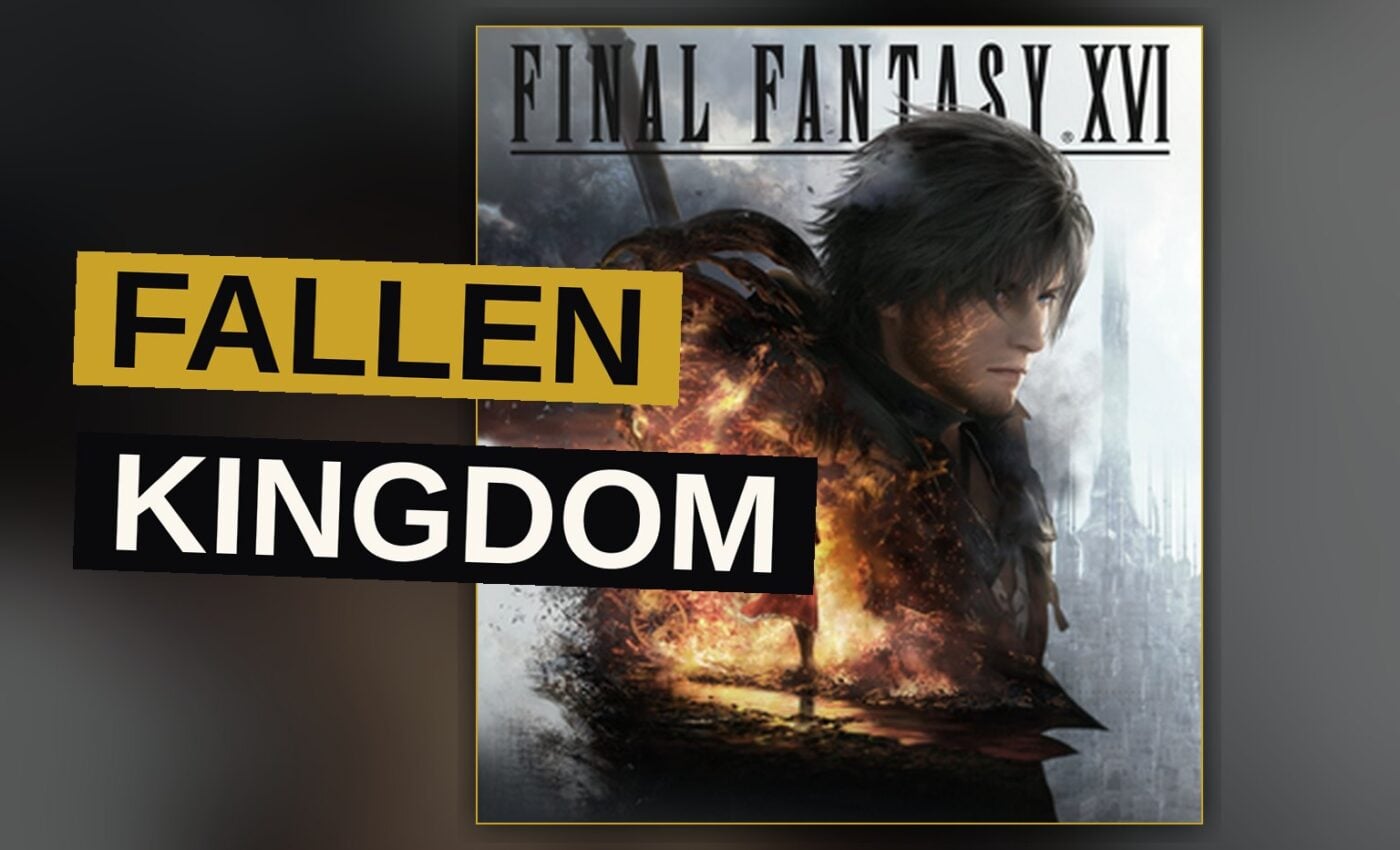
Final Fantasy XVI puts a sword in your hand and a country on fire, and it rarely lets go of either. The game arrives on PS5 and PC as a hard turn for the series, trading turn-based menus for real-time combat and a story built around war, power and the price both carry.
Trailer, via Square Enix.
The Hero and His Fallen Kingdom
The plot follows a soldier bound to a fallen kingdom and to a long-held anger that shapes every choice he makes. His path runs through politics, betrayal, and a cast of nations each hiding their own reasons for war. The writing leans on grim, adult themes: slavery, empire, loss. It works best when it stays small, focused on the hero and the people around him rather than the wider map.
The dialogue carries real weight in its quiet scenes. Characters sit and talk, and the game trusts the player to listen.
That patience pays off later, when the story asks for trust in its bigger turns.
The hero’s anger is not a simple tool for the plot. It drives him into choices that cost him allies and force him to face the ruin his own nation left behind. The game does not let him off easy, and the best scenes come when he must weigh his desire for payback against the needs of the living. This tension gives the story a spine that holds through the slower parts.
Supporting characters carry their own burdens, and the game gives them room to speak. A few of them feel like stock figures at first, but the writing slowly adds layers. By the later acts, the player cares about who lives and who falls. That emotional stake makes the war feel personal rather than just a map of moving pieces.
Summoned Beasts and Real-Time Combat
The combat is where Final Fantasy XVI makes its clearest case for itself. The hero can call on summoned beasts tied to different nations, and switch between their powers in the middle of a fight. The action owes a clear debt to character-action games, full of quick evasions, chained attacks and screen-filling special moves.
The battles between summoned beasts stand apart from the rest of the combat. These clashes trade the ground-level fighting for something closer to a giant-monster film, with whole cities used as a stage. The scale shifts from human-sized duels to city-sized clashes, and the game keeps the player busy throughout.
A short list of what these set pieces tend to include:
- Massive shifts in scale, from human-sized duels to city-sized clashes
- Cinematic button-prompt sequences that break up the action for scripted moments
- Distinct sets of moves tied to each summoned beast, encouraging different ways to fight
Between those peaks, the smaller fights can wear thin. Enemy variety dips in the middle stretch, and side missions often send the hero back over ground already covered. The combat system has depth, but the game asks the player to use it against the same kinds of foes too often. A few new enemy types in the later acts would have kept the mid-game from dragging.
The summoned beasts themselves are more than just power sources. Each one carries a personality and a history tied to the nations at war. The hero’s bond with them grows over time, and the game uses that bond to explain why he can call on their strength. This lore is woven into the fights rather than dumped in menus, which keeps the pace steady.
A Director Known for Action Games
Combat direction here carries the mark of a director known for his work on other action series. That influence shows in the precision of the hero’s set of moves and in the way fights reward timing over random button pressing speed. The game wants the player to learn patterns and act with intent, not just react.
It also shows in how the game paces its sense of power. New abilities land often enough that combat rarely goes stale over a long game. Each new power opens a fresh way to approach a fight, and the game encourages the player to test them against older foes. That sense of growth keeps the action feeling alive.
The pacing of these new powers keeps the middle of the story from feeling like a holding pattern. The hero gains strength at a rate that matches the rising threat of the war around him. By the final act, the player has a full kit of tools and the game gives them room to use all of them.
Performance on PS5
On PS5, Final Fantasy XVI runs smooth in its main graphics mode, though the game does offer a second mode for those who want a more constant rate of motion over sharper visuals. Load times stay short, which keeps the story’s heavy use of long narrative scenes from dragging on the player’s patience. The game rarely stutters, even in the busiest fights.
The PC version was not covered in this review.
Some side content feels thin against the weight of the main story. Missions built around collecting or gathering items break the pace that the story’s big scenes work hard to build. These tasks feel like filler, and the rewards rarely justify the time spent. The game is at its best when it commits fully to spectacle or fully to quiet character work, and a little uneven when it sits between the two. Even so, the strongest hours of Final Fantasy XVI stand with the best action set pieces the series has offered.
The story’s ending, when it arrives, earns the long build that came before it. Threads about power, loyalty and family draw together without feeling rushed, even after the slower middle stretch. The final battles test every skill the player has learned, and the last scenes give each major character a fitting close.
Final Fantasy XVI is a big swing that mostly connects, a war story anchored by strong performances and combat built for a system that clearly wanted this kind of fight all along. It asks for patience in its quieter hours, but it pays that patience back with some of the most memorable action moments the series has produced. For players who want a darker, faster take on the franchise, this is a strong entry.
Get the Notebook.
The day's best stories and every fresh verdict, in plain English, in your inbox by seven. One email a day, no more.