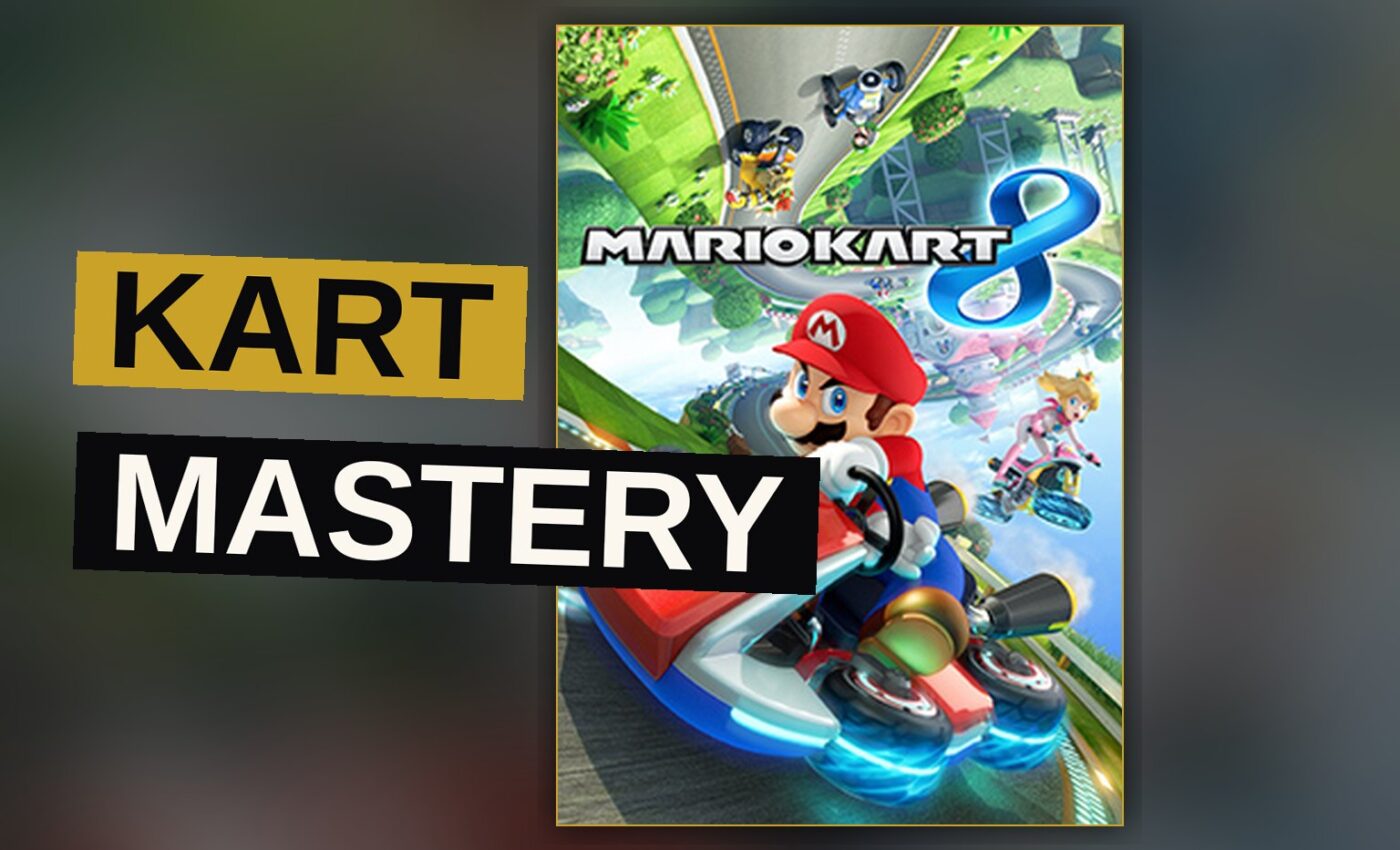
Mario Kart 8 arrived on the Wii U in May 2014 and did something the series had not managed in years: it made the act of steering feel new. Nintendo’s kart racer had spent a decade refining drifting, drafting and the careful cruelty of a well-timed item. The anti-gravity sections are the twist here, and they are not a gimmick bolted on for a trailer. When a course tilts and the wheels leave the ground, the race keeps its logic. Walls become road. Ceilings become road. The camera rolls with you and the kart does not slow down.
That single change carries the whole package.
Anti-Gravity on Walls and Ceilings
The new mechanic works because it respects what came before it. Anti-gravity does not replace drifting — it folds into it. Collide with another racer or a special bumper during one of these sections and you get a speed boost, which turns the walls into a place to fight rather than a place to survive. The tracks are built to be driven upside down, not just looked at.
The 32 courses spread across eight cups understand this. Each cup has a shape and a mood, and the anti-gravity stretches arrive where the track needs a jolt. Nintendo has been making these courses for two decades. This is the first batch in years where the geography itself feels like the attraction.
Underwater racing and hang gliders return from Mario Kart 7. Motorbikes and twelve-player fields return from Mario Kart Wii. None of it feels like a checklist. It feels like a studio deciding which pieces still work and cutting the rest.
Four Difficulties and a Mirror Mode
Difficulty is selectable before a race, and it matters. Four settings change the speed, and the faster tiers do not just make the karts quicker — they change how early you have to commit to a line. Mirror Mode flips every course horizontally, which sounds like a cheap trick and is not. A track you know cold becomes a track you have to learn again.
The roster reaches past the Mario series. Characters come from The Legend of Zelda, Animal Crossing and, in the Deluxe version, Splatoon. Players can also race as their own Miis. The Koopalings and Pink Gold Peach join as new faces.
Four new items change how races play out. The Boomerang Flower can be thrown to hit players more than once. The Piranha Plant attacks nearby racers and obstacles and hands out a speed boost while it does. The Crazy Eight drops eight different items into your hands at once. The Super Horn is the important one. It can attack nearby opponents, and it can also defend against items — including the Spiny Shell, which for years had been nearly unavoidable.
That last change is bigger than it looks. The blue shell was the series’ way of saying that no lead is safe. Now there is an answer. The race at the front is no longer a waiting game.
Twelve Players Online, Four on the Couch
Mario Kart 8 supports up to twelve players online and up to four on a single system. The Switch version adds local wireless for up to eight. Grand Prix racing and arena-based battle modes both return.
The battle mode on the Wii U is the weak spot, and it is worth saying plainly. Reviewers at the time praised the racing and the presentation and criticized the battles, and they were right to. Arena combat without dedicated arenas loses the thing that made it work — the tight, hostile spaces where a single item decides everything. The courses are built for speed. The battles are not.
Vehicle customization lets players mix kart bodies, wheels and gliders. Karts, motorbikes and all-terrain vehicles are all in. The combinations matter enough to tinker with and not so much that they break the field. It is a tuning system, not a puzzle.
Mario Kart 8 Deluxe and the Booster Course Pass
The Switch rerelease landed in April 2017 as Mario Kart 8 Deluxe. It includes all the previous downloadable content, a revamped battle mode with dedicated arenas, and accessibility features for newer players. The battle fix is the headline. Dedicated arenas give the mode the rooms it always needed.
From March 2022 until November 2023, Deluxe received the Booster Course Pass, which added 48 race tracks and eight characters. That is a staggering amount of track for a game that already shipped with 32 courses and 16 more as DLC. The Wii U original got both paid and free downloadable content after launch, including additional tracks and a new difficulty setting.
The Deluxe version is the one to play.
What Mario Kart 8 Gets Right
The racing is fast and readable. The anti-gravity sections are the best new idea the series has had since it went to two wheels. The item pool is balanced enough that a bad start is not a lost race, and the Super Horn finally gives the leader something to do besides hope.
The battle mode on Wii U is the one real miss. It is not enough to sink the package, but it is the reason the Deluxe version exists and the reason it is the definitive one.
What matters most is that Mario Kart 8 does not coast. Nintendo had a formula that sold millions and chose to tilt the whole thing sideways. The tracks reward practice. The speed tiers reward nerve. The anti-gravity sections reward players who look up.
This is a kart racer with nothing left to prove and the confidence to try something anyway. Twelve years on, it is still the best game in its series, and the Switch version makes that case even stronger. 9.3 of 10.
The Numbers
- Release: May 2014 (Wii U); April 2017 (Nintendo Switch, as Mario Kart 8 Deluxe)
- Developer: Nintendo Entertainment Analysis & Development
- Publisher: Nintendo
- Platforms: Wii U, Nintendo Switch
- Base courses: 32 across eight cups, plus 16 released as downloadable content
- Booster Course Pass: 48 tracks and eight characters, from March 2022 to November 2023
- Online players: up to 12; local: up to 4, or 8 via local wireless on Switch
- Critical score: 9.3 out of 10, the IGDB critic aggregate across 17 outlets
Get the Notebook.
The day's best stories and every fresh verdict, in plain English, in your inbox by seven. One email a day, no more.