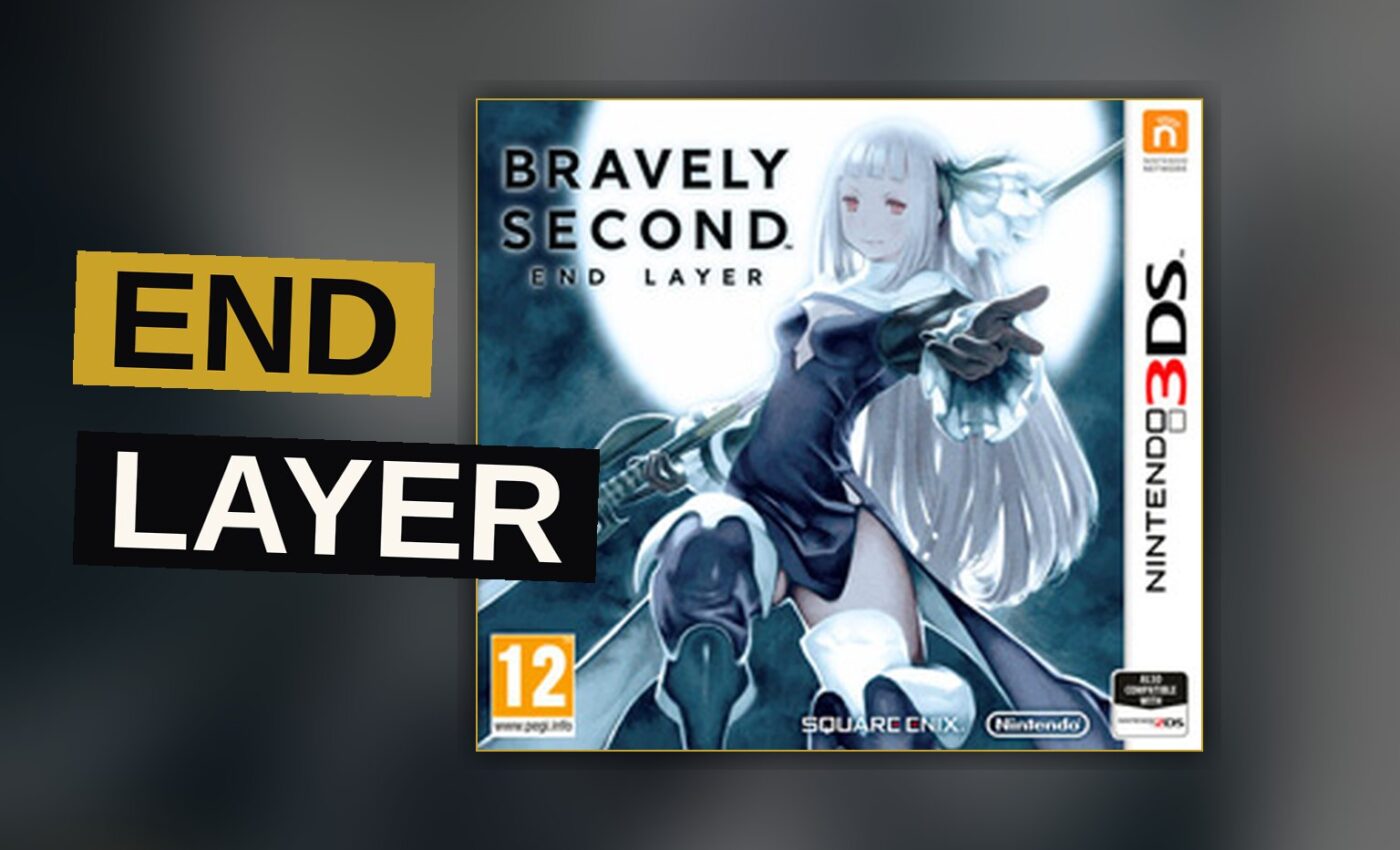
Bravely Second: End Layer asks players to do something unusual: accept that a game about heroes saving the world can also be about grief, loss, and the slow unraveling of purpose. Square Enix’s follow-up to Bravely Default follows a new cast and a world that shares little with the original’s setting beyond its combat system.
The result is a game that divides players sharply. Some see it as a bold reinvention of a beloved series. Others see it as a betrayal of the characters they cared about. Neither reading is wrong.
Trailer, via スクウェア・エニックス.
Combat and the Crystal System
The core of Bravely Second remains the crystal system, a mechanic that rewards patience and punishes haste. Players can spend multiple turns to build up a powerful attack, or spend a single turn to dodge an incoming blow. The system carries over almost unchanged from the first game, and it still holds up as one of the most flexible turn-based systems in the genre.
What changes is how that system is used. Bravely Second introduces a new party of heroes, each with their own crystals and their own reasons for fighting. The story unfolds through a series of encounters, both scripted and random, that test the player’s ability to manage resources across battles.
The difficulty curve is generous early on but ramps up quickly once the game reaches its second half. Boss fights demand careful planning, and the game does not shy away from asking players to grind or rethink their strategies mid-fight.
Story and Its Cost
The plot of Bravely Second centers on a young prince who inherits a kingdom in crisis, and the four crystals that guide him through it. The story takes a darker turn than the original game, touching on themes of duty, sacrifice, and the cost of leadership. Characters die, relationships fracture, and the game does not offer easy answers.
That choice is the game’s biggest gamble. Some players find the emotional weight rewarding; others find it exhausting. The pacing suffers in the middle stretch, where the narrative slows down while the game piles on new systems and side content.
The game’s visual style leans heavily on bright, stylized environments that shift between fantasy kingdoms and urban settings. Character designs are distinct, though some critics argue the sequel lacks the memorable flair of the original’s cast.
Comparing the Two Games
| Feature | Bravely Default | Bravely Second: End Layer |
|---|---|---|
| Setting | Original fantasy kingdom | New kingdom, new world |
| Cast | Original heroes | New heroes |
| Story focus | Saving the world | Personal stakes, grief, loss |
| Combat system | Crystal system | Crystal system |
| Difficulty | Moderate | Ramps up steeply |
The comparison shows how much the sequel changed while keeping its mechanical heart intact. That balance is the game’s greatest achievement, even as it frustrates players who wanted more of what came before.
Final Verdict
Bravely Second: End Layer is a strong game, but it is not for everyone. Its combat system remains sharp, and its ambition to tell a personal story is commendable. The difficulty spikes and the emotional weight it carries make it a demanding experience.