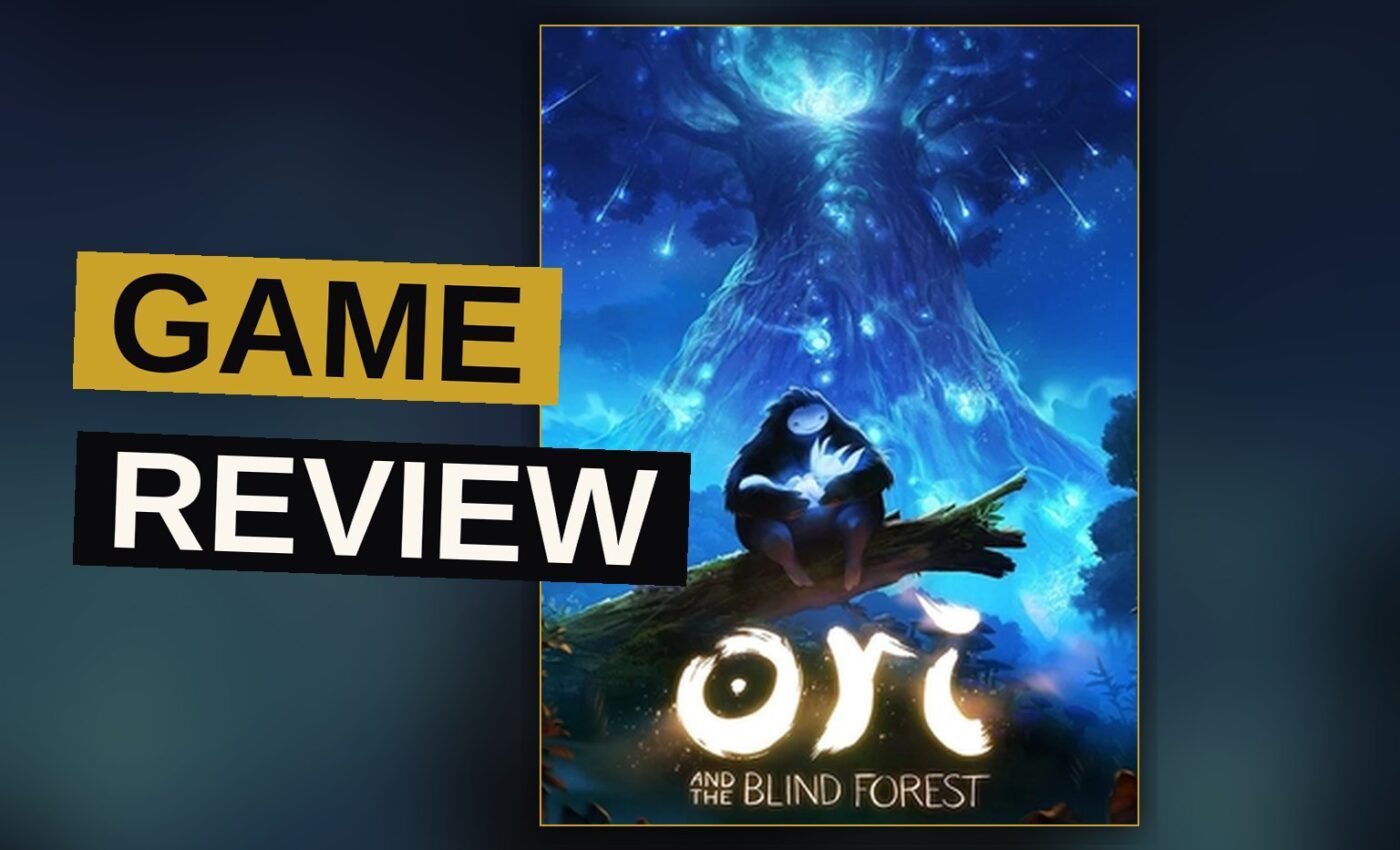
Ori and the Blind Forest opens with a storm, a fallen tree, and a tiny creature left alone in a world gone dark. The 2015 game from Moon Studios, available on PC, Xbox One, and Switch, is a platformer about loss, restoration, and the precise art of movement. It is also one of the most beautiful games ever made. The story is simple, but the emotional weight is real.
Trailer, via XBOX.
A Spirit Left Behind
Ori is raised by a gentle creature named Naru, but when the forest’s life-giving light fades, Naru dies of starvation. Ori is left to wander a dying world, guided only by a faint voice and the memory of what was lost. The tale is told with almost no dialogue, relying on a few animated cutscenes and the environment itself. You are not saving a princess or defeating a tyrant. You are trying to bring light back to a forest you helped, accidentally, to destroy.
The game does not lecture you about this. It shows you the ruins, the dead branches, the empty pools, and lets you feel the consequences of that early mistake.
Hand-Painted Ruins
The core of Ori and the Blind Forest is movement. You run, jump, climb, and dash through environments that look like living watercolors. The art direction is stunning, with layered backgrounds, glowing flora, and a palette that shifts from deep blues to fiery oranges. But the beauty is not decoration. It is the stage for a platformer that demands real skill.
Early on, you gain the ability to launch off walls and enemies. Later, you learn to bash off projectiles, ride gusts of wind, and create your own platforms out of light. Each new ability opens the map in satisfying ways. The controls are tight, and the game rarely feels unfair, even when it is brutally hard.
The forest is a character in itself, and it wants you to fail.
Saving Light
The game’s signature mechanic is the Soul Link, which lets you save your progress anywhere by spending energy. It is a simple system, but it changes everything. You can place a save point right before a difficult sequence, which reduces frustration without removing tension. It is a clever design choice that respects your time while still demanding your attention.
The forest of Nibel is hostile. It is filled with spikes, falling debris, and creatures that want you dead. The enemy design is varied, from small crawling bugs to large, lumbering beasts. Combat is not the focus, but it is functional. Ori attacks with a spirit flame, a short-range burst of light, and later gains a charge attack that can break shields and armor.
Bosses That Test You
The boss fights are memorable. Each one is a test of everything you have learned, and each one is tied to the forest’s elemental themes. One battle has you dodging falling rocks while climbing a collapsing tower. Another forces you to outrun a wall of water while leaping between narrow ledges. These moments are tense, cinematic, and deeply satisfying when you finally pull them off.
The difficulty is real, but the game is generous with checkpoints. Death is frequent, but it never feels like a punishment. It feels like a lesson. You die, you learn, you try again, and the game is always ready to let you continue.
Music That Mourns
The music, composed by Gareth Coker, is a character in itself. It swells during moments of triumph and turns fragile during scenes of loss. The opening sequence, where Naru dies, is accompanied by a mournful piano theme that stays with you long after the screen fades to black. The score is not background noise. It is a guide to the emotional tone of every area.
The sound design is equally careful. Footsteps on leaves, the rustle of wind, the crackle of fire — every sound is placed with intention. The game never overwhelms you with audio clutter. It lets silence breathe, which makes the moments of music feel even more powerful.
Short but Sweet
For all its strengths, Ori and the Blind Forest is not without flaws. The story, while touching, is thin. There is little character development beyond Ori and the few spirits you meet along the way. The world is large, but some areas feel similar, and the map can be confusing to navigate at times. The game is also short, clocking in at around eight to ten hours for a standard playthrough.
- Beautiful hand-painted visuals that hold up 11 years later
- Tight, responsive platforming with a clever save system
- A moving score that elevates every scene
- A short but well-paced campaign
The combat is serviceable but shallow. You do not have many moves, and enemies rarely require complex strategies. The game is best when it is focused on platforming, and it sometimes feels like the combat sections are there just to break up the flow.
A Quiet Masterpiece
Ori and the Blind Forest knows exactly what it wants to be. It is a platformer about movement, emotion, and the slow work of healing a broken world. It does not overstay its welcome, and it does not pad its length with filler. Every moment is crafted with care.
The game has been re-released on Switch, and it remains a masterpiece of the genre. It is not for everyone — the difficulty will push some players away — but for those who stick with it, the reward is a journey that feels personal and profound.
It is a rare thing for a game to make you feel both small and powerful at the same time. Ori and the Blind Forest does that, and it does it with grace.
Score: 8.8/10 (IGDB critic aggregate across 14 outlets).
Get the Notebook.
The day's best stories and every fresh verdict, in plain English, in your inbox by seven. One email a day, no more.