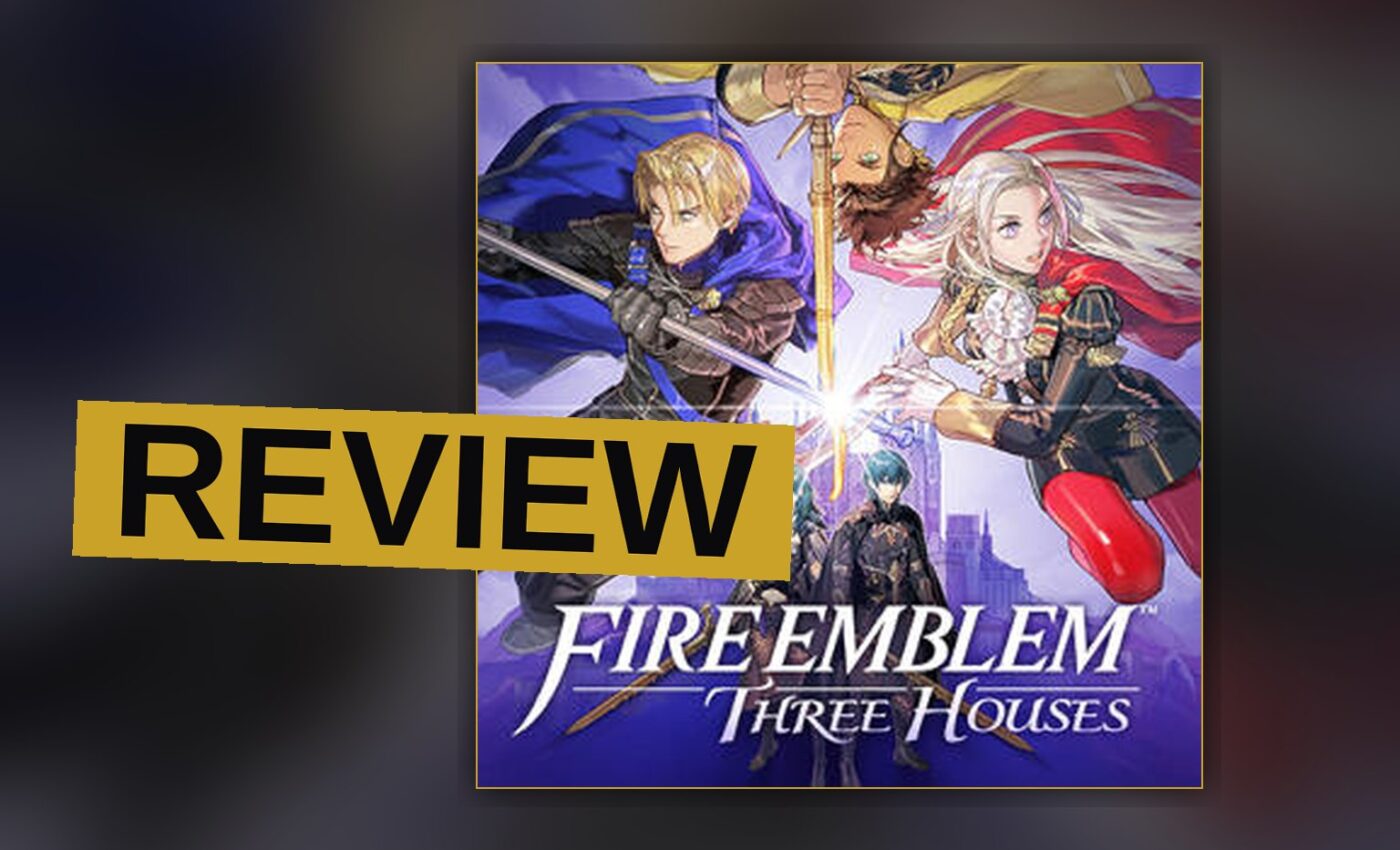
Fire Emblem: Three Houses asks you to pick a house in the first hour and then makes you live with it for the next eighty. That is the whole trick, and it is a good one. The game launched in 2019 on the Nintendo Switch, developed by Intelligent Systems with Koei Tecmo’s Kou Shibusawa, and it is the sixteenth entry in the Fire Emblem series. It is also the first one built for a home console since Radiant Dawn in 2007, and the difference shows in every corner of Garreg Mach Monastery.
Trailer, via Nintendo of America.
A Professor at Garreg Mach
You play as Byleth, a mercenary with a mysterious past and the academy’s newest professor. Early on, Byleth and Jeralt rescue three young nobles — Edelgard, Dimitri, and Claude — from bandits. The rescue impresses the students and leads Byleth to the monastery, where Jeralt reluctantly rejoins the Knights of Seiros and Byleth is handed a teaching post.
The setup is clean. The Church of Seiros runs the Officers Academy inside Garreg Mach, and three houses train there, each tied to a different nation of Fódlan. You choose one. That choice locks your narrative path, and the game does not pretend otherwise.
Jeralt warns Byleth privately not to trust the archbishop, Rhea. The line lands because the game never rushes to explain it. It just sits there while you teach.
Three Nations, One Continent
Fódlan is split into three rival powers currently at peace. The Adrestian Empire sits to the south and west, the Holy Kingdom of Faerghus to the north, and the Leicester Alliance to the east. The Church of Seiros holds the center at Garreg Mach and acts as an influential power in its own right.
The history is dense and the game respects it. A war once raged between the Church’s founder Seiros and the “King of Liberation” Nemesis, an era that also saw the Empire established. Over a thousand years, the Kingdom split from the Empire, then the Alliance declared independence from both. The Church kept the peace.
Nobility in Fódlan bear Crests — sigils passed through bloodlines that grant magical powers. Crests drive dynastic politics, and nobles who inherit them are valued far above those who lack them. Those who carry Crests can also wield artifacts called Hero’s Relics. The series’s titular Fire Emblem appears here as the “Crest of Flames,” tied to the progenitor god.
That is a lot of lore, and Three Houses wears it lightly. The world feels governed by rules rather than decorated with them.
Teaching, Fishing, and the Calendar
The game maintains the turn-based tactical combat of earlier Fire Emblem titles while folding in social simulation and time management. Your time splits between story battles and periods at the monastery, where you interact with students and staff.
Between battles, you get a set number of days on a calendar. You can teach classes, run field exercises, plant seeds in the greenhouse, or fish in the pond. Free time events let you build relationships through Support actions, with dialogue choices moving a character’s Support level. If a relationship gets strong enough, the two can marry after a story-based time skip.
Every action in the academy section costs time points. You have a limited number each day and more activities than the points can cover. You choose, and you lose access to the rest.
That constraint is the smartest thing in the game. It turns a menu of pleasant options into a series of small sacrifices, and it makes the monastery feel like a place with a clock instead of a playground.
What the School System Costs You
Byleth can be male or female, and you choose the name at the start. During the journey, Sothis — a strange, initially amnesiac girl who appears in Byleth’s dreams and can only be heard by them — aids the player. She is one of the game’s better mysteries, and the game is patient with her.
The opening half focuses on the school system. Then the story skips ahead five years and shifts toward battle, with the player locked to the house chosen at the beginning. That lock is the point. It means the second half is not a menu of outcomes; it is the bill for a decision you made when you barely understood the world.
Recruiting students from other houses is possible. By raising particular attributes through actions in battle and around the monastery, you can pull characters into your class alongside others. It is one of the few ways the game lets you soften the consequences of your first choice, and it costs real time to do it.
A House Is a Commitment
The three houses are led by Edelgard von Hresvelg of the Black Eagles, Dimitri of the Blue Lions, and Claude of the Golden Deer. The source material names the Black Eagles’ leader directly and identifies the other two as the heads of their houses. Each house is represented by a royal from one of the three territories, and each is full of students with personality to spare.
Choosing a particular house impacts the narrative from that point on. This is not a cosmetic pick. It changes who you teach, who you fight, and what the war at the center of the story means.
The order of commitment runs like this:
- Pick a house during the opening hours at Garreg Mach Monastery.
- Spend the school half of the game teaching that house and building Support levels.
- Recruit students from other houses by raising the right attributes.
- Reach the five-year time skip locked to your original choice.
- Live with the battles that follow.
That structure is why the game holds up. It is not a story about a continent; it is a story about a decision, and the decision is yours.
The War Coming to Fódlan
War is coming to the continent of Fódlan. The game tells you this early, and then makes you spend dozens of hours in a school where the future combatants eat lunch together. The contrast does the heavy lifting.
The turn-based tactical combat keeps the series’ foundation while adding strategic twists. Battles advance the main narrative, and the academy sections feed the battles by shaping the students who fight them. Neither half works without the other, which is rare in a game that splits its time this way.
Production was challenging for Intelligent Systems, which attributed the game’s success and timely release to Koei Tecmo. The two studios had previously partnered on Warriors. The staff wanted something entirely new for the franchise’s debut on high-definition home consoles, and that ambition produced both the school life mechanics and the expanded battles. Chinatsu Kurahana served as the main character designer. The school system and the time skip drew inspiration from the fourth installment in the series.
Which house, and which path, will you choose?
That question is the game’s pitch and its thesis. Three Houses does not answer it for you, and it does not let you off the hook once you answer it yourself.
What Three Houses Gets Right
The school system could have been filler. It is not. The time points force triage, the Support system gives the cast room to become people rather than stat blocks, and the five-year skip converts all of it into stakes. When the story turns toward battle, you are not commanding units. You are commanding students you taught, and the game knows the difference.
The Crests and Hero’s Relics give the political conflict a material edge. Nobles with Crests are valued above those without, and that hierarchy sits under every house rivalry. It is the kind of worldbuilding that pays off in arguments rather than exposition.
The weak spot is pacing. The monastery loop is generous, and generosity can become a treadmill when the calendar keeps offering more than the points allow. Players who want the tactics and not the tea will feel the drag in the first half.
That is a real cost, and it does not sink the game. The second half earns the first.
Fire Emblem: Three Houses is the sixteenth entry in a long series and the first home-console Fire Emblem since 2007, and it carries that weight without buckling. It takes a franchise built on permadeath and turns it into a franchise built on commitment. The house you pick is the game. Everything else — the fishing, the greenhouse, the Supports — is how it makes you care about what you picked.
It is not a perfect game. It is a game with a spine, and that is rarer.
Get the Notebook.
The day's best stories and every fresh verdict, in plain English, in your inbox by seven. One email a day, no more.