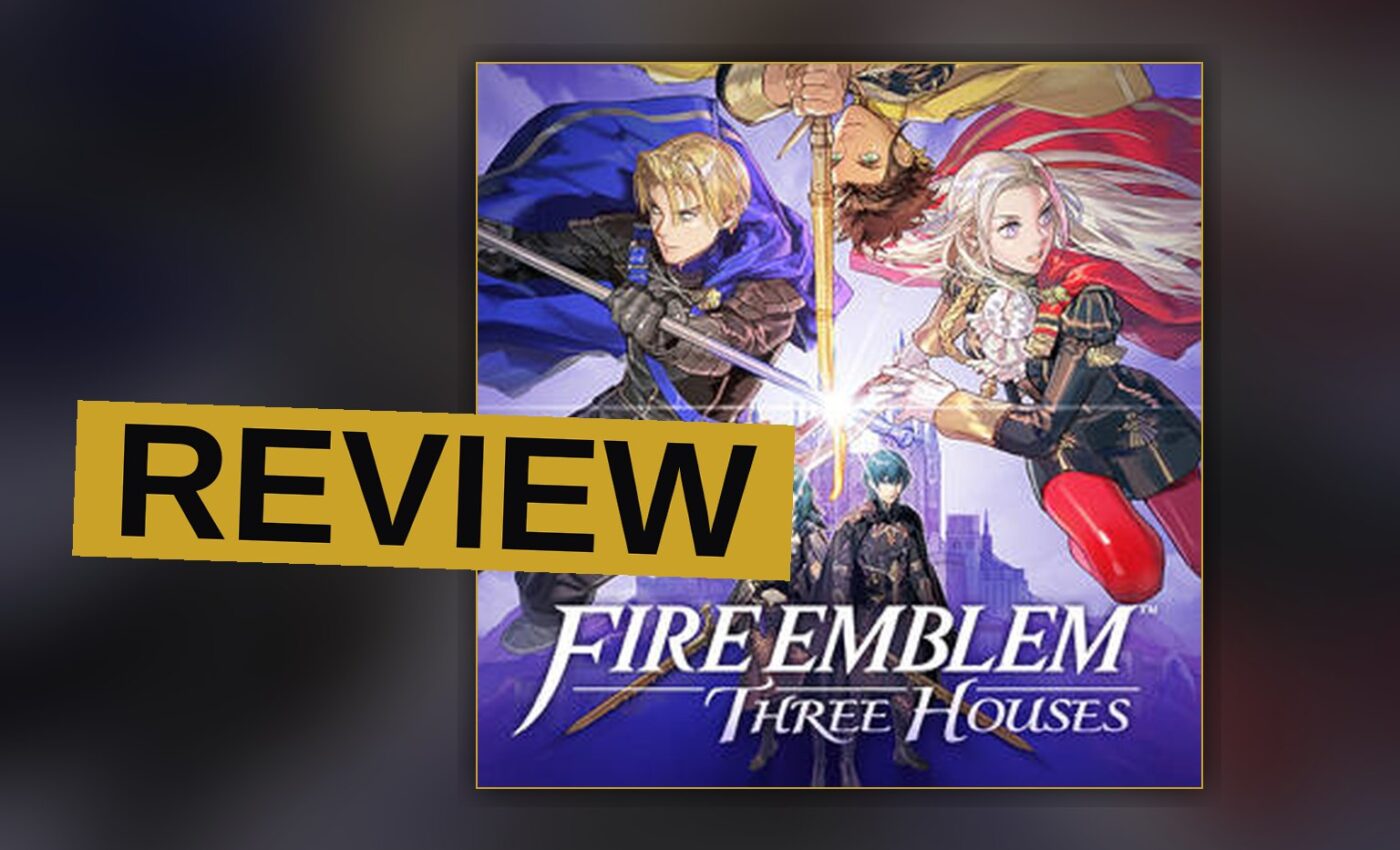
Fire Emblem: Three Houses is a turn-based strategy game for the Switch that refuses to sit still. It is a war story, a school simulator, and a character drama, all packed into one massive package. You teach a class of students, then send those same students to kill their former classmates on the battlefield. It is a heavy premise, and the game carries that weight with surprising grace.
The core loop is simple to grasp. You are Byleth, a mercenary turned professor at the Garreg Mach Monastery. You pick one of three houses to lead: the Black Eagles, the Blue Lions, or the Golden Deer. Each house has its own lord, its own politics, and its own path through the war that follows. The game does not let you see everything in one playthrough. You pick a side, and you live with the consequences.
Trailer, via Nintendo of America.
Life at the Monastery
A large part of the game happens outside of battle. The monastery is your home base, and you will spend hours walking its halls. You talk to students, eat meals with them, and give them lost items. You can also teach them in the classroom, raising their skills in swords, bows, magic, and other disciplines.
This routine is not busywork. It is the engine that makes the story work. You learn who these characters are before the war starts. You know their hopes, their fears, and their petty grudges. When the timeskip happens and the war begins, those relationships give every battle a personal sting.
The game makes you care, and then it makes you fight the people you cared about.
The monastery does slow the pace. Some weeks feel like a chore. But the game lets you skip most of it. You can fast-forward through the month, and the game handles the busywork for you. That flexibility keeps the routine from becoming a wall.
Tactics on the Grid
The combat is classic Fire Emblem, refined to a sharp edge. Battles take place on a grid. Your units move, attack, and counterattack, with weapon triangles and terrain bonuses shaping every decision. The game adds a new layer with Combat Arts, which are powerful special moves that cost durability on your weapons.
The maps are varied and clever. Some are tight corridors, others are open fields with ambushes waiting in the trees. The game does not hold your hand. A careless move can get a unit killed for good, since permadeath is on by default. That tension makes every battle feel urgent. You are not just playing a game; you are trying to keep your students alive.
The difficulty curve is fair, but the game is not afraid to punish mistakes. You will lose units, and you will reload saves. The game rewards careful planning and punishes recklessness, which is exactly what a tactics game should do.
Edelgard, Dimitri, and Claude
The story hinges on three characters. Edelgard is the Black Eagles’ leader, a determined woman who wants to tear down the old order. Dimitri is the Blue Lions’ leader, a prince haunted by tragedy. Claude is the Golden Deer’s leader, a schemer with a smile and a hidden agenda.
These three are the heart of the game. Your choice of house determines which one you spend the most time with, and which ones you eventually fight. The writing treats them with respect. None of them is a simple villain. Even the one you oppose has reasons you can understand, and the game does not shy away from showing you their side.
The supporting cast is just as strong. Each house has its own set of students, and they all have distinct personalities. There is the quiet archer, the loud knight, the shy mage. The game gives them all support conversations, which unlock as you build relationships. These conversations are often the best writing in the game, full of small moments that make the characters feel real.
The War Phase
After the academy phase, the game jumps ahead five years. The war begins, and the map changes. The monastery is still your base, but it is now a military headquarters. The students are older, harder, and some of them are gone. The game does not tell you where they went. You find out on the battlefield.
This is where the game earns its emotional weight. The battles in the war phase are not just tactical exercises. They are confrontations with people you knew. The game lets you recruit students from other houses before the war, but you cannot save everyone. Some will die, and some will become enemies. The game does not flinch from that.
The war phase also changes the pacing. The monastery routine is still there, but it feels different. You are not teaching anymore; you are commanding. The tone is darker, and the music reflects that. The game lets the story breathe, and the result is a narrative that stays with you long after the credits roll.
Fire Emblem: Three Houses has four main routes, but you only see one per playthrough. The Black Eagles have two paths, depending on a choice you make late in the game. The Blue Lions and the Golden Deer each have their own route. Each route covers the same war from a different angle, and each one reveals different parts of the story.
This structure is both a strength and a weakness. The strength is replay value. You can play the game four times and still find new story beats and new characters to focus on. The weakness is that no single route tells the whole story. You will finish one playthrough and still have questions about the larger conflict. That is by design, but it can be frustrating if you only have time for one run.
A single playthrough can take 60 to 80 hours. A full completionist run can go well past 200. That is a lot of game for the price, but it also means the game demands a serious time commitment.
Sound and Vision
The game looks good, but not spectacular. The character models are detailed, and the battle animations are flashy. The monastery is rendered with care, and the lighting gives it a warm, lived-in feel. The game runs at a stable frame rate, though there are occasional dips when the screen gets crowded.
The music is a standout. The soundtrack shifts between peaceful monastery themes and sweeping battle marches. The main battle theme, “Fódlan Winds,” is a driving piece that gets the blood pumping. The voice acting is also strong, with the three lords delivering standout performances. The game offers both English and Japanese voice tracks, and both are well done.
The user interface is clean and functional. Menus are easy to navigate, and the game gives you plenty of information without overwhelming you. The game also has a rewind feature that lets you undo a turn, which is a godsend for players who make a careless mistake. It does not remove the tension, but it does remove some of the frustration.
How It Compares
| Feature | Fire Emblem: Three Houses | Fire Emblem: Awakening | Fire Emblem: Fates |
|---|---|---|---|
| Setting | Garreg Mach Monastery, Fódlan | Ylisse, a continent in crisis | Nohr and Hoshido, two warring kingdoms |
| Hub World | Full 3D monastery to explore | World map with optional levels | My Castle, a customizable base |
| Story Structure | Four routes, one war | Single linear story | Three routes, one conflict |
| Class System | Free-form with skill requirements | Fixed class tree with reclassing | Fixed class tree with branching |
| Time Skip | Yes, five-year jump | No | No |
The table shows how Three Houses fits into the series. It is the most ambitious entry, with a hub world that feels alive and a story that branches in ways the older games did not attempt. Awakening and Fates are excellent games, but Three Houses pushes the formula further.
Why the Choices Matter
The game’s central theme is choice. The choices come in order, and each one shapes the next:
- You choose your house.
- You choose who to recruit.
- You choose who to teach.
- You choose who lives and who dies.
The game does not pretend these choices are easy. It gives you the information you need, but it does not tell you the right answer.
There is no right answer.
That is the game’s greatest strength. It trusts the player to think. It does not moralize or lecture. It presents a world with real conflict, and it lets you decide where you stand. The result is a game that feels personal. Your playthrough is yours, and no one else’s.
The game is not perfect. The monastery can drag, and the four-route structure means you will miss content on a single run. Some players will find the pacing uneven, especially in the middle of the academy phase. But these are minor complaints against a game that delivers so much.
The Final Score
Fire Emblem: Three Houses is a landmark strategy game. It takes the series’ core strengths and builds a world around them. The characters are memorable, the battles are tense, and the story is willing to take risks. It is a game that rewards patience and thought, and it does not let you coast.
The game is long, but it earns its length. Every hour spent at the monastery or on the battlefield builds toward something. The war phase pays off the setup, and the ending leaves you with a sense of closure, even if it also leaves you wanting to see the other routes.
For new players, the game is a strong entry point. The difficulty options are flexible, and the rewind feature makes it accessible. For veterans, it is a deep tactical experience with plenty of room for experimentation. It is a game that respects your time and your intelligence.
The score is clear. Fire Emblem: Three Houses earns its place among the best games on the Switch. It is a complete package, and it is a game you will think about long after you put it down. 9.3 of 10.
Get the Notebook.
The day's best stories and every fresh verdict, in plain English, in your inbox by seven. One email a day, no more.