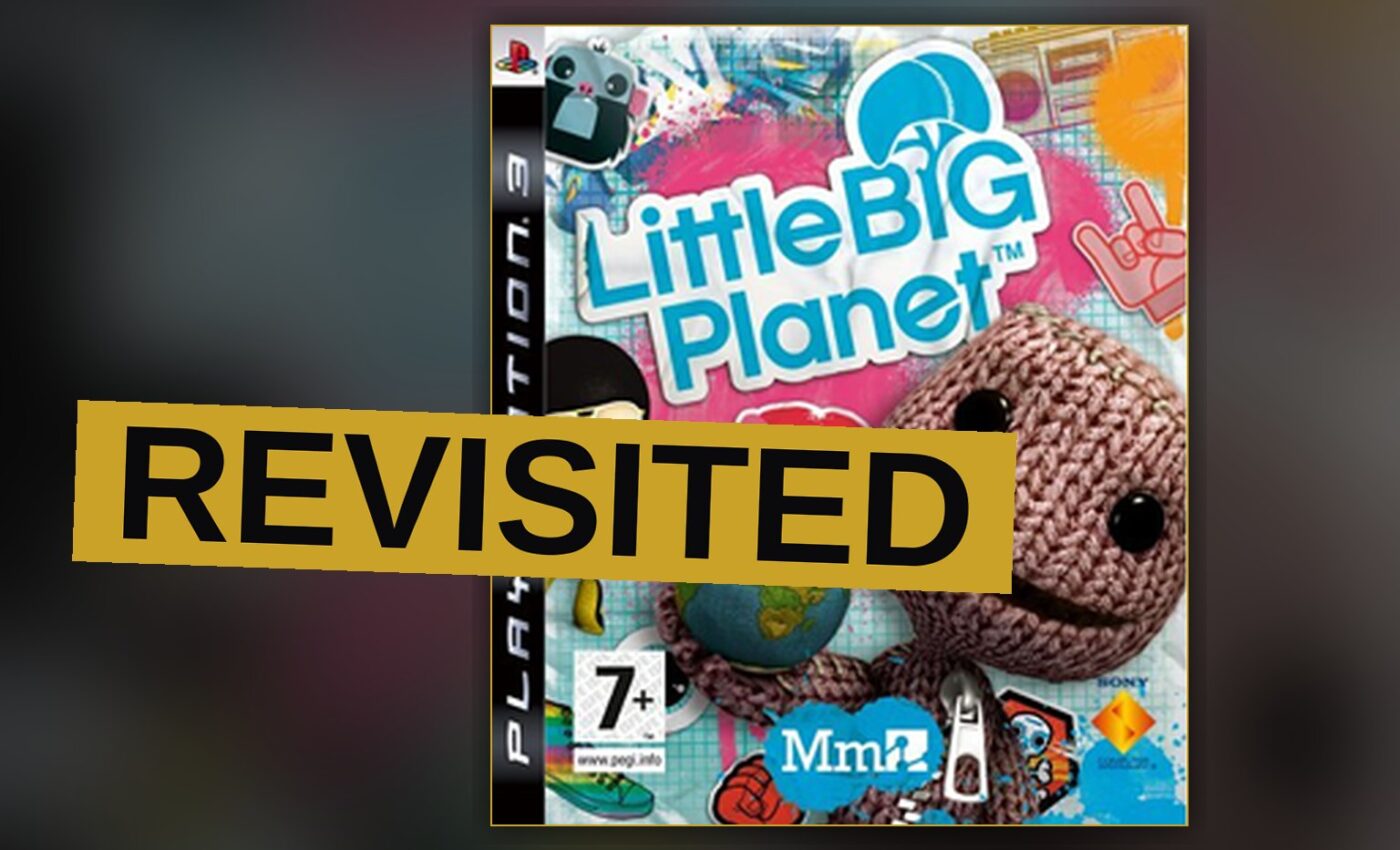
LittleBigPlanet on PS3 is a game about making things, and it is also a game about breaking them. It arrived in 2008 with a sackcloth hero named Sackboy, a toolkit that let players build their own levels, and a physics engine that loved to fling everything across the screen. Eighteen years later, its influence is still visible in every user-generated content game that followed.
Trailer, via John GodGames.
Sackboy’s Simple Moves
The core platforming is simple. You run, you jump, you grab. Sackboy moves with a pleasing weight, and the game’s signature mechanic — grabbing onto objects and swinging — feels natural. The story levels, a few dozen of them, take you through jungles, temples, and factories, each one a diorama of handmade charm. The visual style is the real star: everything looks like it was stitched together from felt, cardboard, and old buttons.
The physics are the game’s double-edged sword. Objects wobble, topple, and slide in ways that are often hilarious and sometimes frustrating. A platform you need will drift away just as you leap. This unpredictability is part of the fun, but it also means precision platforming can feel like a gamble.
Building Worlds From Sponge and Metal
The level editor is the heart of LittleBigPlanet. It gives you a vast array of materials, from sponge to metal to glass, each with its own physical properties. You can place switches, pistons, and sensors, then wire them together to create anything from a simple door to a complex puzzle. The tools are deep, but the learning curve is real.
The reward is the community. Players uploaded a vast library of levels over the game’s lifetime. Some are brilliant, some are broken, but the sheer volume means you can always find something new. Playing someone else’s creation, then taking their ideas back into your own workshop, is a loop that kept the game alive long after its story ended.
The Felt and the Thud
The soundtrack is a mix of licensed pop songs and original orchestral pieces. It works because it matches the game’s handmade aesthetic. The audio design, with its squishes and thuds, sells the physicality of the world.
Camera Problems and Long Loads
The camera is the biggest problem. In single-player, it often lags behind the action, and in co-op, it struggles to keep all four players on screen. The load times are also long, which is painful when you fail a level and have to restart.
The story mode is also short. Most players will finish it in eight to ten hours. The real longevity comes from the community, but that requires a willingness to dig through menus and try levels that may be terrible.
Why It Still Matters
LittleBigPlanet did not invent user-generated content, but it made it accessible and fun. It proved that a console game could be a platform for creativity, not just consumption. Its influence can be seen in games like Dreams, which was made by the same studio, and in the creative modes of countless other titles.
“Play, Create, Share.”
That was the slogan on the box, and for once, it was mostly true. The tools are limited by the physics engine, but the range of what players built with them was astonishing. Here is what the community produced, in rough order of complexity:
- Simple obstacle courses with basic jumps and swings.
- Racing levels that turned Sackboy into a kart racer.
- Puzzle rooms built around switches and pressure plates.
- Full cinematic adventures with scripted cutscenes and voice acting.
- Working calculators and musical instruments inside the game engine.
Scoring LittleBigPlanet
LittleBigPlanet is a flawed masterpiece. The camera and the load times are real problems, and the physics can be maddening. But the core idea — that a game can be a toy, a tool, and a canvas all at once — is executed with such charm and ambition that the flaws are easy to forgive.
It is a game that rewards patience and creativity. If you want a polished, tight platformer, look elsewhere. If you want to build something, play something, and share something, LittleBigPlanet is still worth your time. It is a game about possibility, and that feeling has not faded.
Get the Notebook.
The day's best stories and every fresh verdict, in plain English, in your inbox by seven. One email a day, no more.