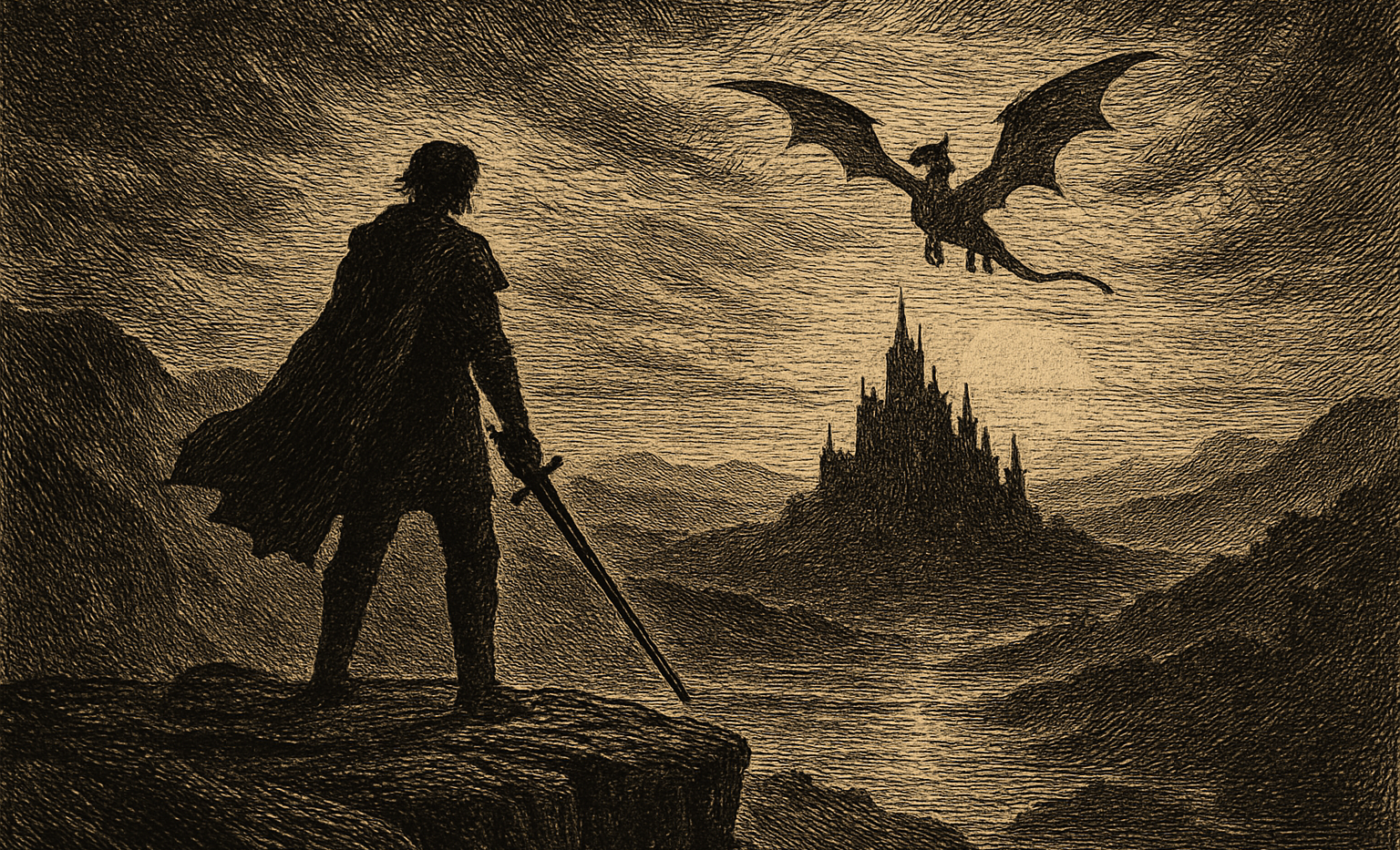
Capcom’s open-world fantasy sequel is a strange, stubborn beast. It refuses to smooth over rough edges, and that is exactly why it works. Dragon’s Dogma II takes the bones of the 2012 original and rebuilds them with sharper teeth, deeper roads, and a world that punishes you for treating it like a checklist.
The game opens with a dragon stealing your heart. Literally. Your character, the Arisen, is marked by the theft and must hunt the beast across the kingdom of Vermund and the desert nation of Battahl. The setup sounds like every fantasy story you have ever heard. The execution is anything but.
Trailer, via FGS.
The Roads Between Vernworth And Bakbattahl
Dragon’s Dogma II does not care about your time. It cares about your attention. Fast travel exists, but it costs rare items and only works between specific stone markers. Most journeys are made on foot or horseback, and every trip carries risk. Bandits ambush you on narrow passes. Harpies snatch you mid-climb. A single goblin pack can kill you if you are careless.
This friction is the point. The world feels dangerous because it is. You learn the roads. You remember which bridges are safe and which caves hide a chimera. The game rewards knowledge over reflexes, and that makes every successful crossing feel earned.
The pawn system returns, and it remains the most distinctive thing here. You travel with three AI companions. One is yours, created in a deep character editor. The other two are borrowed from other players’ worlds. They talk constantly. They point out loot, warn of enemies, and remember quests you have forgotten. Their chatter is sometimes annoying. It is also the reason the world feels alive.
Pawns are not just helpers. They are the game’s multiplayer hook, even though you never meet another human. When your pawn is hired by another player, you earn rift crystals, a currency used for special gear. When you hire a high-level pawn, you get a glimpse of how someone else built their character. The system is clever, and it makes a single-player game feel shared.
Climbing Griffins And Swinging Greatswords
Fighting in Dragon’s Dogma II is physical. Attacks have real heft. A warrior’s greatsword swings slow but hits like a falling tree. A mage’s spells take time to cast but can flatten a crowd. The vocations, the game’s job classes, are distinct enough that two players will never fight the same way.
The highlight is climbing. Big enemies, like griffins and ogres, can be scaled. You grab onto their fur or feathers and stab at weak points while they try to shake you off. It is chaotic and janky in the best way. There is nothing else quite like it, and it has not aged a day since the first game.
One major addition is the Trickster vocation. It does not deal damage directly. Instead, it creates illusions and confuses enemies, making them fight each other or walk off cliffs. It is a strange, support-focused role, and it does not suit every player. But the fact that Capcom included it shows a willingness to experiment that most sequels lack.
The enemy variety is solid, though not endless. You will see goblins and wolves early and often. Later areas introduce grimmer foes, like the skeletal soldiers that rise from the earth and the drakes that demand respect. Each encounter asks you to adjust your tactics, and the game never lets you autopilot.
The Missing Husband And Other Side Quests
The main plot is thin. You chase the dragon, you learn about the cycle of the world, and you make a choice at the end. The writing is serviceable, and the voice acting is competent. But the real storytelling happens in the side quests.
Many of them are simple: find a lost ring, escort a merchant, clear a camp. But the game tracks your choices in ways you do not notice until later. A man you spared in chapter one might appear in chapter three with a different life. A village you saved might prosper. A town you ignored might fall to ruin.
One quest stands out. Early on, you meet a woman whose husband has vanished. The trail leads through a swamp, past a bandit camp, and into a cave. The resolution is not heroic. It is sad and strange, and it lingers longer than any dragon fight.
The game does not hold your hand. There is no quest compass pointing you to the next objective. You get directions in dialogue, and you must follow them. Get lost, and you might miss the quest entirely. This design will frustrate some players. It will delight others.
Vernworth And The Weight Of Routine
The capital, Vernworth, is a highlight. It is dense and vertical, with streets that wind uphill and markets that spill into alleys. Pawns gossip about rumors you can investigate. Nobles complain about the Arisen’s presence. The city has a rhythm, and it changes based on your actions.
The second major city, Bakbattahl, is a different flavor. It is hotter, dustier, and more suspicious of outsiders. The contrast between the two nations is sharp, and the game uses it to explore themes of faith and governance. The story does not dwell on these ideas, but they are there if you look.
The technical side is a mixed bag. Dragon’s Dogma II launched with performance problems on all platforms. The frame rate dips in crowded areas, and the CPU load is heavy because the world simulates every NPC’s daily routine. Patches have improved things, but the game still strains on base consoles. On a high-end PC or the newer consoles, it runs better, but it is never flawless.
The graphics are not the point. The art direction is. The game knows when to be ugly and when to be beautiful. A sunset over a ruined castle hits harder than any ray-traced reflection. The soundtrack is sparse, but it swells at the right moments, especially during boss fights.
The Walk To The Final Dragon
Dragon’s Dogma II is not a game you finish in a weekend. A single playthrough can take 60 to 80 hours, and that is without chasing every side quest. The game does not respect your time, but it respects your intelligence. It trusts you to find your own way, to learn from failure, and to carry that knowledge forward.
There is no fast travel to the final boss. You walk there, and the walk is part of the story. You remember the first time you crossed that bridge, the ambush that killed you, the pawn who saved you. By the end, the map is not a collection of icons. It is a place you know.
The game’s biggest flaw is its stubbornness. It will not meet you halfway. If you want a guided, polished, convenient adventure, this is not it. But if you want a world that feels real because it is hard, Dragon’s Dogma II delivers.
The pawn system, the climbing combat, the quests that reward attention over speed — these are not trends. They are ideas that most studios abandoned because they are hard to make. Capcom built them anyway.
The Critical Score And What It Means
Dragon’s Dogma II holds a strong critical reputation. The game’s open world and combat have been widely praised, while its performance issues and lack of convenience have drawn criticism. The published critical score is 9.1 out of 10, a figure that reflects both the ambition and the execution.
That score is fair. The game is not perfect. It is rough, and it is proud of it. But the rough parts are part of the design, not accidents. The game wants you to struggle, because struggle makes victory meaningful.
It is rare for a sequel to take this many risks. Most follow the formula that worked. Dragon’s Dogma II breaks the formula, and it breaks it with confidence.
Playing It On Switch 2 And PS5
The game is available on PC, PS5, Xbox Series X|S, and Switch 2. Performance varies by platform. The Switch 2 version trades visual fidelity for portability, and it holds up better than expected given the hardware. The PS5 version runs at a higher frame rate in most areas, though the crowded cities still cause dips.
The PC version offers the most flexibility, with settings that can push the simulation further. But even the best hardware cannot fully eliminate the stutter in dense markets. The game is ambitious beyond what current machines comfortably handle. That is a cost, and players should know it before they buy.
Dragon’s Dogma II is a game that will not be for everyone. It demands patience, attention, and a tolerance for jank. But for those who meet it on its own terms, it offers something rare: a world that feels genuinely alive.
The combat is the best in the genre. The pawn system is a genuine innovation. The world is a character in itself. The flaws are real, but they are the flaws of ambition, not laziness.
This is a game you will remember. Not for its polish, but for its soul.
Key Facts
- Game: Dragon’s Dogma II
- Platforms: PC, PS5, Xbox Series X|S, Switch 2
- Developer: Capcom
- Published critical score: 9.1/10
- Single playthrough length: 60 to 80 hours
- Vocations: Multiple, including the new Trickster class
- Main settings: Vernworth and Bakbattahl
- Multiplayer: Indirect, via pawn sharing
Get the Notebook.
The day's best stories and every fresh verdict, in plain English, in your inbox by seven. One email a day, no more.