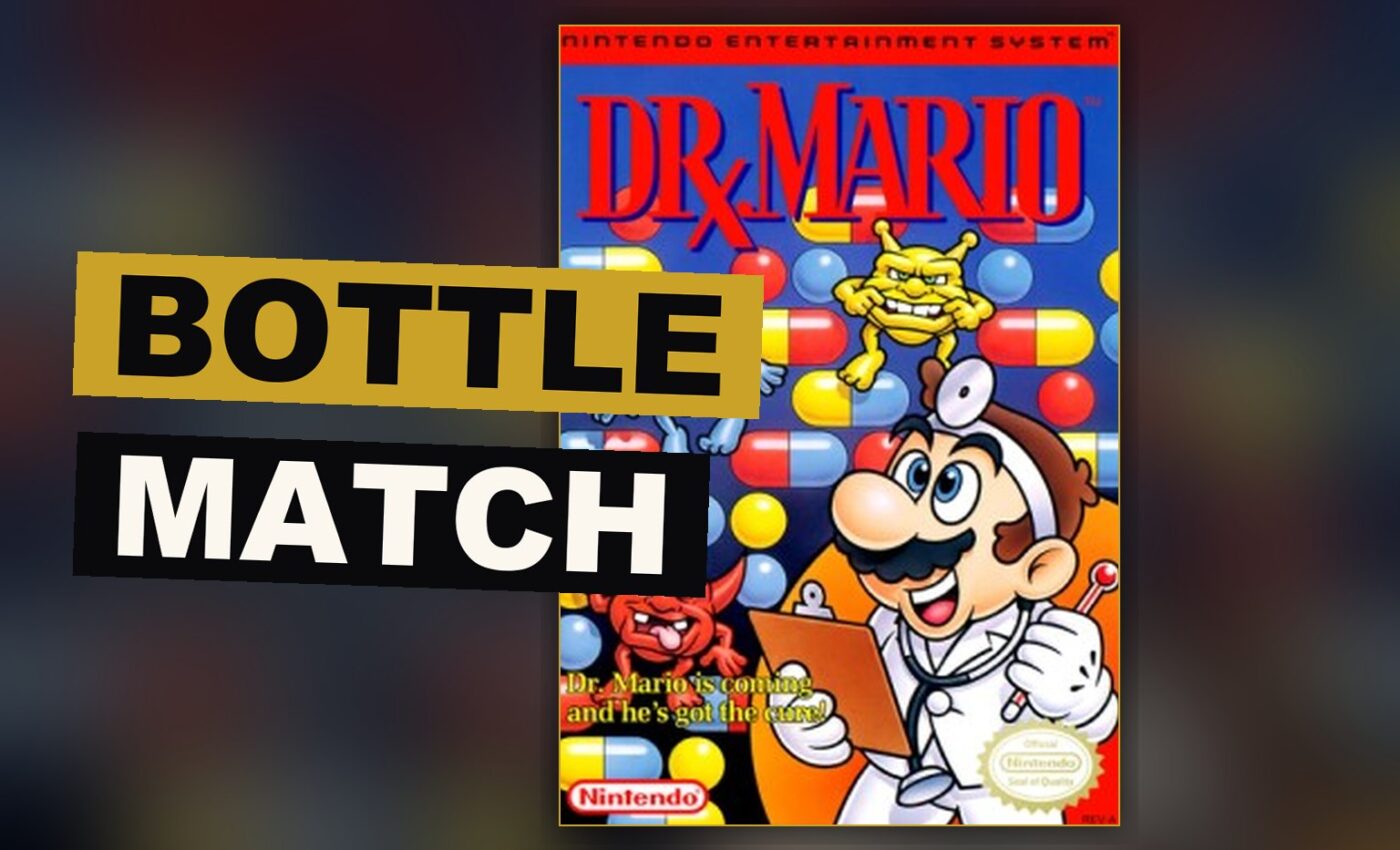
Dr. Mario is a 1992 handheld game watch. Mani Industries developed it, and Mani Industries published it. It belongs to the Gamewatch Boy line, one of two LCD game watches in that line, and it plays much like the original Dr. Mario. The platform is Handheld Electronic LCD. It is a puzzle and arcade game, single player, side view, with fantasy and science fiction themes.
That is the reviewed work. It is not the 1990 Nintendo Entertainment System and Game Boy game, which Nintendo developed and published, and which Wikipedia covers in a separate entry. The two share a name and a color-matching rule. They are not the same release.
Mani Industries and the Gamewatch Boy
The Mani game watch arrived in 1992, two years after Nintendo’s console Dr. Mario. The source describes its play as similar to the original game. It is a puzzle game in a watch case, and it is one of two LCD game watches in the Gamewatch Boy line.
The Nintendo game is the one with the deeper record. Gunpei Yokoi produced it. Takahiro Harada programmed it. Hirokazu Tanaka composed the soundtrack. Mario assumes the role of a doctor and tosses two-colored medical capsules into a medicine bottle that serves as the playing field. That bottle is populated by viruses in three colors – red, yellow and blue – which stay in their starting positions until removed.
Mani’s version carries none of those credits in the source. What it carries is a year, a developer, a publisher, a platform and a genre. That is a thin file, and it is the file we have.
Capsules, Viruses and the Bottle
In the Nintendo game, the player moves each falling capsule left or right and rotates it 90 degrees clockwise or counter-clockwise. When matching capsule halves and viruses touch sequentially 4-in-a-row, they disappear. Any unsupported capsule or capsule half falls to the bottom of the field or until it hits a supported object, and new 4-in-a-row alignments disappear in turn. A game over occurs if capsules fill the field in a way that obstructs the bottle’s narrow neck.
The options screen configures the starting level, game speed and music. The player picks a starting level between 0 and 20, which sets the number of viruses to clear, and one of three speeds for the falling capsules. Score is based on eliminated viruses and the chosen speed, with bonus points for clearing more than one in a single line. After every fifth level on Medium or High difficulty, up to level 20, a cutscene shows the virus trio sitting on a tree as music plays and an object flies across the screen.
The Nintendo game offers a multiplayer mode in which two players compete in separate playing fields. Each player’s goal is to clear their own field of viruses first. Eliminating multiple viruses or starting chain reactions can add capsules to the opponent’s field.
Ports, Remakes and Dr. Luigi
Nintendo’s Dr. Mario sold more than 10 million copies worldwide across all platforms and drew generally positive reviews, appearing on several lists of “Best Nintendo Games of All Time”. It was ported, remade, or had a sequel on every Nintendo home console since the NES, and on most portable consoles, including a re-release in 2004 on the Game Boy Advance in the Classic NES Series. It was modified into minigames in WarioWare, Inc.: Mega Microgames!, Brain Age 2: More Training in Minutes a Day! and Brain Age: Concentration Training. Dr. Luigi, a Wii U spin-off, was released on December 31, 2013, as part of the Year of Luigi celebration.
None of that belongs to the Mani game watch. The port history, the sales figure and the spin-off all attach to Nintendo’s game. A reader who wants the 1992 watch gets a platform, a publisher and a one-line description of how it plays.
Ranking what the source actually establishes:
- Nintendo’s 1990 game, with its credits, mechanics and 10 million copies sold.
- Nintendo’s port, remake and sequel history across home and portable consoles.
- The 2004 Classic NES Series re-release on Game Boy Advance.
- The WarioWare and Brain Age minigame adaptations.
- Mani’s 1992 Gamewatch Boy title, known by year, maker and platform.
The order is the point. The reviewed work sits at the bottom of its own list, because the record for it is four facts long.
What the 6.6 Means
The published critical score is 6.6 out of 10 on Metacritic. The source does not say which release that score covers, and it does not say who assigned it. It is a number without a subject attached.
That gap is the story here. A game watch from 1992, made by Mani Industries for the Handheld Electronic LCD platform, shares a title with one of Nintendo’s most durable puzzle games and almost nothing else in the record. The Nintendo game has a producer, a programmer, a composer, a sales figure, a port history and a spin-off. The Mani game has a year and a line name.
The 10 million copies belong to Nintendo. So do the lists, the re-release and Dr. Luigi. Anyone reading a review of “Dr. Mario” should know which one they are holding before they trust the score. On the evidence here, the 1992 watch is a curiosity with a borrowed name, and the 6.6 floats free of both.
Get the Notebook.
The day's best stories and every fresh verdict, in plain English, in your inbox by seven. One email a day, no more.