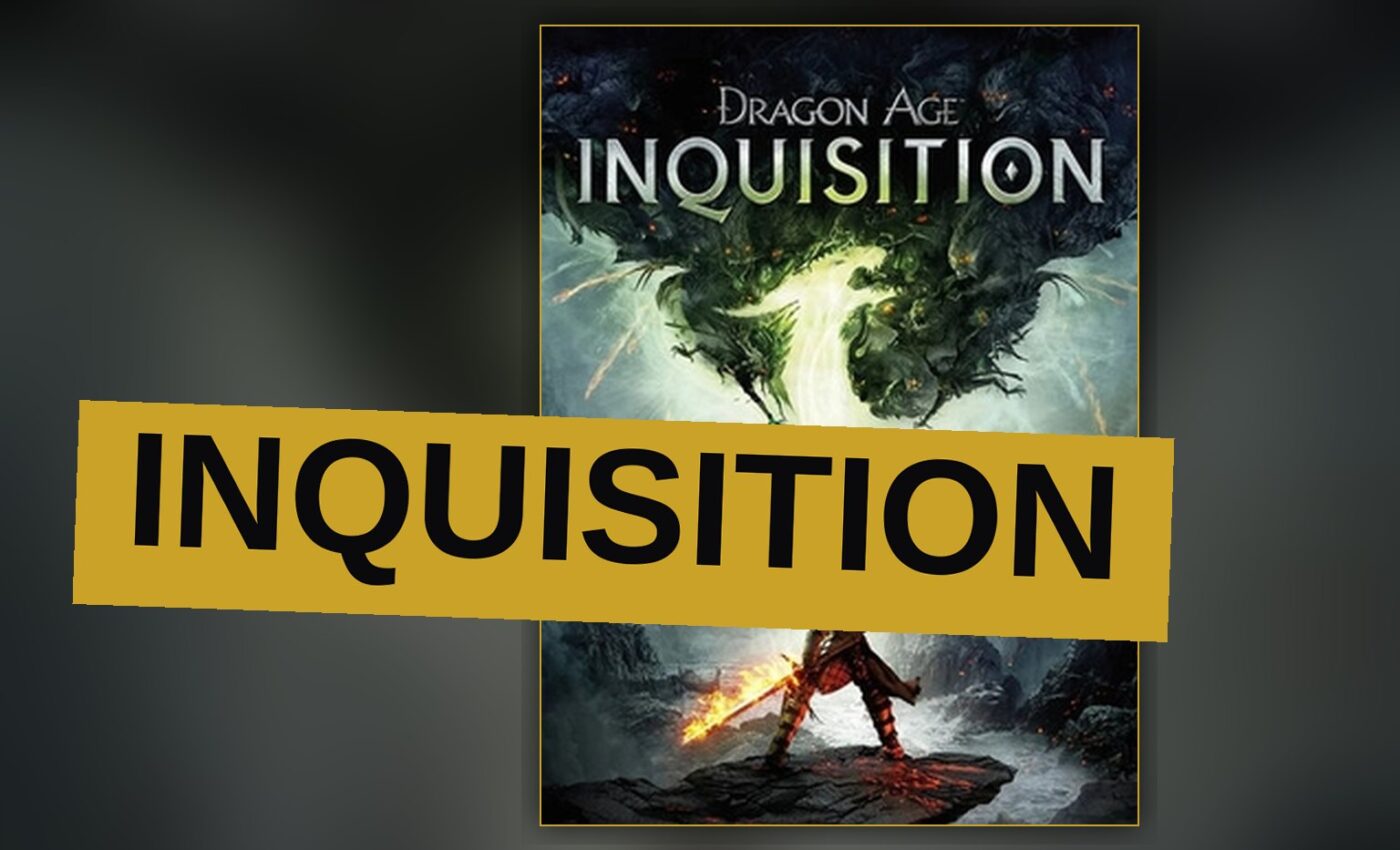
Dragon Age: Inquisition arrived in 2014 as the third main game in BioWare’s role-playing series, and it carries the weight of a franchise that had lost its footing. Dragon Age II, the 2011 sequel, drew a mixed reception from players who missed the complexity of Dragon Age: Origins. BioWare said it wanted to address that feedback, and the studio built its sequel to pull the best of both earlier games into one. The result is a game that mostly delivers on that promise, even where it stumbles.
Trailer, via IGDBcom.
The Breach and the Inquisitor
The story opens on catastrophe. A massive explosion destroys the Conclave, a peace conference near the village of Haven in the kingdom of Ferelden, where Divine Justinia V had tried to halt the Mage-Templar war. That war had been building since the Circle of Magi went rogue and the Templar Order broke from the Chantry to wage its own campaign against the world’s mages.
Out of the wreckage comes the player character, known as the Inquisitor, who must settle the civil unrest across the continent of Thedas and close a mysterious tear in the sky called the Breach. The Breach is unleashing demons on the world. The Inquisitor leads the Inquisition to hunt down the agents of chaos, and the game’s choices, by its own framing, forever change the Dragon Age.
Four Races, Three Classes, One Custom Inquisitor
Character creation is the first real test of the game’s ambition. Players pick a race from human, dwarf, elf, or Qunari — the Qunari being playable for the first time in the series. They then customize the Inquisitor’s physical appearance and gender, and choose a class from mage, rogue, or warrior, each with three specializations.
A custom party can be defined, and each member earns experience that opens better weapons and more abilities. Power points unlock new areas. Influence points define the Inquisition’s hold over the region, and each new level grants a perk that benefits the whole organization.
The game also reaches backward. Through Dragon Age Keep, a cloud-based interactive story creator, players can detail the major plots of the previous two Dragon Age games and import a world state into Inquisition without replaying them. It is a smart piece of housekeeping for a series with this much history.
Semi-Open Thedas, Mounts, and Fade Rifts
Inquisition is an action role-playing game similar to its predecessors, but its world is broken into several sections rather than one continuous map. Players explore these semi-open regions freely, and mounts are introduced to move across them faster. The regions do not scale in level, so a player can be too weak or too strong for the enemies in a given area.
Each hub world holds side activities: sealing Fade rifts, capturing keeps and forts, and establishing camps that serve as fast travel and resupply points. These acts grant Influence for global Inquisition upgrades and Power, which is required to progress the story and unlock new areas.
There are also side missions, fetch quests, magical shards to collect, and Astrarium puzzles to solve. Codex entries fill in the world of Thedas for players who want the deeper reading. At Skyhold, the Inquisition’s base of operations, the war table unlocks locations, delivers rewards, and moves the story forward.
Cullen, Leliana, and a Deep Bench
The companion roster is where Inquisition earns its keep. Returning characters include Cullen and Leliana, serving as the Inquisition’s military commander and spymaster, and Cassandra Pentaghast and Varric, who join as party companions. Hawke, the protagonist of Dragon Age II, also returns.
New companions widen the map. Solas is an elven apostate mage well-versed in the Fade and its spirit denizens. Blackwall is a lone Grey Warden of the Free Marches. Sera is an elven thief and member of a secret society called the Friends of Red Jenny. The Iron Bull is a Qunari warrior leading a mercenary company called the Bull’s Chargers and an agent of the Ben-Hassrath. Vivienne is the official enchanter to the Imperial Court of Orlais. Dorian Pavus is a mage from the Tevinter Imperium. Cole is a mysterious being first introduced in the 2011 novel Dragon Age: Asunder. Josephine Montilyet, an Antivan noblewoman and diplomat, serves as the Inquisition’s ambassador.
The politics behind them are just as dense. The 2014 tie-in prequel novel Dragon Age: The Masked Empire, by writing team member Trick Weekes, details the civil war in Orlais between loyalists of Empress Celene and a noble faction led by her cousin Grand Duke Gaspard de Chalons, along with the rise of a neutral elven faction led by Celene’s handmaiden Briala. Inquisition does not treat any of this as background noise.
Frostbite 3 and the Cost of Crunch
The making of the game matters to how it plays. Development began in 2011. BioWare used EA DICE’s Frostbite 3 engine, a choice that created many development challenges for the team. The studio crunched extensively, and hardware limitations on older generation consoles forced several gameplay features to be cut.
That last point is worth sitting with, because Inquisition shipped on PlayStation 3, PlayStation 4, PC, Xbox 360, and Xbox One. The two older consoles are the ones that paid for that hardware, and the cuts are the price of that reach. A game this size spread across two console generations was always going to strain somewhere.
What Inquisition Gets Right, and Where It Drags
The strongest thing Inquisition does is refuse to choose between Origins and Dragon Age II. It keeps the tactical, party-driven role-playing of the first game and the more personal, voiced protagonist of the second. The semi-open regions give the world room to breathe without pretending to be a true open world. The war table and Inquisition perks give the player a stake in something larger than one character’s story.
The weaker thing is the same breadth. Fetch quests and shard collecting pad out regions that do not scale, so a player can wander into fights they cannot win or trivialize ones they should not. The side content is uneven, and the game’s own scale works against it in stretches. The companions, the politics of Orlais, and the Breach carry the weight. The busywork does not.
Here is how the major pieces rank, from the parts that hold the game up to the parts that merely fill it:
- The companion roster and its politics, from Solas and Dorian to the civil war in Orlais.
- The Inquisitor’s customization, including the first playable Qunari in series history.
- The semi-open regions and the war table’s Influence and Power systems.
- The Fade rifts, keeps, and camps that structure each hub world.
- The fetch quests, magical shards, and Astrarium puzzles that pad the map.
That ordering is the review in miniature. Inquisition is at its best when it is about people and power, and at its most ordinary when it is about collecting things.
8.8 of 10
Dragon Age: Inquisition is the correction BioWare needed to make after Dragon Age II, and it mostly works. The studio set out to combine the elements of the first two games, and the combination holds: a customizable Inquisitor, a deep companion bench, a continent in open war, and a sky tearing open above it.
The Frostbite 3 transition cost the team dearly, and the crunch and cut features are real marks against it. The older console versions carry limitations the newer ones do not. None of that undoes what is here. Inquisition gives players a role-playing game with actual role-playing in it, and a world with enough history to reward the codex entries.
The uneven side content keeps it from the top tier, but the core is strong, and the companions alone justify the trip through Thedas. Score: 8.8 of 10.
Get the Notebook.
The day's best stories and every fresh verdict, in plain English, in your inbox by seven. One email a day, no more.