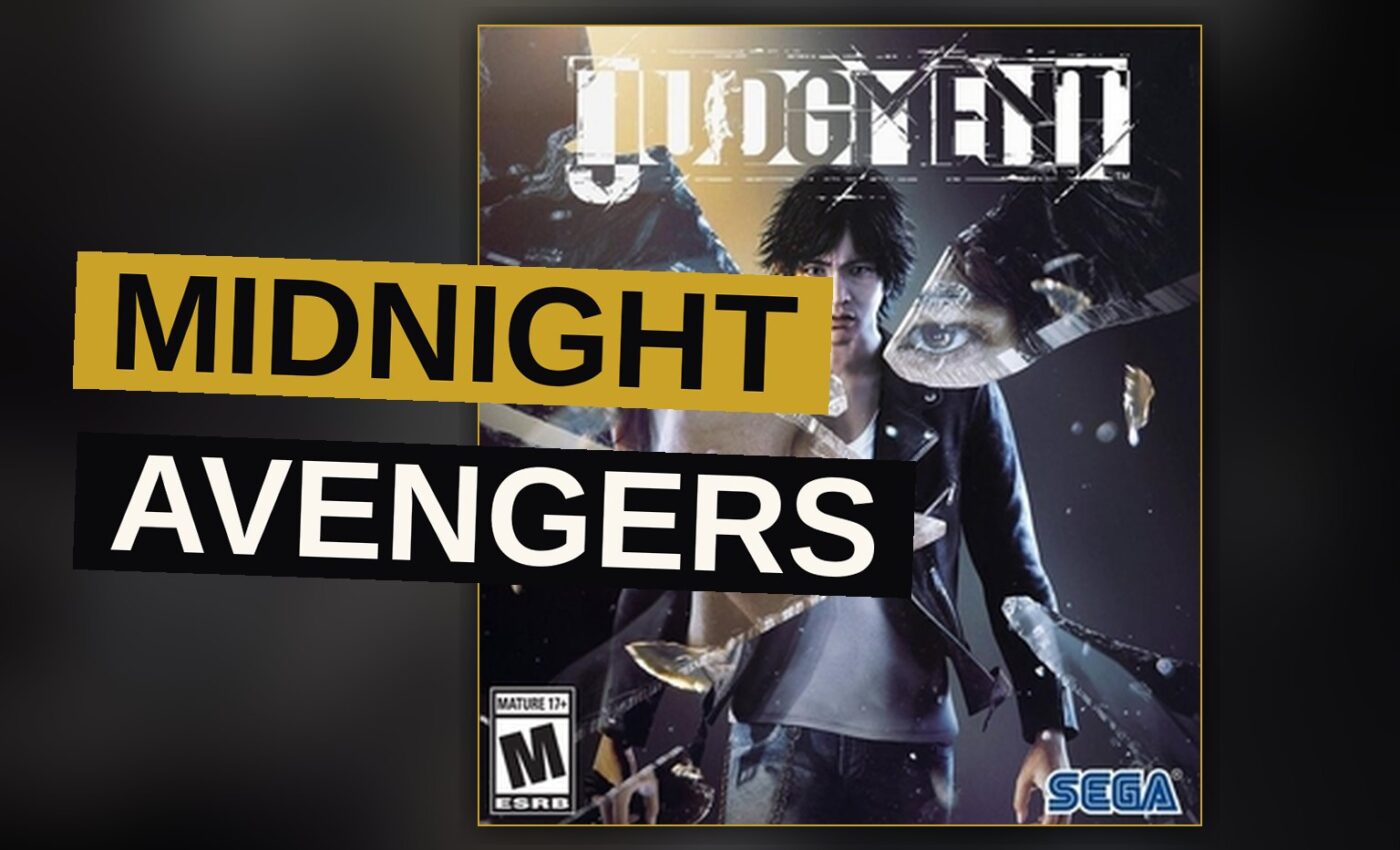
Judgment is a crime thriller dressed as a superhero game, and it mostly pulls it off. Developed by Ryu Ga Gotoku Studio and published by Sega, the game follows Takayuki Yagami, a former detective now working as a private investigator, who stumbles into a conspiracy involving masked vigilantes, corrupt officials, and a shadowy organization that wants him dead. It is a sequel to the 2014 game Judgment, and it improves on its predecessor while keeping the same core identity: a gritty, grounded action-adventure with a touch of absurdity.
The game is available on PS4, and it runs at a solid frame rate with few technical hitches. It is a lengthy experience, clocking in at around forty hours, though the pace varies widely depending on how much side content you chase. The story is the engine, and it is a strong one, full of twists, betrayals, and moments where the game asks you to question who is really in control. That strength carries the weaker elements, but it does not erase them.
Trailer, via SEGA.
The Case of Takayuki Yagami
Judgment opens with Yagami investigating a murder in Yokohama, a city known for its neon-lit streets and its seedy underbelly. He is hired by a wealthy businessman whose son has disappeared, and the trail leads him to a group of masked vigilantes known as the Midnight Avengers. These heroes operate outside the law, taking justice into their own hands, and they are the focus of a media sensation that has captured the public imagination.
Yagami is not a fan of the Avengers. He sees them as vigilantes, not protectors, and he believes that the law should handle crime, not individuals with masks. His investigation puts him at odds with both the police and the public, who view the Avengers as heroes. The tension between these two perspectives drives the plot forward, and it sets up a central conflict about what justice means in a broken system.
As Yagami digs deeper, he uncovers a conspiracy that reaches to the highest levels of government. He is framed for a crime he did not commit, and he must clear his name while staying one step ahead of the authorities. The investigation takes him through the streets of Yokohama, into the halls of power, and eventually to a secret organization that controls the city from the shadows. The story is a slow burn, but it pays off in the final act with a twist that recontextualizes everything you have seen.
The narrative is dense with subplots and characters, and it rewards patience. It is not a game that you can speed through and understand. It requires you to pay attention to the details, to remember the names of minor figures, and to piece together the connections between events. The payoff is a story that feels larger than the game’s modest budget suggests, with a sense of scale that rivals the best open-world games on the market.
“The law is not enough.”
That line captures the game’s attitude toward its setting. The city is corrupt, the police are compromised, and the justice system is a tool used by those in power. Yagami operates outside that system, using his fists and his wits to get answers. The game does not romanticize violence, but it presents it as the only honest way to deal with dishonest people.
Fighting Through Yokohama
The combat in Judgment is a mix of brawling and shooting, with Yagami able to switch between melee and ranged attacks on the fly. The fighting is fluid and responsive, with a dodge mechanic that allows you to slip past attacks and a counter system that rewards timing. The game encourages you to mix up your approach, using your pistol to soften enemies from range and then rushing in with a flurry of punches.
The enemy variety is decent, with different types of thugs requiring different approaches. Some enemies are fast and aggressive, forcing you to keep moving. Others are slower but hit harder, rewarding patience and careful positioning. The game also includes a handful of boss fights that stand out from the routine encounters, with each boss offering a distinct challenge that tests your understanding of the combat systems.
The game’s difficulty curve is gentle in the early hours, but it ramps up significantly as you progress. The later sections require you to manage your stamina, your health, and your position on screen, and they test your ability to react to multiple threats at once. The game does not punish you for failing, but it does force you to learn the patterns and adapt.
The environments are where the game shines brightest. Yokohama is a sprawling city, filled with distinctive locations like the Chinatown district, the waterfront, and the upscale shopping areas. Each area has its own character, and the game uses lighting and sound to create a sense of place. The city is alive, with pedestrians walking the streets, cars driving past, and neon signs flickering at night.
The exploration is open, but it is structured around the main quest. Side quests and collectibles are scattered throughout, and they offer a reason to explore the city beyond the main story. The game rewards curiosity, and it hides secrets behind locked doors and hidden paths. The map is large enough that you can spend hours wandering without ever feeling lost.
The Detective Work
Judgment is not just a combat game. It is also a detective game, and the investigative aspects are just as important as the action. Yagami has access to a smartphone app that lets him scan clues, take photos, and gather evidence. He can interview witnesses, follow suspects, and use his deduction skills to solve puzzles and uncover the truth.
The investigative sequences are varied, ranging from simple observation tasks to complex puzzles that require you to piece together information from multiple sources. The game does not overdo these segments, but it uses them to break up the action and add depth to the world. The clues you find often connect to the larger conspiracy, giving you a sense of progression even when you are not fighting.
The game also includes a social network feature, where Yagami can communicate with his friends and allies. These conversations provide context for the story and offer hints about upcoming missions. They are not essential, but they add flavor to the world and make Yagami feel like a real person with a life outside the case.
The Detective Work Continued
The pacing is uneven, with some stretches dragging and others racing. The middle section of the game slows down considerably as the story builds toward its climax. This is a common problem in games of this length, and Judgment does not escape it. However, the payoff in the final act justifies the wait, and the game ends on a high note.
Performance and Presentation
The game runs at a smooth frame rate on PS4, with few technical issues. The load times are reasonable, and the game rarely stutters during combat. The graphics are competent but not spectacular, with detailed character models and a realistic lighting model. The city looks lived-in, with dirt and grime on the walls and reflections on wet surfaces.
The audio design is excellent, with a score that shifts between tense orchestral pieces and atmospheric soundscapes. The voice acting is strong, with the lead actors delivering their lines with conviction. The game’s localization is seamless, with no jarring translations or awkward subtitles.
The game is a product of its developer, and it shows. Ryu Ga Gotoku Studio is known for its work on the Yakuza series, and Judgment shares many of the same design principles. The combat is punchy, the story is dramatic, and the world is immersive. The studio has clearly put a lot of effort into making Judgment feel like a polished product, and it shows in the final result.
The game is not perfect. There are moments where the combat feels repetitive, and there are side quests that feel like filler. The game’s reliance on a smartphone app for its investigative sequences can be distracting, and the game’s difficulty spike in the late hours may frustrate some players. However, these flaws are minor compared to the strengths, and they do not detract from the overall experience.
A Slow Burn With A Big Payoff
Judgment is a game that rewards patience. It takes its time building its world, its characters, and its conspiracy, and it pays off that investment in the final act. The story is a slow burn, but it is a satisfying one, with a twist that recontextualizes everything you have seen.
The game is a crime thriller with a superhero angle, and it handles both sides of that equation with confidence. The vigilantes are treated with respect, but they are also criticized for their methods. The game does not take sides, and it lets you draw your own conclusions.
| Feature | Judgment |
|---|---|
| Developer | Ryu Ga Gotoku Studio |
| Publisher | Sega |
| Platform | PS4 |
| Genre | Action-adventure |
| Setting | Yokohama |
| Main Character | Takayuki Yagami |
Judgment is a game that deserves attention. It is a polished product with a strong story, a memorable cast, and a setting that feels lived-in. It is not a perfect game, but it is a good one, and it stands tall alongside the best action-adventure games on the market.
The game is a slow burn with a big payoff, and it is a must-play for fans of the genre. It is a game that respects its players, and it offers a world worth exploring. It is a game that you will remember long after you finish it, and it is a game that you will want to return to. It is a game that earns its place among the best of its kind.
Get the Notebook.
The day's best stories and every fresh verdict, in plain English, in your inbox by seven. One email a day, no more.