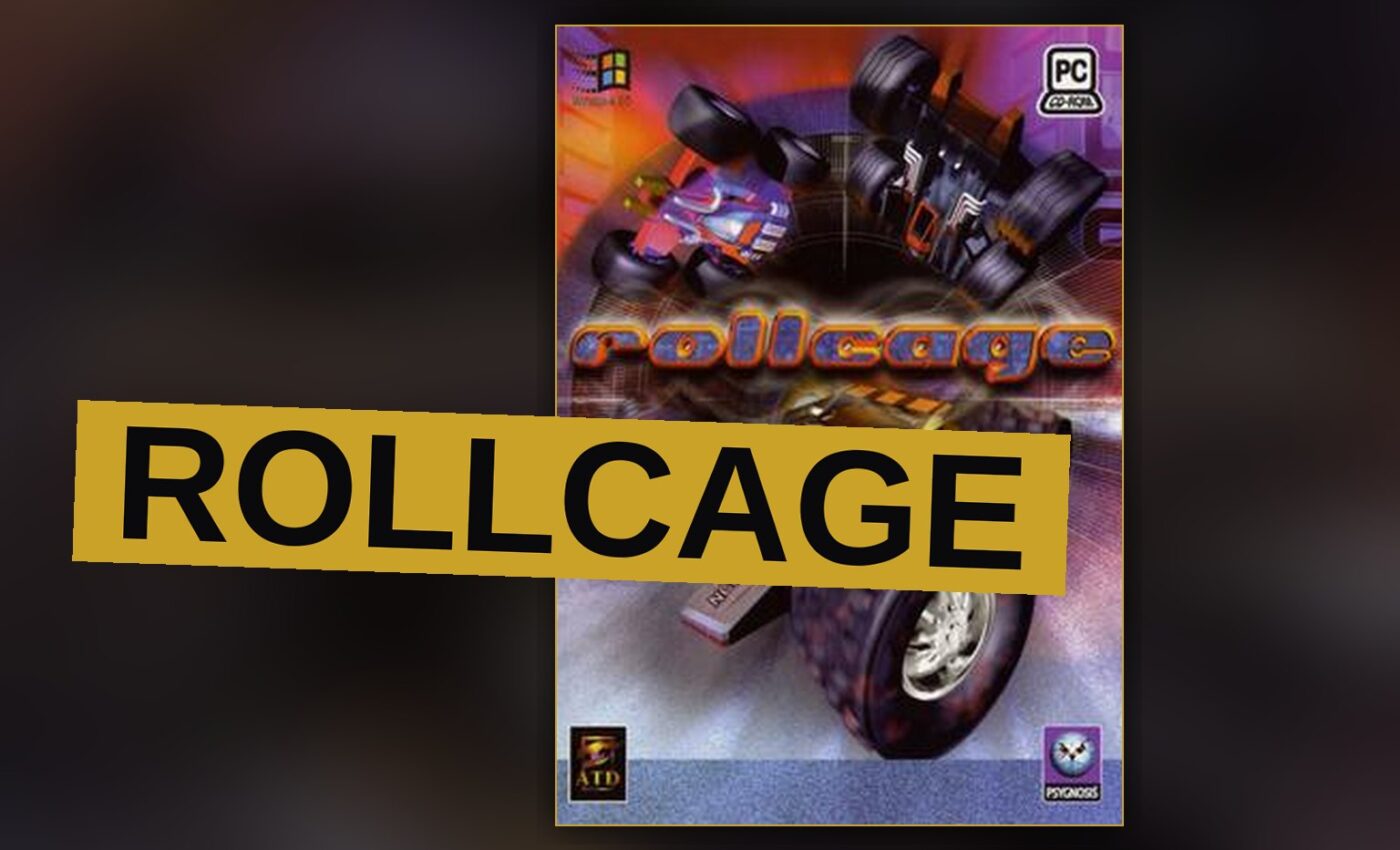
Rollcage puts six racers on the track at once and asks each of them to think about the other five. That simple setup, built around cars that can ram and destroy each other, still holds up as one of the stranger racing games ever put on the PlayStation. It rewards chaos over skill, and it knows exactly what it wants to be.
The Setup
The idea is easy to explain but hard to master. Six racers share a narrow road, and the rules let you hit anyone else, send them off the course, or destroy their car entirely. Points come from finishing races, but extra points come from wrecking other cars. So the best way to win is often to stop worrying about the finish line and start worrying about the guy ahead of you.
That sounds like a recipe for frustration, and sometimes it is. But the game manages to keep the chaos from turning into pure noise. There is a rhythm to it, and once you learn it, you can start to see openings where a wreck is possible and where one is likely to cost you the race.
What Works
The presentation is the game’s strongest asset. Cars are large, detailed, and distinct enough that you can tell who is who in the middle of a fight. The sound design matches the action, with engine noises and crashes that feel physical. It is a game that looks and sounds like it means business.
The track selection is also strong. Each course offers tight corners, open straights, and hazards placed with care. Some tracks reward patience, others reward aggression, and the mix keeps the game from feeling dull after a few hours.
Here is what stands out:
- The destruction system — cars can be destroyed, not just slowed down.
- The scoring system — wrecking other racers earns extra points.
- The track variety — each course plays differently.
- The presentation — cars look distinct and the sound design lands.
“Wrecking other racers earns extra points.”
What Falls Short
The controls are the game’s weakest link. Cars drift and slide in ways that feel loose, and the handling model takes time to learn. New players will find themselves sliding off the course more than they want, and the game does not offer much help in getting back on track.
There is also a lack of variety in modes. Once you have played the main race mode a few times, there is not much else to do. The game does not include online play, which limits its replay value for players who want to race against friends.
These problems do not sink the game, but they keep it from being great. They are the difference between a game you enjoy and one you love.
How It Holds Up
Rollcage has aged better than most racing games from its era. The core idea is simple and hard to improve upon, and the game’s willingness to embrace chaos rather than punish it gives it a character that later racing titles rarely matched.
The game is not trying to be a simulator. It is trying to be a spectacle, and it succeeds at that. Watching a wreck happen in front of you while you are still moving is a moment that sticks with you, even years later.
The multiplayer is where the game truly shines. Racing against other people in the living room, watching cars explode and scatter across the course, is a shared experience that few other games manage. It is the kind of game that gets passed around and played again and again.
The Verdict
Rollcage is a game that rewards aggression and punishes hesitation. It is not for everyone, and its flaws are real, but its strengths are memorable. The destruction system, the track design, and the sheer spectacle of a wreck all add up to something special.