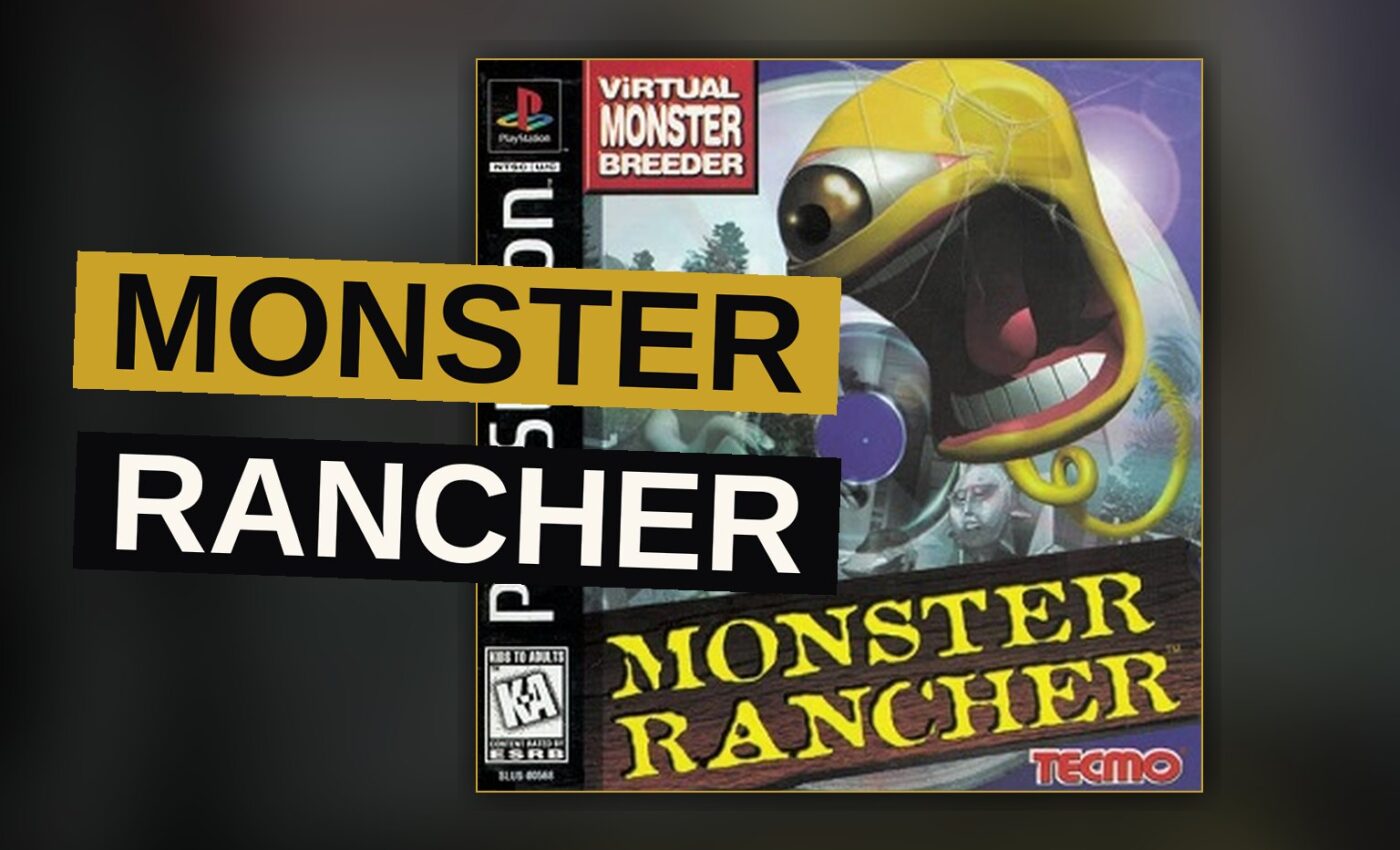
Monster Rancher arrived on the original PlayStation in 1997 as a farming simulator with a twist: instead of raising crops, you raise monsters. The game asks you to breed creatures, train them, send them into battle, and watch them age and die. It is a strange fit for the console, and it works anyway.
Breeding Monsters
The core loop is simple. You capture a monster egg, hatch it, feed it, train it, and then send it off to fight. Each monster has stats for strength, speed, health, and skill. You raise those stats through training sessions, and you lower them through neglect. The game tracks every decision you make, from what you feed your monster to how often you let it rest.
What makes Monster Rancher stand out is the breeding system. You can mate two monsters together to produce offspring. The offspring inherits traits from both parents, but the exact mix is random. One parent might pass on high strength while the other passes on low health. The result is a creature that plays very differently from either parent. The game does not explain exactly how the trait inheritance works. It simply presents the system and lets you see the results.
Battle System
Combat in Monster Rancher is turn-based and simple. You pick an attack, your monster performs it, and the enemy responds. There is no dodge or block button. The game relies on stat comparisons to resolve attacks. A strong monster hits harder, a fast monster lands first.
The battles are not the highlight of the game. They exist to test your monster’s training, not to entertain you. A skilled player can win almost every fight by sending in a well-trained monster. The challenge comes from managing your monster’s life span and preparing it for later battles.
Life Span
Every monster ages. The game tracks days, weeks, and years. Eventually, every monster dies. This creates a constant tension. You want to train your monster to be strong, but you also want to enjoy it while it is young. The game forces you to balance preparation for the future with enjoyment of the present.
Some players find this upsetting. Others find it rewarding. The game does not explain why monsters age. It simply states the fact and moves on. That silence makes the experience feel more natural than if the game explained the rules. The game also does not offer any way to extend a monster’s life span beyond careful training. Once a monster dies, it is gone.
CD Data
One of the weirdest features of Monster Rancher is the way it reads data from CDs. You can insert a music CD into your PlayStation, and the game will read the data on the disc and create a monster based on that data. The monster’s appearance changes depending on the CD you use. Some CDs produce monsters with human-like faces, others produce monsters with animal heads, and some produce monsters that look like nothing else.
This feature is gimmicky, but it is also clever. It turns a standard CD drive into a creative tool. You can customize your monster by choosing the right CD. The game even lets you save your monster and share it with other players. This sharing system made Monster Rancher popular in multiplayer circles.
Sound and Look
The presentation is modest. The character models are simple, and the animation is basic. The game does not try to impress you with graphics. Instead, it focuses on the systems underneath. The sound design is similarly restrained. The music is pleasant, but it does not demand attention.
This simplicity has a cost. The game looks dated quickly. Within a few years of release, newer titles had far more detailed graphics. Monster Rancher held up better than most because its core systems were solid, but the presentation showed its age within months of release.
Longevity
Monster Rancher was not a short game. A full playthrough could take dozens of hours. The game rewards patience, but it punishes impatience. Neglect your monster for too long, and its stats drop sharply. Send it into battle unprepared, and it will lose easily. The game expects you to manage your time carefully.
The game also supports multiple saves. You can keep several monsters alive at once, each with its own stats and history. This allows you to experiment with different breeding strategies without losing your progress. The game does not punish you for failure. It simply shows you the consequences of your decisions.
Legacy
Monster Rancher was influential. It spawned a series of sequels and spin-offs, and it inspired other games to borrow its CD reading mechanic. The idea of creating content from physical media was unusual at the time. Most games used cartridges or optical discs to store data. Monster Rancher used the CD itself as a creative tool.
The game also popularized the concept of monster breeding. Later games copied the idea of raising creatures over time, training them, and watching them grow older. Monster Rancher was not the first game to do this, but it brought the concept to a wider audience.
Comparing Monster Rancher to Other Farming Games
| Feature | Monster Rancher | Harvest Moon | Stardew Valley |
|---|---|---|---|
| Focus | Monster breeding and combat | Farming and relationships | Farming, mining, fishing |
| Combat | Turn-based battles | None | None |
| CD Data | Reads CD data to create monsters | No | No |
| Life Span | Monsters age and die | Characters age, but not die | Characters age, but not die |
The comparison shows how different the game is from other farming titles. Harvest Moon and Stardew Valley focus on growing crops, raising animals, and building relationships. Monster Rancher focuses on raising monsters and sending them into battle. The two genres share a surface similarity — managing resources over time — but their goals are entirely different.
Final Word
Monster Rancher is a game about commitment. It asks you to invest time in something that will eventually die. That is a bold ask for a video game. Most games want you to win. Monster Rancher wants you to care.
The game is not perfect. Its battles are dull, its graphics are dated, and its presentation is plain. But its systems are deep, its breeding mechanic is clever, and its handling of life span is rare. Few games make aging feel meaningful.
If you want a game that respects your time, Monster Rancher is worth your attention. If you want a game that entertains you constantly, it is not the best choice. The game is a slow burn. It takes time to warm up, but once it does, it offers a unique experience that few other games can match.
Monster Rancher earns a 7 of 10.