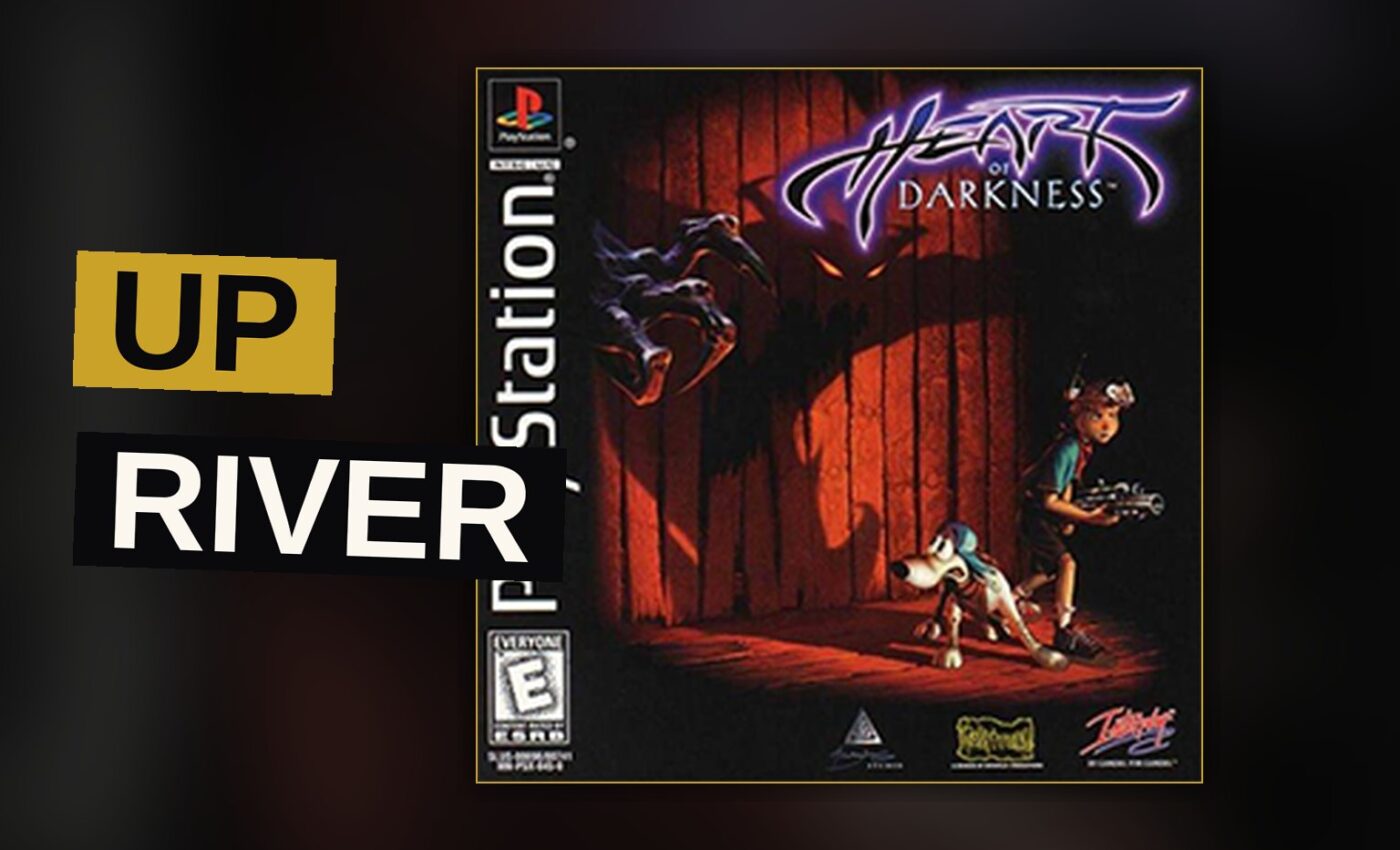
Heart of Darkness opens on a boy and his dog, and spends most of its running time making them pay for it. Amazing Studio’s cinematic platformer, supervised by Éric Chahi of Another World, shipped for PlayStation and PC in 1998. It is a beautiful, punishing game about a child named Andy descending into the Darklands to rescue Whiskey from the Master of Darkness. It is also, too often, a game that mistakes cruelty for weight.
An Eclipse Takes Whiskey
The setup is the best thing here. Andy hates his teacher, loves his dog, and is afraid of the dark. A solar eclipse takes Whiskey, and Andy launches a homemade spaceship from his treehouse into the Heart of Darkness. Chahi’s team renders this with pre-rendered backdrops and thousands of 2D animated frames, and the results still hold up. Bruce Broughton’s orchestral score does the rest. The game plays like an animated film you are allowed to fail at.
Dying in the Swamps
That failure is the problem. Heart of Darkness is a linear cinematic platformer built on trial and error, and Andy dies constantly: eaten, crushed, burned, dropped into lakes. The swamps and canyon sections demand memorization before they allow momentum. Checkpoints soften it, but the game’s idea of tension is a shadow you could not have seen.
Amigo and the Magic Rock
The middle stretch finds its footing. Andy saves a winged creature named Amigo, gains plant-manipulating powers from a magic rock at the bottom of a lake, and wins over the Amigos by growing them an apple tree. Then the shadows destroy the village at nightfall. It is the one sequence where the game’s scale and its sadness line up. The Amigos arming themselves for war is a genuinely good image.
A Servant Turns Traitor
The Master of Darkness abuses his servant, kills a shadow for capturing the wrong target, and throws the servant at a spiked wall. The servant survives, helps Andy, then kicks Whiskey into the portal. This is the game’s nastiest turn and its most memorable. It also exposes the writing: villains here are cruel because the plot needs cruelty, not because they have reasons.
Waking in the Treehouse
Andy reforms the rock, drops it into the dark portal, and battles the Master. He wakes in his treehouse. His mother calls him to dinner. The whole journey was make-believe, and he turns off the nightlight unafraid. Then the final scene shows the Amigos picking through his ship’s wreckage, with the servant tied up and harassed. The adventure was real after all. The game wants both readings. It earns neither.
| Element | What Heart of Darkness does |
|---|---|
| Cinematics | About half an hour of storytelling sequences |
| Art | Thousands of 2D animated frames, pre-rendered backdrops |
| Score | Original music by Bruce Broughton |
| Ports | A Game Boy Advance version was announced in 2001 and never released |
The craft is real. The design is not generous. Heart of Darkness asks players to admire its animation while punishing them for not already knowing what comes next, and the gap between those two impulses never closes. Chahi’s Another World trusted players with less and gave them more room. This one looks like a classic and plays like a memory test.
Get the Notebook.
The day's best stories and every fresh verdict, in plain English, in your inbox by seven. One email a day, no more.