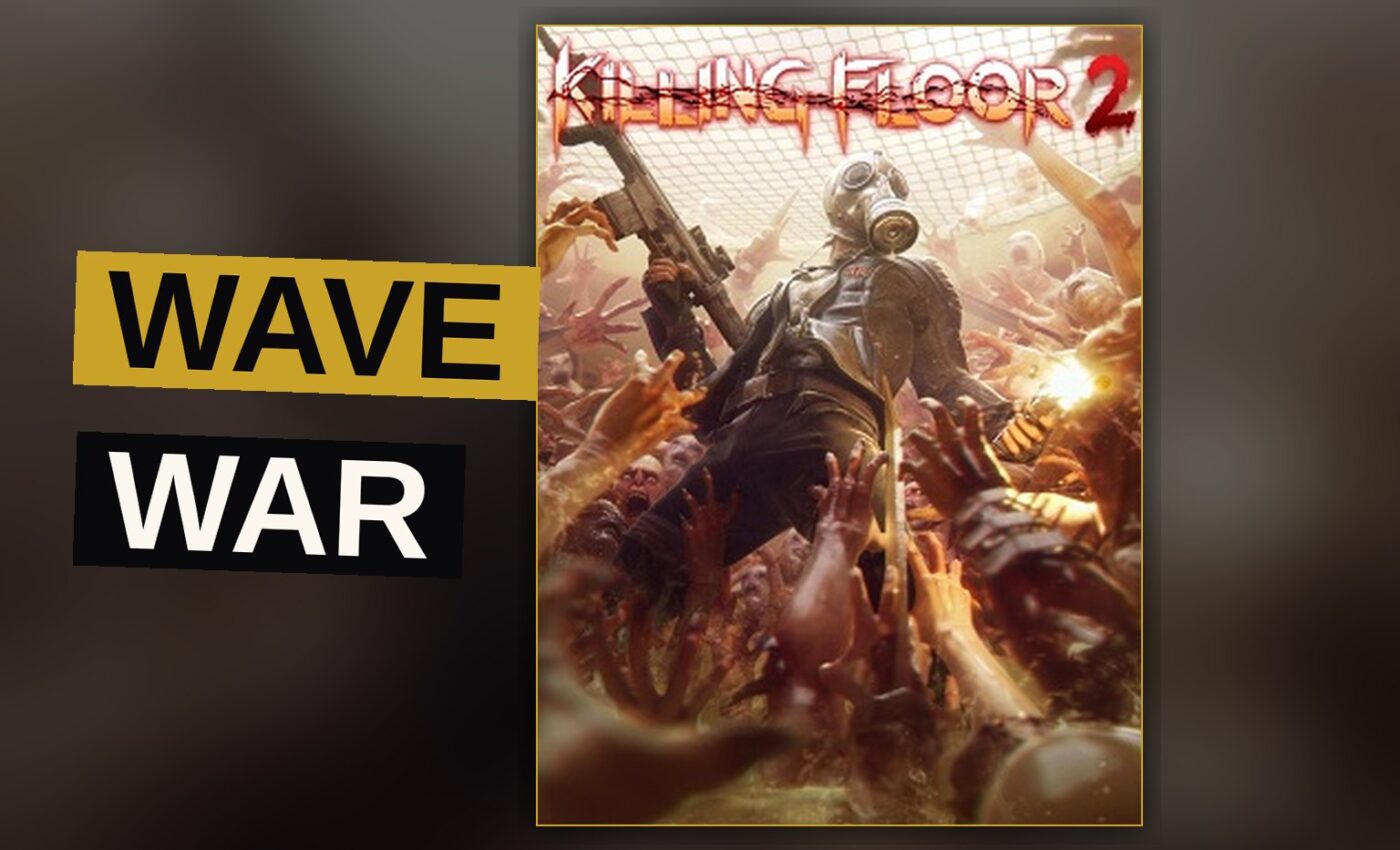
Killing Floor 2 dropped you and five friends into a Europe that had already lost. Tripwire Interactive’s sequel picks up one month after the original Killing Floor, and the picture it paints is not a rescue mission. Horzine Biotech’s failed experiments produced the clones called Zeds, and by the time the game opens, the European Union is paralyzed, governments have collapsed, communication networks have failed, and military forces have been systematically eradicated. The people still breathing have gone into hiding.
Trailer, via IGDBcom.
From London to the Hot Zones
The first outbreak ripped through London. Killing Floor 2 moves the fight to continental Europe, where the specimen clones are everywhere and the outbreak has gained unstoppable momentum. You are not a soldier in a chain of command. You are part of a motley group of civilians, soldiers, and mercenaries operating from privately funded bases scattered across Europe. When an outbreak is detected, the game sends you into a Zed-laden hot zone to exterminate everything in it.
Six Players, One Boss
Killing Floor 2 is a first-person shooter built for solo play or co-op with up to six players. Waves of Zeds come at you, and the enemy count climbs as the waves pass. New enemy types appear as you clear each wave, ending in a boss fight on the final wave. The boss is chosen at random when that last wave starts, and each one has to be beaten differently.
You carry melee weapons and firearms, a healing syringe, and a welder for blocking passages. Weapons, ammo, and armor sit around the level to be found, but your carry weight is capped. Kills pay out in-game money and experience. Land something like a head shot and the game can trigger “zed time,” slowing every action for every player for a few seconds so you can rethink a bad decision mid-fight. Zeds chase and attack on spawn. Damage is healed with a syringe, your own or a teammate’s.
Release Timeline
| Version | Platform | Release |
|---|---|---|
| Early access | Microsoft Windows | April 2015 |
| Full release | Windows, PlayStation 4 | November 2016 |
| Full release | Xbox One | August 2017 |
| Sequel | Killing Floor 3 | July 2025 |
What the Co-op Actually Asks
| Element | How it works |
|---|---|
| Player count | Alone or up to six, co-operatively |
| Enemy scaling | Enemy count determined by number of players |
| Wave structure | Increasing enemy count, new types per wave |
| Final wave | Randomly selected boss, unique defeat method |
The welding tool is the detail that tells you what kind of game this is. Blocking a passage is a defensive act, and defense only matters when the thing on the other side is genuinely dangerous. Zed time does the same work in a different register: it hands you a few slowed seconds to fix a decision you already made. Both mechanics assume you will make mistakes.
Tripwire built Killing Floor 2 on Epic Games’ Unreal Engine 3, with later support from Saber Interactive, and the game has held up as a co-op shooter because it never pretends the odds are fair. The waves scale to your group. The boss is a coin flip. The map gives you just enough to work with and no more.
This is not a horror game about being hunted. It is a game about holding a line with five other people who are also out of options, and the tension comes from arithmetic rather than atmosphere.
Killing Floor 2 earns its place as one of the more durable co-op shooters of its generation, and the 8.1 out of 10 it holds across 13 outlets is a fair number.
Get the Notebook.
The day's best stories and every fresh verdict, in plain English, in your inbox by seven. One email a day, no more.