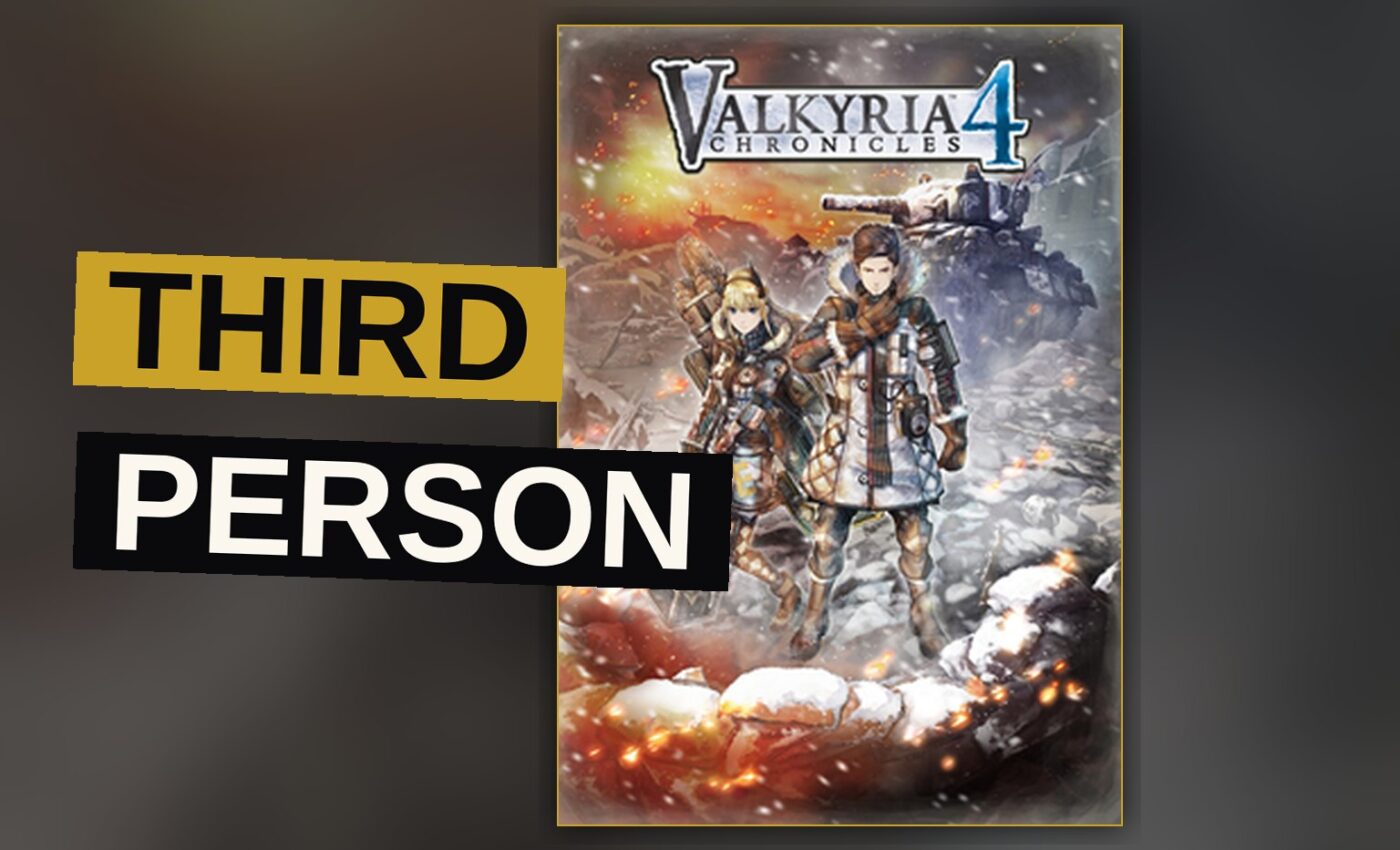
Valkyria Chronicles 4 asks a simple question: can a war game about tanks, soldiers and occupied territory still feel personal after ten years? The answer is yes, mostly. Sega’s latest entry in the series lands on PS4, PC, Xbox One and Switch, and it finds a way to make the same strategic loop feel fresh by changing who tells the story.
The game follows a new squad of soldiers in the Empire of Gallia, fighting back against the invading forces of the Federation of Eastern Europa. That setup sounds familiar, but the twist is in the presentation. Valkyria Chronicles 4 drops the isometric view of its predecessors for a third-person perspective during field missions. That single change alters the entire experience.
Trailer, via SEGA.
The Field Mission Shift
Field missions are where the game earns its keep. Instead of looking down on units like chess pieces, players now see the battlefield through the eyes of the protagonist, Claude Wallace. The change is small on paper but large in practice. Units can move between cover, sprint, and dive for protection, and enemies react to gunfire with flinches and shouts.
The tactical layer stays intact. Players still command squads of infantry, engineers, scouts and tank drivers, rotating through them to hold positions, flank enemies or call in artillery support. But the third-person view adds a sense of scale that the older games lacked. Watching a tank barrel roll over a hill and crush enemy positions feels different when you see the explosion hit the ground.
The system rewards patience. Rushing headlong into a firefight without a plan rarely works. Enemies flank, they reinforce, and they mark targets for artillery strikes. Players who stop to survey the map, position their units and wait for the right moment will find the game far more forgiving than those who charge in blind.
“If you want to win, you need to think.”
That line sums up the whole approach. Valkyria Chronicles 4 trusts players to think tactically, not just act aggressively.
Story and Claude Wallace
Claude Wallace is the main character, and his story carries the campaign. He joins the Imperial Army out of duty and grief, losing his family to the Federation’s occupation. His journey from reluctant recruit to seasoned soldier drives the narrative forward.
The writing leans on dialogue and quiet moments rather than big speeches. Claude’s interactions with his squadmates—his best friend, his commander, the girl he protects—are where the emotional core lives. The game doesn’t hit you over the head with its themes; it lets them breathe.
The supporting cast is a mix of gruff veterans and young idealists. Each squad member has a distinct personality, and the game takes time to develop their bonds. That investment pays off in later chapters, when the stakes rise and the losses land harder.
The story also touches on the politics of war. The Empire of Gallia is occupied, its people oppressed, and the Federation’s motives are rarely pure. Valkyria Chronicles 4 doesn’t shy away from showing the cost of conflict on both sides. It’s a grim note, but it grounds the action in something larger than just winning battles.
The Tank Battle System
Tanks return as a central mechanic, and they’re better than ever. Players can now control a tank directly, driving it through the battlefield while the rest of the squad provides support. The system is simple but effective. Tanks can push through enemy lines, provide cover fire, and call in airstrikes when needed.
The tank controls are smooth. Moving, turning and firing all respond quickly, and the game does a good job of communicating threats visually. Enemy anti-tank units will mark your position, and friendly infantry will warn you of incoming fire. It’s a clever way to keep you informed without cluttering the screen with text.
The tank missions also offer a break from the standard infantry fights. They’re shorter, faster, and they let you feel the weight of the vehicle. The game mixes these sequences well, so you never get stuck in one mode for too long.
The downside is that the tank sections don’t offer the same depth as the infantry missions. There’s less room for positioning and less variety in unit types. But as a palate cleanser, they work. The game knows when to shift gears, and the tank missions are a welcome change of pace.
Graphics and Sound
The visual style is the most obvious difference from earlier entries. Valkyria Chronicles 4 uses a cel-shaded look, with characters rendered in a cartoonish but detailed way. The backgrounds are bright, often painted with bold colors, and the game does a good job of making each battlefield feel distinct.
The third-person view means you see more of the environment. Grass sways, snow crunches, and explosions scatter debris. The result is a more immersive world than the older isometric maps allowed. It’s a technical achievement that also serves the storytelling.
The sound design supports the tone. Gunfire is sharp, artillery booms, and the game uses music to cue dramatic moments. The soundtrack is a mix of orchestral pieces and lighter tracks, and it shifts depending on the situation. During a tense battle, the music swells. After a victory, it settles into a quieter hum.
The voice acting is solid across all platforms. The Switch version runs at a lower resolution than the others, but the audio holds up. The game is a technical feat on multiple systems, and it shows.
Difficulty and Replay Value
Valkyria Chronicles 4 is challenging, but fair. The difficulty curve rises steadily, and the game introduces new enemy types and strategies regularly. Boss battles test your positioning skills, and some missions require careful planning to succeed.
The game offers multiple difficulty levels, so players can adjust the challenge to their taste. On higher difficulties, enemy accuracy increases and reinforcements arrive faster. It’s a good system for players who want a quick playthrough or a more punishing experience.
The replay value comes from the branching structure. Missions often have multiple objectives, and completing them all unlocks additional content. The game also includes a multiplayer mode, though it’s not as extensive as the single-player campaign.
For players who finish the main story, there’s still plenty to do. The game rewards exploration and encourages you to experiment with different tactics. It’s a game that respects your time, even when it’s asking for more of it.
The Third-Person Tradeoff
The third-person view isn’t perfect. Some players will miss the clarity of the isometric maps, where every unit’s position was instantly visible. In the new view, tall grass or buildings can obscure enemies, and you sometimes have to guess where the threat is coming from.
The game tries to mitigate this with markers and audio cues, but it’s not always enough. A few missions felt frustrating because I couldn’t see the full battlefield at once. The tradeoff is worth it, but it’s a real cost.
The Switch version handles the transition better than expected. The handheld mode is comfortable, and the docked mode looks sharp. The frame rate holds steady in most situations, though busy battles can dip during heavy exchanges. It’s a competent port, and it’s good to have the game on the go.
Where It Falls Short
The pacing drags in the middle of the campaign. Some missions feel similar, and the game repeats its combat loops without much variation. It’s not a fatal flaw, but it’s noticeable after a dozen hours.
The story also stumbles in its middle chapters. Some plot threads are resolved too quickly, and a few character arcs feel rushed. The game is at its best when it slows down and lets the human drama breathe. When it speeds up, the quality dips.
The multiplayer mode is a mixed bag. It’s a decent addition, but it lacks the polish of the main campaign. It’s a nice bonus, not the reason to buy the game.
Final Verdict
Valkyria Chronicles 4 succeeds because it respects its audience. It trusts players to think tactically, to learn from failure, and to care about its characters. The third-person view is a risk that mostly pays off, and the campaign delivers a story that’s both personal and political.
It’s not a perfect game. The middle chapters drag, the multiplayer is thin, and the third-person view has its flaws. But the strengths outweigh the weaknesses. The field missions are engaging, the story is compelling, and the tank battles are a welcome addition.
The game is a confident return to form for the series. It honors the past while moving forward, and it stands as one of the best strategy titles of its generation.
Get the Notebook.
The day's best stories and every fresh verdict, in plain English, in your inbox by seven. One email a day, no more.